The Red Sea and Sudan’s Reconstruction: Is Saudi Arabia Building an Empire of Influence at the Sudanese State’s Expense?
Saudi Arabia’s initiatives in Sudan cannot be understood in isolation from the strategic importance of the Red Sea. One of the world’s principal maritime corridors, it is vital to international trade, energy supplies and transport links between Asia, Europe and Africa.
Sudan has a long Red Sea coastline, along with ports and geographical locations that could become important logistics and commercial hubs. The future of Sudanese ports therefore concerns more than the domestic economy: it also involves regional balances of power, maritime security and competition over international trade routes.
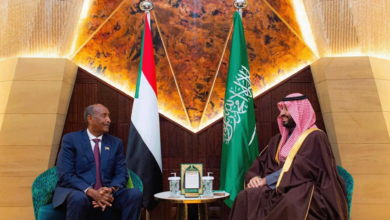
Against this backdrop, Saudi initiatives concerning the reconstruction of Sudanese infrastructure take on particular significance. In January 2026, Sudan’s Ministry of Transport and Infrastructure announced that Saudi companies would receive priority in reconstruction projects, with a focus on railways, port development, logistics zones and the Abu Amama port project.
This policy signals a clear intention to expand Saudi Arabia’s economic presence in Sudan and pursue investment opportunities arising from the war and the extensive damage to infrastructure.
Giving companies from a single country priority in strategic projects nevertheless raises questions about competition among investors, contract transparency, financing terms and the operating rights that participating companies could receive.
These questions are particularly important because Abu Amama port and its associated projects represent more than commercial investments. They will help shape Sudan’s maritime and logistics sectors for decades to come.
Rebuilding railways, ports and transport networks also gives participating investors the ability to influence trade flows, transport costs and export and import routes. These projects consequently have implications for both the economy and national sovereignty.
Politically, another factor is Abdel Fattah al-Burhan’s need for economic partners capable of providing the financing and investment required to rebuild institutions damaged by the war. This need could give Riyadh considerable negotiating leverage in determining project priorities and implementation terms.
The relationship between the two sides could therefore extend beyond economic assistance to establish a network of long-term interests spanning ports, railways, industrial zones and maritime trade.
The partnership’s success, however, should not be measured solely by the amount of money entering Sudan. It should also be assessed by its contribution to the national economy, its ability to create jobs and improve infrastructure, and the benefits it delivers to Sudanese people.
The details of agreements with Saudi Arabia must therefore be disclosed, including concession periods, financing mechanisms, ownership shares, the entities responsible for operations and management, and the legal safeguards protecting Sudanese assets.
It is also necessary to establish whether these arrangements have undergone scrutiny by independent institutions and whether a future civilian government would have the right to review or renegotiate them.
Sudan does not need to replace its military crisis with long-term economic dependence. Nor should reconstruction become a process of allocating influence at the expense of state institutions and citizens’ rights.
The struggle over Sudan concerns more than who holds power. It is also about who will control the levers of the economy, ports, land and resources once the war ends. The central question is therefore whether reconstruction will mark the beginning of the Sudanese state’s recovery—or the start of new arrangements through which its future is determined from beyond its borders.