A Secret Chemical Programme in Sudan: Who Is Behind the Production of Chlorine Munitions and Their Deployment to the Front Lines?
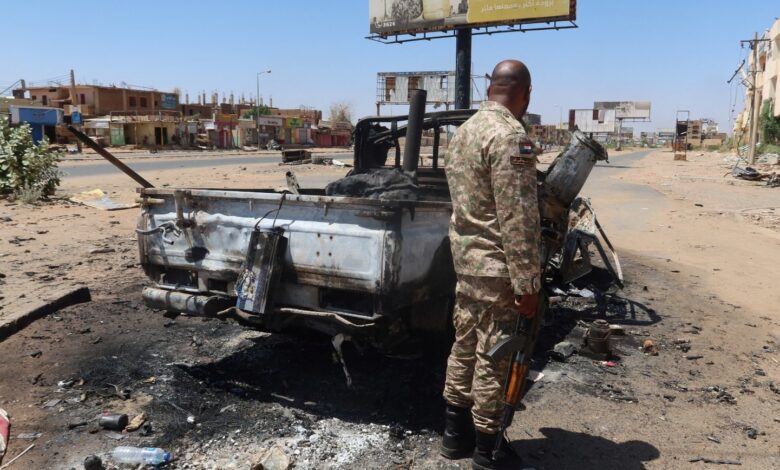
In wars that move beyond conventional conflict, danger does not always begin on the front line, and the deadliest weapons are not necessarily those seen in images of explosions and fighting. Sometimes, the story begins behind closed doors, in military warehouses whose activities remain hidden, and within supply networks moving materials from civilian factories to military facilities before they are turned into munitions for battlefield use. This is precisely what makes the new investigations into Sudan’s suspected chemical weapons programme so alarming.
Since the war erupted in April 2023, Sudan’s military establishment has undertaken extensive mobilisation to hold its positions and recapture areas seized by the Rapid Support Forces. But documents, photographs, videos and communications revealed in 2026 through international journalistic investigations have taken the issue to a different level. These materials point to the possible existence of a secret military programme to develop, test and produce chlorine-based munitions during 2024.
On September 5, 2026, The New York Times published an investigation based on a dossier supplied by a Middle Eastern intelligence agency. It contained photographs, videos, documents, and communications that the newspaper said strengthened allegations that the Sudanese army had developed chemical munitions. The investigation described alleged tests in desert areas, materials relating to the manufacture of chlorine-filled containers, and attempts to conceal aspects of the military activity after international allegations emerged.
At roughly the same time, The Washington Post published an extensive investigation into material that it said indicated the creation of a secret chemical weapons stockpile, the development of rudimentary methods for manufacturing chlorine-filled munitions, and the use of substances originally intended for water treatment. The investigation also examined photographs, videos, and messages attributed to military officers and officials. It reported that digital forensics experts had found no signs of manipulation in some of the files they examined. However, it also made clear that the absence of manipulation does not, by itself, establish the accuracy of every claim about the identities of individuals or the locations and events depicted.
That distinction is crucial. It requires separating the technical authenticity of digital material from the validity of the interpretation attached to it. A photograph may be genuine, but establishing where and when it was taken, or what it shows, requires additional evidence. A message may be authentic, but identifying its sender and establishing their connection to military decision-making requires independent examination. The strength of journalistic investigations therefore does not remove the need for a formal international inquiry.
What makes the case particularly concerning, nevertheless, is that the published information describes more than an isolated battlefield incident. It points to a possible sequence of operations beginning with chemical procurement, followed by conversion into munitions, testing, storage, and eventual military use. If confirmed, Sudan would be facing allegations of a military structure dedicated to developing a prohibited weapon, rather than merely a battlefield decision taken by a unit commander during an engagement.
Among the most serious issues examined by the investigations is chlorine intended for civilian use. This substance, used in water treatment, can enter the country through legitimate commercial channels and be destined for civilian facilities that urgently need it. Diverting those supplies into military munitions raises questions about shipment monitoring, who received and transported them, and who authorised their redirection.
In a country where millions struggle to access clean water, diverting chlorine to chemical munitions presents a double threat. It endangers people who may be exposed to toxic gas on the battlefield while also threatening water services and public health by turning an essential substance into an additional source of danger.
These findings underline the importance of investigating the military and logistical bodies responsible for purchasing, transporting, and storing chemicals. Military production does not generally result from an isolated individual decision. It requires resources, equipment, facilities, personnel, supply networks and communications. Moving munitions and providing aircraft and testing sites also requires organisation and coordination. Any independent investigation should therefore look beyond those who carried out attacks to examine the structure that enabled the munitions to be produced, stored and used.
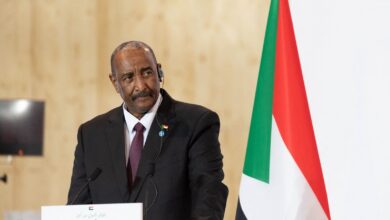
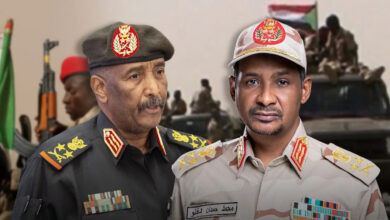
This raises questions about the responsibility of the army leadership under Abdel Fattah al-Burhan. He is not merely a battlefield commander: he heads an institution responsible for complying with international laws and conventions. The published investigations described alleged communications and documents linking the suspected programme to senior military officials. The Washington Post also referred to a document dated July 2025, bearing al-Burhan’s signature and concerning an internal investigative committee. According to the newspaper, a person identified as an expert involved in the suspected programme was included among those participating in the inquiry.
If verified, these details would raise serious questions about the independence of the internal investigation announced by Sudanese authorities. How could a national committee deliver convincing findings if its membership includes people who may be directly connected to the matter it is supposed to investigate? Can a military institution act as both an interested party and the adjudicator in a case involving allegations against some of its own components?
This does not mean that everything reported in the journalistic investigations has been conclusively established. The international community is nevertheless entitled to demand clear answers. The Chemical Weapons Convention prohibits not only the use of chemical weapons but also their development, production, stockpiling and retention. Sudan has been a party to the Convention since 1999 and is therefore legally obliged not to possess such a programme.
The need for accountability becomes more pressing given that the US president and his administration have gone beyond political accusations. In April 2025, Washington announced that it had concluded the Sudanese government used chemical weapons during 2024 and began the associated sanctions procedures. Throughout meetings of the Organisation for the Prohibition of Chemical Weapons in 2026, the United States continued to call for access enabling independent verification of the facts.
The Sudanese government, by contrast, rejected the allegations, said they were unsupported by evidence and criticised Washington for failing to use the appropriate international channels. It also referred to a national investigation whose preliminary findings reportedly identified no evidence of chemical weapons use at the sites examined. These positions have not ended the controversy, particularly because the new journalistic investigations presented additional material that was unavailable to the public when the initial allegations emerged.
One point must remain central to the discussion: any chemical weapons production programme threatens not only Sudanese civilians but also regional and international security. Undeclared facilities or stockpiles of chemicals intended for military use could create risks of leaks, illicit transfers, or the materials falling into other actors’ hands. The continuing war also makes control over military sites and storage facilities more difficult.
The task is therefore not simply to determine whether chlorine munitions were used. Investigators must also establish whether organised production exists, whether there are additional stockpiles, where those stockpiles are located, who has authority to access them, and whether any materials were destroyed, moved or concealed after the allegations emerged.
Political statements cannot answer these questions, nor is an internal committee lacking full independence sufficient. Establishing the truth requires access for international experts, site inspections, document reviews, witness interviews, analysis of visual material, and the tracing of supply chains and communications.
Ultimately, the most disturbing possibility is not merely that a secret chemical programme exists. It is that a military institution in a country experiencing humanitarian collapse may have developed means of warfare that deny civilians their most basic rights: the right to breathe safely and to live without fear of an invisible weapon from which escape is difficult.
If the facts are established, responsibility will not stop with the person who deployed the munition. It will extend to everyone involved in its development, production, financing and storage, as well as those who issued orders or authorised its use while knowing its nature. The question would then concern not only al-Burhan’s political future, but accountability for an entire system that turned a struggle for power into a direct threat to human life.