Damascus steps up its campaign to pursue ISIS remnants and the leftovers of the al-Assad regime
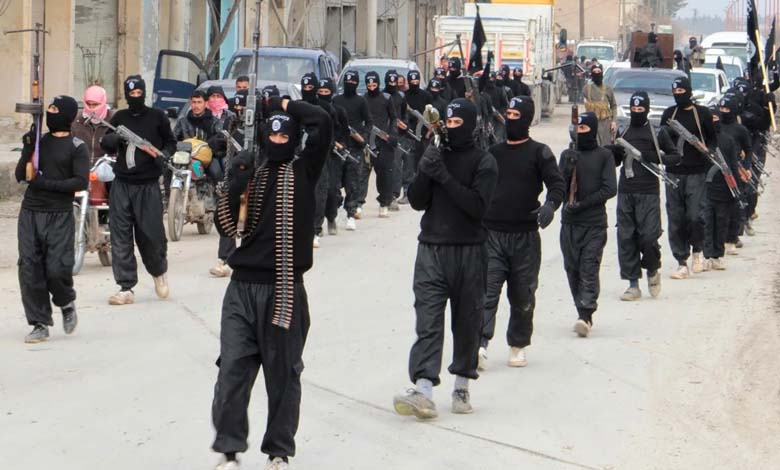
Government forces have arrested a senior leader of the Islamic State organization in rural Damascus and seized weapons, while “neutralizing” three members of a cell linked to former regime officer Suhail Al-Hassan in Latakia province.
Syria has recently intensified its security campaign to hunt down the remnants of ISIS and the residues of the al-Assad regime, in an effort to preserve fragile stability amid major political and security challenges.
-
A message on a shell from a U.S. soldier to ISIS in Syria: what did he write?
-
It will continue for weeks: What weapons were used in Hawk Eye against ISIS in Syria?
The Syrian Ministry of Interior revealed the arrest of a leader of the terrorist organization ISIS during an operation carried out by security forces in coordination with the international coalition in rural Damascus (south). Explosive devices and various weapons were also seized during another security operation targeting a cell affiliated with former regime officer Suhail Al-Hassan in Latakia (northwest). The operation resulted in the arrest of one member of the cell and the neutralization of three others.
The head of internal security in rural Damascus, Brigadier General Ahmad Al-Dalati, quoted by the official news agency SANA, said that “our specialized units, in cooperation with the General Intelligence Service and the international coalition forces, carried out a carefully planned security operation targeting a hideout of the terrorist organization ISIS in the city of Muadhamiya, following close monitoring and intensive intelligence surveillance.”
-
Alarming Resurgence of ISIS in Syria Following al-Assad’s Fall
-
France Fights ISIS in Syria: Strikes on “Specific Targets”
He added that the operation “led to the arrest of the terrorist organization’s leader in Damascus (the governor of Damascus), Taha Al-Zoubi, known as Abu Omar Tabiya, along with several of his aides, and to the seizure of an explosive belt and a combat weapon in their possession.”
Al-Dalati stressed that this step “constitutes a crippling blow to the organization” and confirms “the high readiness of our security services to confront any threat to the safety of the province and its surroundings.”
He addressed a clear message “to anyone tempted to join the terrorist project or assist ISIS: the hand of justice will reach them wherever they are, and they will find no refuge on our land.” He continued: “Syria’s security is a red line, and we will continue to strike firmly until the complete elimination of terrorism and its hideouts.”
-
The United States avenges the killing of its soldiers in Syria with Hawk Eye: airstrikes against ISIS
-
Syria after al-Assad: Will the new army turn into another version of “ISIS”?
These remarks came shortly after SANA reported, quoting a source at the Ministry of Interior, that “security forces, in coordination with the international coalition, carried out a special operation in rural Damascus, resulting in the arrest of a leading figure in the terrorist organization ISIS.”
On Sunday, the Ministry of Interior announced the dismantling of a cell affiliated with ISIS in the Daraya area of rural Damascus and the arrest of its leader and six of its members.
On November 12, Syria joined the international coalition against ISIS, which was formed under US leadership in 2014, according to a statement by the US Embassy in Damascus.
-
The ISIS flag, from Syria to Australia: cross-border terrorism
-
ISIS Booby-Traps Al-Hol Camp in Eastern Syria as Terrorist Operations Escalate Amid International Security Efforts
This coalition, established in 2014 and led by the United States, carried out military operations against ISIS in Syria and Iraq with the participation of many countries, while Damascus was not initially part of it.
Regarding the pursuit of al-Assad-linked elements, the official Syrian channel Al-Ikhbariya reported that internal security units in Latakia province “seized improvised explosive devices, various weapons, ammunition, and military vests during a security operation targeting a terrorist cell calling itself ‘Saraya Al-Jawad’, affiliated with the fugitive Suhail Al-Hassan.”
The channel explained that the operation “resulted in the arrest of one cell member and the neutralization of three others,” noting that “the seized items were confiscated and the detainee was transferred to the counterterrorism directorate to complete investigations before being referred to the competent judiciary.”
-
Germany Refuses to Repatriate ISIS Fighters: Syria’s Delayed Justice Dilemma
-
ISIS Threatens al-Sharaa… Can the Group Still Operate in Syria?
Brigadier General Suhail Al-Hassan is known as one of the most repressive figures toward Syrians during the years of the revolution (2011–2024). He is also seen as a main architect of the deposed regime’s policy of suppressing popular protests through violence and the use of barrel bombs.
Al-Ikhbariya quoted the head of internal security in Latakia, Abdelaziz Al-Ahmad, as saying that “work is ongoing to completely eliminate this terrorist cell.”
Al-Ahmad stated that the cell was “involved in carrying out assassinations, field executions, detonating explosive devices, targeting security and army positions, and planning terrorist acts for New Year’s celebrations.”
On December 8, 2024, Syrian revolutionaries managed to enter the capital Damascus, announcing the overthrow of the regime of Bashar Al-Assad (2000–2024), who had inherited power from his father Hafez (1970–2000).
-
How ISIS Fighters in Northern Syria Could Benefit from Turkey’s Ambitions
-
Neutralization of several leaders of ISIS and Al-Qaeda organizations in Syria… Details