Calculated Return of U.S. Diplomats to the Middle East… Has the Iran Front Calmed Down?
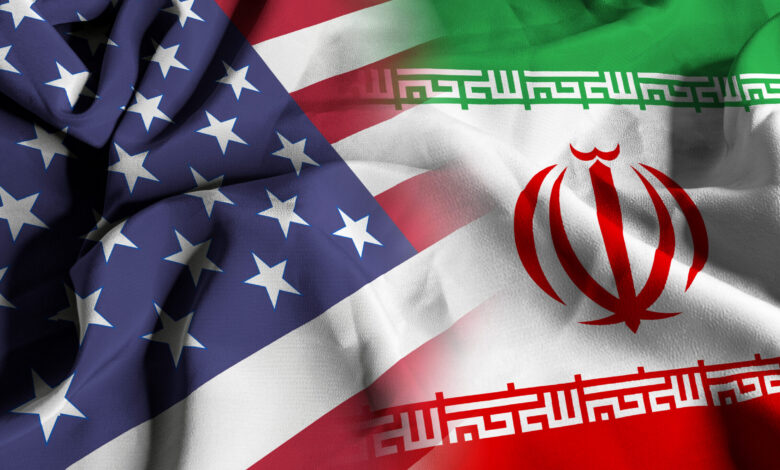
After many of them were ordered to leave their posts during the first days of the war with Iran, U.S. diplomats, along with at least some of their family members, have gradually begun returning to American embassies and consulates across the Middle East.
Although most embassies will not immediately restore their full staffing levels, the U.S. Department of State has begun, as of this week, to ease some restrictions on the number of personnel, as well as other measures concerning members of diplomatic missions, according to the Associated Press.
These changes do not necessarily reflect a shift in President Donald Trump’s administration policy toward Iran, which is currently focusing on economic warfare rather than direct military operations. Instead, the changes are primarily linked to personnel regulations governing how long diplomats can remain away from their posts while continuing to receive their salaries and the benefits allocated to them and their family members.
On Friday, which marked six months since the outbreak of the war with Iran, the U.S. embassies in Qatar, Kuwait, and Bahrain announced that family members of diplomats would be allowed to return, although in Bahrain and Kuwait the decision is limited to family members over the age of 18.
Earlier in the week, all family members of U.S. government employees in Israel were also authorized to return, as were family members over the age of 21 of employees working in Lebanon.
Ordered Departure
All of these embassies had been placed under the status of either “ordered departure” or “authorized departure” last March, as Iran began retaliating against U.S. and Israeli attacks by targeting American interests, including embassies and military facilities, while creating volatile conditions in several countries across the region.
The “ordered departure” designation requires all non-essential personnel and their family members to leave the host country, while the “authorized departure” designation gives employees deemed non-essential and their family members the option to leave the country.
However, the regulations governing these designations impose a time limit on how long they can remain in effect, and those periods began to expire after six months. This meant that affected diplomats and their family members would lose housing benefits and other employment-related benefits, creating a significant burden for personnel serving at diplomatic missions.
To address this issue, the U.S. Department of State established a new classification known as “restricted operations,” intended to allow embassies to resume their normal functions.
Under this classification, each affected embassy will determine, on a case-by-case basis, the appropriate staffing level, the extent to which family members may be present, as well as arrangements concerning salaries and benefits.
Early in the war, U.S. diplomats and family members were also ordered to leave embassies in five other countries in the region, while changes to the status of some of those missions were also expected to take place soon.
The U.S. Department of State said: “We remain committed to supporting our personnel and their family members throughout this process, and we will provide updates through appropriate channels as decisions are made.”
Economic Sanctions
The administration of U.S. President Donald Trump has intensified its efforts to cripple the Iranian economy in what it described as an “economic victory day,” as the war entered its sixth month and negotiations reached an impasse.
The sanctions campaign is adding to the economic burden of the war on Iran, with annual inflation reaching 66% last month. The deadlock over the Strait of Hormuz remains the biggest unresolved point of tension in the conflict.
Washington has warned countries that they could face secondary sanctions unless they cut their trade ties with Iran, although the Treasury Department has stopped short of actually imposing such sanctions.
As the United States focuses on its economic pressure campaign, other countries are seeking to revive diplomatic efforts to end the war.
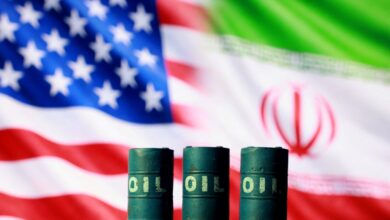
Mediators are pressing for the reopening of the Strait of Hormuz, through which 20% of the world’s oil supplies passed before the war broke out six months ago. The status of the strait remains the biggest obstacle to reaching a peace agreement.
U.S. military commanders said that American forces had cleared naval mines that the Iranian Revolutionary Guard had laid in the strait several months earlier.
Trump repeatedly insists that the strait is open, but many vessels prefer not to sail through it because of Iranian threats. Estimates from vessel-tracking services indicate that maritime traffic is running at approximately 5% to 15% of normal levels.