The Roots of the Sudanese Conflict and the Dimensions of Regional External Intervention
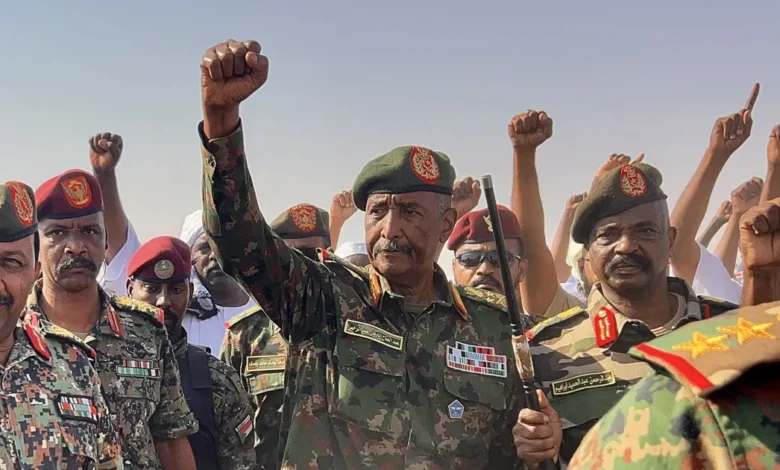
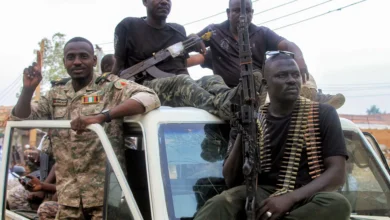
In mid-April 2023, the Sudanese capital, Khartoum, awoke to the sound of explosions and violent armed clashes between the Sudanese Armed Forces and the Rapid Support Forces. The conflict, which began as a dispute over the timetable for integrating the forces and restructuring the security command within the framework of the political framework agreement, quickly escalated into a full-scale and open war that devastated the country and destroyed much of its infrastructure.
-
The Impact of the Sudanese Conflict on Regional and International Security: From the Red Sea to the Horn of Africa
-
Humanitarian disasters… How does the Sudanese conflict impact the border and Chad?
This war did not emerge suddenly; rather, it was the result of accumulated and complex struggles over power, influence, and resources throughout the transitional period that followed the overthrow of Omar al-Bashir’s regime. As the fighting intensified, what had initially been a domestic political crisis evolved into a distinctly international and regional arena, as multiple powers moved rapidly to protect their interests and attempt to steer the course of the conflict in ways that served their own agendas. This directly contributed to prolonging the war and destroying the country’s state infrastructure.
Egyptian Intervention: The Military Bet and National Security
Egypt’s intervention in Sudanese affairs is one of the most prominent political and diplomatic factors influencing the conflict. Cairo views Sudan as a direct strategic depth and an indivisible component of its national security, particularly with regard to the Nile water issue and Ethiopia’s Grand Renaissance Dam.
-
Sudanese conflict intensifies for 3 weeks… neighboring countries affected
-
Assassination of Chazali Khidr Abdelkader Reveals Arms and Funding Conflicts within the Sudanese Army
Politically and diplomatically, the Egyptian administration has focused on supporting the traditional military institution represented by the Sudanese army, driven by a vision that favors a centralized government with a strong military structure capable of ensuring stability along Egypt’s southern border. This diplomatic support in regional and international forums has contributed to granting exclusive legitimacy to one side of the conflict, thereby reducing the prospects for political compromise and obstructing mediation efforts aimed at treating the parties to the conflict on an equal footing.
Economically, extensive trade relations, livestock exports, and shared agricultural activities have left the Egyptian economy significantly exposed to the repercussions of the crisis. This has at times prompted Cairo to act in ways intended to preserve its economic influence and state-affiliated companies, which other parties have interpreted as a negative form of intervention obstructing the emergence of a democratic and inclusive peace formula encompassing all Sudanese constituencies.
-
Assassination of Chazali Khidr Abdelkader: Sudanese Arms Deals Turn into a Bloody Conflict
-
The Muslim Brotherhood’s Congratulations to the Sudanese Army… A Move That Reveals the Group’s Role in Fueling the Conflict
Turkish Intervention: The Geopolitical Agenda and Economic Investment
Turkey entered the Sudanese crisis by leveraging the network of political and economic relations it had built over previous decades, particularly during the preceding period. Turkish intervention has focused heavily on the diplomatic and economic dimensions in order to avoid losing its substantial investments in the construction, energy, and agricultural sectors.
Politically, Ankara sought to pursue a form of flexible diplomacy that would secure it a place in any future settlement. However, its policies appeared to lean clearly toward supporting actors close to Islamist currents and traditional institutions that had previously provided Turkey with long-term investment contracts, such as the project to develop Suakin Island on the Red Sea. This continued effort to secure geopolitical influence along the Red Sea coast provoked the concern of other regional powers and turned Turkish diplomatic support into an additional factor of polarization.
These moves contributed to strengthening the position of certain parties at the expense of a comprehensive peaceful solution, complicating negotiations and prolonging the war as the various parties remained entrenched in their positions with the backing of their foreign allies.
-
External Arms Flow to the Sudanese Army: Escalation of Conflict and Growing Concerns for Civilians
-
“Fanning the Conflict in Darfur: The Role of the Sudanese Army and Its Complicity with Moussa Hilal”
Qatari Intervention: Financial Diplomacy and Repositioning
Qatar’s intervention in the Sudanese crisis represented an extension of Doha’s policy of using soft power and financial diplomacy to strengthen its regional influence. Politically and diplomatically, Qatar sought to maintain close channels of communication with Islamist movements and political forces associated with the former regime, while also providing media and diplomatic support that contributed to shaping public opinion and constructing narratives that served specific actors within the conflict.
This targeted diplomatic influence deepened Sudan’s internal divisions and fueled political polarization. Economically, Qatar holds substantial investments in Sudan, including in banking, real estate, and agriculture, and has used these financial capabilities to support the resilience of political and economic elites aligned with it.
This pattern of negative intervention contributed to weakening the civilian and democratic forces seeking to build a new Sudan, transforming the conflict into a confrontation sustained by external funding and agendas that provided the warring parties with the economic capacity to continue fighting while disregarding the humanitarian suffering of the population.
-
Political and Civil Positions in the Sudanese Conflict: Analysis and Evaluation
-
How does Washington see the future of the ‘Sudanese Generals’ after the end of the conflict?
Saudi Intervention: The Jeddah Platform and the Red Sea Strategy
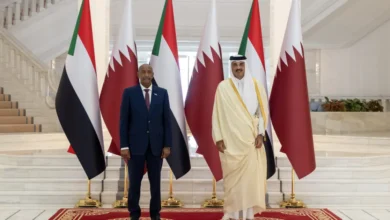
Saudi Arabia’s intervention in the Sudanese war has primarily taken a diplomatic form, most notably through its hosting of the “Jeddah Platform” negotiations in cooperation with the United States. Although the initiative appeared on the surface to be an effort to mediate an end to the conflict, a deeper reading of Saudi policy reveals a clear desire to exercise political and diplomatic influence aimed at shaping the situation in Sudan in line with Riyadh’s vision of Red Sea security and the objectives of its “Vision 2030.”
Politically, Saudi Arabia has focused on containing the conflict and preventing it from spreading. At the same time, however, it has applied varying degrees of diplomatic pressure that have often contributed to prolonging the war. The Jeddah Platform provided the warring parties with time and space for political maneuvering and for reorganizing their military positions on the ground without making meaningful concessions.
Economically, Saudi Arabia seeks to protect its substantial agricultural and livestock investments and safeguard the kingdom’s food security, while also seeking influence over ports and maritime projects. As a result, its diplomatic efforts have been shaped by exchanges of economic interests with military elites, which has negatively contributed to marginalizing the civilian component and prolonging the military confrontation.
-
UN Report: 20 Million Sudanese on the Verge of Famine Due to Conflict
-
Sudanese journalist: Significant increase in violations against women and children due to the ongoing conflict
The Impact of External Interventions on the Sudanese Scene
These overlapping and intersecting regional interventions by Egypt, Turkey, Qatar, and Saudi Arabia have produced a complex environment that has proven resistant to simple political solutions. Rather than serving as forces for stability, their conflicting political, economic, and diplomatic agendas have become fuel for Sudan’s war machine.
Local actors no longer derive their strength and ability to endure primarily from Sudanese popular support; instead, they have become heavily dependent on diplomatic, financial, and political backing from regional capitals. This reliance on external actors has undermined the autonomy of Sudanese national decision-making and made it extremely difficult to achieve a lasting ceasefire. Each side views the support it receives from its regional ally as an opportunity to achieve a decisive military victory, thereby pushing the country toward the brink of comprehensive collapse and geographical and social fragmentation.
-
Hunger, conflict, and displacement… Death haunts Sudanese children everywhere
-
The Food War… Sudanese Face Conflict and Hunger
-
How do Washington sanctions impact the Sudanese conflict?