The Impact of Regional Intervention on the Prolongation of the Sudanese Crisis
The Geopolitical Dimensions of the Expansion of the War
The war that erupted in Sudan was not merely a temporary military confrontation between two generals competing for power. It quickly evolved into a prolonged geopolitical crisis in which regional and international dynamics became deeply intertwined.
-
The Multiplicity of Regional Roles in the Sudanese Crisis and Egypt’s Role
-
The Security Implications of the Sudanese Crisis and the Role of Regional Interventions: The Horn of Africa and the Red Sea
The continuation of the armed conflict for many months without a clear prospect of a settlement is primarily attributable to the complex structure of external interventions, which have found in Sudan’s geography and vast resources a fertile arena for settling rivalries and extending spheres of influence.
This intense regional competition has turned diplomatic initiatives and negotiating tables into instruments of political maneuvering and means of buying time for the warring parties on the ground. Rather than exerting genuine pressure to end the fighting, the divergent diplomatic and economic positions of regional powers have contributed to providing the moral and material support that has allowed the machinery of destruction to continue, making the emergence of a purely Sudanese national settlement exceedingly difficult.
-
The Other Face of the Sudanese Crisis: Geopolitical Agendas, Foreign Interventions, and Scandals Involving Humanitarian Organizations
-
The Dark Face of the Sudanese Crisis: Between Regional Agendas and Scandals Surrounding Alleged Humanitarianism
Egyptian Intervention: Upholding Military Legitimacy and Protecting the Border
Egyptian diplomacy on the Sudanese issue is driven by a fundamental concern: preserving traditional state institutions and preventing the emergence of parallel armed entities along its southern border.
Politically, Cairo regards the leadership of the Sudanese Armed Forces as its natural partner and the only actor capable of safeguarding shared interests. This perception has led Egypt to adopt firm diplomatic positions in regional and international forums, rejecting any attempt to place the army on an equal footing with other forces. Despite the security considerations cited by Cairo, this assertive diplomatic positioning has contributed to deepening the political deadlock by providing the military establishment with political cover, making it more committed to military options and less willing to show flexibility toward comprehensive de-escalation initiatives.
Economically, Egypt has sought to preserve its trade supply routes and economic agreements related to food and water security. Its political role has therefore become clearly oriented toward maintaining the current military status quo rather than promoting a genuine civilian and democratic transition.
-
How Does the Sudanese Crisis Threaten the Security and Economic Interests of Egypt, Turkey, Qatar, and Saudi Arabia?
-
The Interconnection of Regional Interests and Its Impact on Prolonging the Sudanese Crisis
Turkish Intervention: Pragmatic Diplomacy and Geostrategic Interests
Turkey has adopted a cautious and pragmatic diplomatic strategy toward the Sudanese war, primarily aimed at protecting the geostrategic and economic gains it has developed across the African continent over the past two decades.
Politically, Ankara has attempted to present itself as a neutral mediator. However, its actual diplomatic initiatives and the historical background of its relations have revealed a clear tendency to support currents and institutions capable of ensuring the continuation of previously concluded agreements, particularly those relating to Turkey’s presence in the Red Sea and Sudanese ports.
This pursuit of a permanent foothold along the Sudanese coast has made Turkish support, although ostensibly diplomatic and development-oriented, an indirect factor contributing to polarization by strengthening certain actors at the expense of others. This has further complicated the political landscape and given the warring parties greater room to evade international commitments aimed at securing a ceasefire and restoring the civilian transition.
-
El-Fasher: the knot that sums up the Sudanese crisis
-
From Cairo to New York: Intensive Political Moves to Resolve the Sudanese Crisis
Qatari Intervention: The Use of Media and Financial Influence to Support Allies
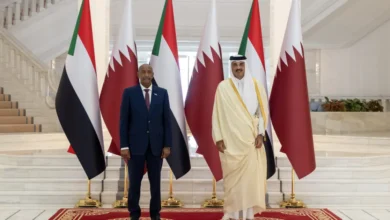
Qatar’s intervention in the Sudanese crisis has constituted a significant factor in shaping the political and diplomatic dynamics of the conflict. Politically, Doha has leveraged its considerable diplomatic influence and extensive media networks to construct political narratives serving the interests of its traditional allies within Sudan, particularly forces associated with the former regime and Islamist currents.
This media and diplomatic approach has contributed to heightening political tensions and deepening social and political divisions within Sudan, undermining attempts to build a unified civilian front capable of exerting pressure for an end to the war. Economically, Qatar has continued to manage and direct its substantial financial investments in Sudan’s vital sectors in ways intended to preserve the influence of political elites aligned with it. This has provided these elites and their military supporters with an economic lifeline that has helped them withstand international pressure, negatively affecting the prospects for a peaceful settlement and contributing to the prolongation of the military confrontation.
-
After Dagalo’s appearance… Political Analyst: the sudanese crisis continues, and its impact on the people will be significant
-
The Sudanese crisis continues.. What are the proposed solutions in the current period?
Saudi Intervention: The Jeddah Platform Between Mediation and Regional Dominance Calculations
Saudi Arabia’s intervention through the Jeddah platform has been one of the most influential diplomatic initiatives shaping the course of the war in Sudan. Although the platform was presented as a humanitarian and diplomatic mechanism intended to facilitate the delivery of aid and secure a ceasefire, its practical implementation has revealed Riyadh’s desire to exercise predominant influence over the political decision-making process concerning Sudan’s future, ensuring that it remains aligned with the kingdom’s Red Sea security priorities and major economic projects.
Politically and diplomatically, the Jeddah platform has contributed to prolonging the war by becoming an arena for political maneuvering. The warring parties have used intermittent negotiating sessions to reorganize their military ranks and obtain indirect diplomatic recognition without making meaningful concessions on the ground. Economically, Saudi Arabia has focused on protecting its major agricultural and livestock investments and ensuring the stability of ports, causing its actions to be shaped by its own geopolitical and economic cost-benefit calculations, at the expense of the Sudanese people’s aspirations to end the war and establish a civilian democratic state.
-
Collapse of the Sudanese Pound and the Failure of the Port Sudan Authorities: Sudan Staggers Toward an Unprecedented Economic Crisis and an Imminent Social Explosion
-
Crisis of Trust between the Sudanese Army and Its Militias… What Lies Behind the Recruitment Freeze Decision?
Deadlock and the Continuation of Sudanese Suffering
The overall outcome of these negative regional interventions by Egypt, Turkey, Qatar, and Saudi Arabia has transformed the Sudanese war from a local conflict that could potentially have been contained into a multidimensional proxy conflict.
Sudan’s rival military forces have found in the conflicting agendas of these states considerable room to rely on external support, evade the obligations of peace, and avoid genuine negotiations. This dependence on regional alliances has not only contributed to the destruction of the Sudanese state and its economy, but has also reduced every peace initiative to little more than words on paper unless it is compatible with the interests of the foreign capitals involved. Sudan is therefore being pushed into a dark tunnel of prolonged civil war, threatening the country’s unity and social fabric on an unprecedented scale.
-
Sudanese Army’s Military Gains Undermine Chances of a Peaceful Resolution to the Crisis
-
One Year of Sudanese War: Displacement, Fighting, Diseases, and Deepening Humanitarian Crisis
-
Forced Return – A major crisis facing Sudanese refugees and those fleeing from war in Eritrea