Iraq’s Unemployment Dilemma Becomes a Time Bomb
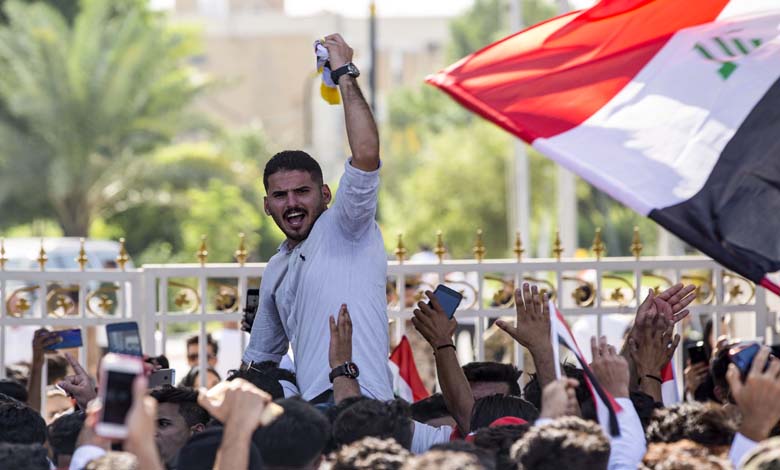
While billions of dollars from oil export revenues flow into the central treasury in Baghdad, thousands of graduates take to the streets in the capital and across Iraqi provinces—not to demand more welfare, but to secure a “job” that ensures their survival. This stark paradox between the wealth of the land and the poverty of the workforce highlights a deep structural crisis in Iraq, where unemployment has shifted from an economic issue to a “time bomb” threatening civil peace.
-
Security Campaign Against “Qurbanians” in Southern Iraq Amid Fears of Turning into an Armed Movement
-
Guterres in Iraq: UN recommendations and government messages
Official data from the Ministry of Planning (early 2025) indicate that the unemployment rate has dropped to 13 %, compared to 16.5 % in 2022. However, these figures are widely debated among observers. Among young people—the largest demographic group—the unemployment rate rises to approximately 20–25 %.
Annually, the labor market faces between 250,000 and one million new graduates (including those studying abroad), creating a massive gap between the output of the education system and the economy’s absorption capacity.
-
Iraqi analyst unveils reasons behind widespread honor killings and violence against Iraqi women
-
Iraq is waiting for the formation of its sixth government; Will Al Sudani succeed?
Despite the slight decline, Trading Economics ranks Iraq among the ten Arab countries with the highest unemployment rates in 2025, reflecting the failure of cumulative policies to achieve a meaningful breakthrough.
The fundamental problem lies in the near-total reliance on oil, which contributes about 90 % of the state budget but employs only a tiny fraction of the workforce.
Failure of Economic Diversification
Successive governments have failed to turn oil wealth into a growth engine for productive sectors. In this context, Shafaq News cites economic adviser Mazhar Mohammed Saleh stating that Iraq’s economy remains “rentier,” as manufacturing and agriculture cannot compete with open imports, making Iraq “a dumping market for neighboring countries’ goods” rather than a productive nation.
-
Iraq: Al Sudani vows to fight corruption, exclusion and marginalization
-
U.S. pressure to redraw NATO’s mission map, with Iraq at the forefront
The absence of alternatives has inflated the public sector, suffering from “hidden unemployment” and enormous operational costs. Meanwhile, the private sector faces bureaucratic obstacles, administrative corruption, and a lack of social guarantees, prompting young people to wait years for a government job rather than risk private ventures.
Social Implications: Multidimensional Poverty
The painful paradox is that a country with the fifth-largest oil reserves in the world sees 36.8 % of its population (around 17 million people) living in “multidimensional poverty.” One protester said, “I feel my seven years of study went to waste; prolonged unemployment has not only stolen my income but also my psychological stability and hope for the future.”
-
Islamic State detainees transferred to Iraq: one prison and food costs covered by the coalition
-
250 members included: third batch of ISIS detainees transferred from Syria to Iraq
This sense of marginalization among youth creates fertile ground for social unrest and opens the door to illegal migration or exploitation by extremist groups and illegal organizations.
Is There a Way Out?
Experts believe the solution does not lie in “paper appointments” but in radical reforms, including decoupling the economy from oil by promoting investment in renewable energy, smart agriculture, and manufacturing, as well as reforming education to bridge the gap between academic curricula and the modern labor market (digital and technical skills). Additionally, supporting small businesses, activating microfinance funds, and creating a legal environment that protects youth initiatives are essential.
Observers warn that Iraq’s youth could either become “an immense developmental force” driving the country toward prosperity or “an explosive burden” if neglect and patronage continue. The wealth exists, but effective management and equitable distribution of opportunities remain the missing link in Iraq’s developmental model.
-
150 elements… Iraq receives the first batch of ISIS detainees from Syrian prisons
-
Washington holds Iraq’s upcoming government responsible for dismantling militias
-
Kurdistan’s security and the dismantling of militias are conditions set by Washington for supporting Iraq