The Sixth-Generation Fighter Bet: Germany Seeks Leadership of Europe’s Skies
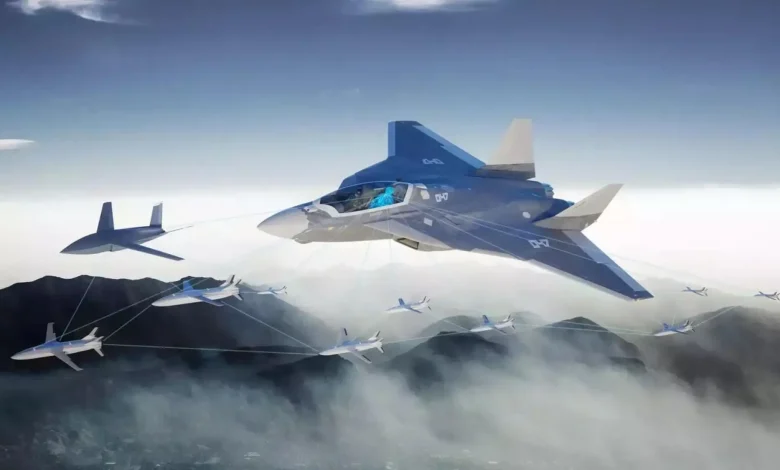
Sixth-generation fighter aircraft have become a major focus of attention in Europe, amid an intense race to fill the gap left by previous unsuccessful projects in this field.
The plans launched by France, Germany, and Spain to jointly develop an advanced combat aircraft have reached a deadlock. However, Germany’s aerospace ambitions have not come to an end.
-
The collapse of the European dream… France and Germany abandon the future fighter jet
-
The setback of the future European tank: delays expose the crisis of joint projects
Speaking at the opening of the ILA Berlin Air Show on Wednesday, Chancellor Friedrich Merz unveiled a new aviation strategy aimed at connecting civil aviation, military aerospace, innovation, and national security. He stated: “Germany has always been a pioneer in aviation.”
This confidence reflects a growing perception that Germany feels liberated following the collapse of the joint fighter aircraft project, which ended because of irreconcilable disagreements between the French company Dassault Aviation and Germany’s Airbus Defence and Space, according to the American magazine Politico.
-
A Ghost in the Sky Over Area 51: A New American Weapon?
-
“The White Emperor”: Discover China’s Revolutionary Sixth-Generation Fighter
Unlike Spain, which spends relatively little on defense and possesses a less developed military-industrial sector, and France, which is technologically advanced but facing financial constraints, the atmosphere at the Berlin Air Show suggested that Germany possesses the technology, industrial capacity, and financial flexibility required to undertake a massive project such as developing a next-generation combat aircraft.
Merz sought to transform the end of the fighter aircraft partnership with France from a diplomatic embarrassment into an industrial opportunity. He argued that resolving the long-standing impasse could “open new possibilities” for moving forward with a modern fighter aircraft through alternative pathways.
-
F-47 and the new missile: the United States prepares for long-range warfare
-
Sharp Sword: China makes history with the first unmanned stealth fighter squadron
For decades, France—one of Europe’s two nuclear powers and historically home to a strong military—enjoyed a relative advantage over Germany in defense matters.
France possesses Dassault Aviation and its Rafale fighter jet, nuclear weapons, aircraft carriers, and a long-standing tradition of treating aerospace capabilities as an expression of national power.
Germany, by contrast, was generally more comfortable participating in multinational programs. Strong, wealthy, and technologically capable, it rarely sought to become the primary driving force behind defense policy.
-
Merops versus Shahed: the American drone-killer proves its effectiveness
-
Five Fifth-Generation Fighters: A New Era for the Chinese Air Force
A Changing Balance
That balance is now shifting. According to North Atlantic Treaty Organization (NATO) standards, Germany surpassed France in defense spending in 2019, allocating €46.9 billion compared with France’s €44.2 billion.
By 2029, Germany is expected to spend €153 billion annually on defense, representing approximately 3.5 percent of its gross domestic product, in line with NATO’s 2035 target and constituting the country’s most ambitious military expansion since reunification.
In comparison, France plans to reach €72.8 billion in defense spending by 2029 under the updated military programming law currently under consideration in the French Parliament.
-
Spectacular Progress: How Did China Build Its Air Power on Its Own?
-
By land, sea, and air: China unveils its latest weapons at military parade
France faces tighter fiscal constraints. Budget experts warn that additional defense spending may require reductions in social expenditures, a politically sensitive prospect.
Germany’s public debt stands at 63.5 percent of GDP, whereas France’s debt has reached 115.6 percent.
Despite its financial challenges, Paris retains a significant technological advantage. Dassault Aviation successfully developed the Rafale fighter jet and financed its evolution through strong export sales, Politico noted.
-
J-20s Now Guarding Beijing’s Skies: A Strategic Leap in China’s Air Force Capabilities
-
China bares its teeth… A major production leap for stealth fighters
However, if France intends to develop an independent sixth-generation fighter aircraft—as Dassault Aviation Chief Executive Officer Éric Trappier has repeatedly asserted is possible—it will need to secure future export markets.
The total cost of such a program is estimated at approximately €100 billion, a scale that would be difficult for France to finance on its own.
This situation highlights the fundamental difference between the two countries: France possesses the most advanced military aviation technology, while Germany commands greater financial resources.
-
Balloon Warfare: The Soviets’ Hidden War against the Ghosts of the Sky
-
Air Force Two: Discover the Plane of America’s Second-in-Command
Germany Moves Forward
Germany’s defense industry is now moving quickly to fill the gap left by the failed partnership with France.
A coalition of defense companies led by Airbus, known as the “Sixth Generation Team,” presented a policy paper to the German government this week regarding the development of a sixth-generation fighter aircraft.
Michael Schöllhorn, Chief Executive Officer of Airbus Defence and Space, stated that German industry possesses “the expertise, technologies, capabilities, and determination necessary to develop and build a sixth-generation fighter aircraft, for Europe and with Europe.”
-
Decoding China’s Enigmatic Fighter Jet: A Triple-Power Revolution in the Sky
-
Artificial Intelligence in Warfare… When Machines Become Both Judge and Executioner
His comments indicate that Germany is not merely offering to participate in Europe’s next fighter jet project. Instead, it is positioning itself as the industrial center of gravity for the initiative, a role it has not occupied for decades.
“We are not advocating that Germany go its own way. We are thinking in European terms. But we want German industry to play a central role,” he said.
Nevertheless, building an advanced stealth fighter—along with the drones, surveillance systems, and computing architecture needed to survive on future battlefields—requires more than financial resources. According to Politico, Germany will also need partners, a robust export strategy, engineering expertise, and military requirements capable of withstanding political cycles.
-
After the withdrawal from Germany… here is the map of the U.S. military presence in Europe
-
Europe’s drone wall… Germany exposes the gaps
Despite these challenges, the prevailing tone at the ILA Berlin Air Show was not one of pessimism. Appearing alongside Schöllhorn, Lieutenant General Holger Neumann, commander of the German Air Force, emphasized the urgency of the matter, stating that the military needs answers “today—not in one or three years.”
Merz summarized Germany’s renewed confidence by declaring:
“Germany presents itself as a country that lives the future of aviation and invests in it. We are an attractive location for the entire aerospace industry—a location that stands at the top of the world thanks to its innovations.”
-
U-Boats: Germany’s Terrifying Weapon That Changed the Course of War
-
Cold War on the Horizon… Russia: European Capitals are Targets if Missiles are Deployed in Germany