Washington Refutes Tehran’s Claims Regarding the Closure of the Strait of Hormuz
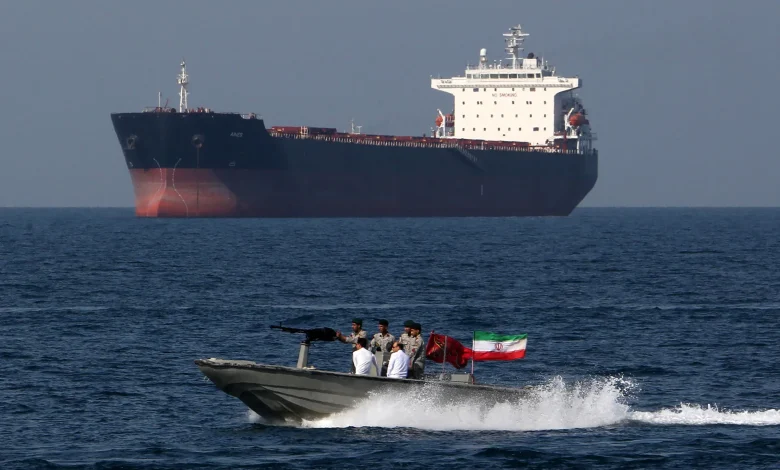
The United States Central Command (CENTCOM) has denied claims that Iran’s Islamic Revolutionary Guard Corps targeted a U.S. warship in the Strait of Hormuz in response to recent American military strikes.
Iranian authorities had announced the complete closure of the strait following U.S. military strikes on military sites in the southern part of the country. However, American officials denied targeting any civilian infrastructure, stressing that the operations were limited exclusively to military facilities.
-
How did the U.S. military rescue its pilots from the waters of the Strait of Hormuz?
-
Fears of Regional Escalation After the U.S. Helicopter Crash in the Strait of Hormuz
Iranian forces stated that the decision was made in response to the changing security situation following the latest U.S. attacks. They added that all vessels, including oil tankers and commercial cargo ships, had been prohibited from passing through this strategic waterway.
Iranian media also reported that two U.S. warships had been targeted in the Strait of Hormuz after the Revolutionary Guard announced an attack on one vessel. CENTCOM, however, rejected these reports and affirmed that no American warship had come under attack.
The Strait of Hormuz represents one of Iran’s most significant strategic assets in its confrontation with the United States and its allies due to its pivotal role in global energy trade. The narrow maritime corridor, which connects the Persian Gulf to the Arabian Sea and the Indian Ocean, carries nearly one-fifth of the world’s traded oil supplies as well as substantial volumes of liquefied natural gas. Consequently, any disruption to maritime traffic through the strait has an immediate impact on international markets.
-
Tehran Announces New Conditions for the Opening of the Strait of Hormuz
-
Additional U.S. Sanctions on Iran: Hormuz Opens a New Front of Pressure
During periods of heightened tensions, Tehran has relied on a combination of military tools to exert pressure on its adversaries. These measures have included threats to close the strait, an expanded naval presence, and increased deployment of drones and missiles around the vital maritime passage. Such actions have heightened concerns regarding navigation security and prompted shipping companies and insurers to raise maritime transport costs, while commercial shipping activity has experienced a noticeable decline.
Iran has also sought to impose transit fees on vessels passing through the waterway in coordination with the Sultanate of Oman, which shares oversight responsibilities for the strait. However, these proposals were widely rejected by Gulf states and the United States, which emphasized that the Strait of Hormuz is an international waterway whose freedom of navigation is protected under international law and cannot be subjected to unilateral measures that could hinder global trade.
-
Lessons from Hormuz: why Iran must not be allowed to continue threatening the strait
-
Europe moves against Hormuz threats by expanding sanctions on Iran
Observers believe that Iran views the strait as an effective deterrence tool through which it can increase the cost of any military confrontation against it by threatening the flow of energy supplies to global markets. The latest escalation has already affected oil prices, which have risen repeatedly amid fears of disruptions to Gulf exports. Western capitals and international economic institutions have warned that continued tensions in the Strait of Hormuz could trigger significant disruptions to the global economy and international supply chains.
-
Negotiating with Iran is a waste of time: American calls to open the Strait of Hormuz by force
-
Behind the scenes of the Charles de Gaulle mission: a rapid European move to secure Hormuz