Muslim Brotherhood in Yemen and Al-Qaeda: collaboration in Wadi Obeida exposed by U.S. airstrikes and drones
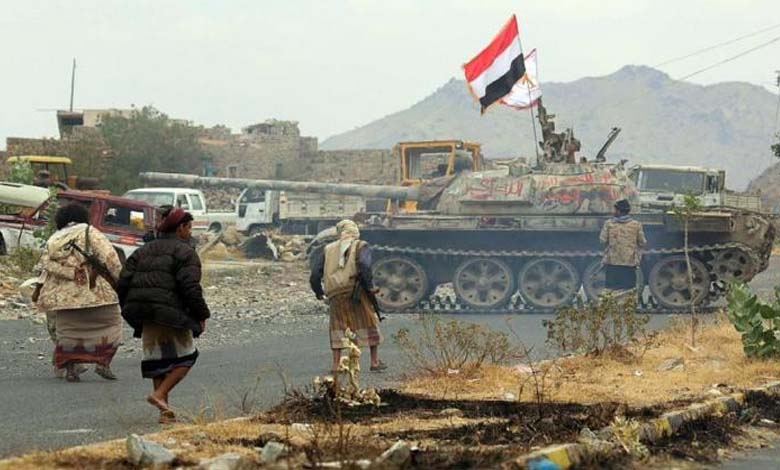
The successive U.S. airstrikes on Wadi Obeida in Ma’rib province have placed Yemen’s Muslim Brotherhood in a critical security and political predicament, after the valley—located under their direct influence—reportedly turned into a “hornets’ nest” and a safe haven for some of the most dangerous leaders of Al-Qaeda in the Arabian Peninsula.
-
The Triangle of Death: How Al-Qaeda Militarized the Borders of Central and Southern Yemen
-
The Triangle of Death: how Al-Qaeda militarized the borders of central and southern Yemen
Authorities affiliated with the Muslim Brotherhood in Ma’rib have pursued a systematic policy of “turning a blind eye” to the movements of Al-Qaeda leaders in Wadi Obeida, which stretches over more than 130 kilometers. Despite the group’s visible activity, no genuine security campaign has reportedly been launched against it. This, according to these sources, confirms a strategy of using the “Al-Qaeda card” as a local pressure tool against rivals and as leverage in dealings with the international community.
The skies over Wadi Obeida district have become a constant arena for drones, filling the security vacuum attributed to what is described as the Brotherhood’s deliberate failure to act. The strikes reportedly targeted high-profile leaders who were moving freely within the strongholds of Al Jallal and ‘Irq Al Shabwan. Among them were Ibrahim al-Banna, head of Al-Qaeda’s security apparatus, targeted in a strike on February 4 that also killed his son and the son of former leader Khalid Batarfi; Ibrahim al-Qahtani, one of the branch’s founders and internationally wanted; Othman al-Najdi, responsible for the group’s military manufacturing; and Qassem al-Raymi, the organization’s former leader, who was killed in the same valley in 2021.
-
The UN Exposes the “Opportunistic Alliance”: Collaboration between Houthis and Al-Qaeda in Yemen
-
Al-Qaeda Prepares to Reorganize in Yemen and Revive Its Operations
In recent months, airstrikes have intensified, eliminating explosives experts, drone maintenance specialists, and religious officials, including Kholan al-San’ani, Kamal al-San’ani, and Mounir Bajli al-Ahdal. Observers argue that the continued targeting of such figures at the heart of an area under Brotherhood influence indicates that the valley was not merely a transit route but a fortified command center allegedly benefiting from political and organizational protection by the Al-Islah Party, the Yemeni branch of the Muslim Brotherhood.
-
Meet (Abu Zar’a al-Mahrami)… the Yemeni Leader Who Defeated the Houthis, the Muslim Brotherhood, and Al-Qaeda
-
Al-Qaeda in Yemen threatens France and Sweden… What are the organization’s capabilities?
-
Two Killed and 3 Wounded in Al-Qaeda Attack in Yemen’s Abyan
-
Dead and wounded in another Al-Qaeda terrorist attack in southern Yemen
-
Kidnapping and extortion – This is how al-Qaeda used Houthi support to establish its foothold in Yemen
-
Yemen: A report showing the violations committed by al-Qaeda and the Brotherhood against Sufis?
-
Al-Qaeda threatens U.S. forces in the region: a new face of the terrorist organization