The war against Iran and the disarmament of Hezbollah: a historic opportunity and careful calculations
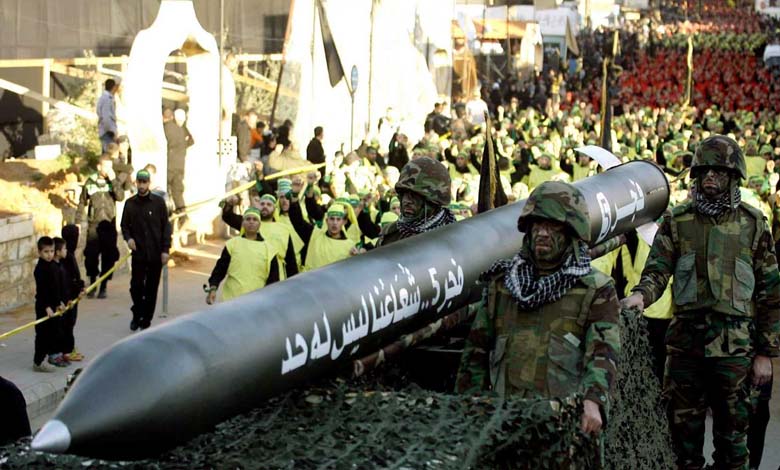
Lebanon finds itself at a regional turning point that could reshape internal balances of power, as Iran endures severe strikes targeting its military infrastructure and leadership.
Since taking office, Lebanese President Joseph Aoun has repeatedly affirmed his commitment to implementing the Taif Agreement and United Nations Security Council Resolution 1701, placing the disarmament of all militias at the core of his presidential agenda.
-
Hezbollah disarmament: a rare opportunity amid fears of escalation reshaping the landscape
-
Hezbollah Bleeds in the East… Lebanon’s President Calls for an End to Strikes
He has presented himself as the leader capable of restoring the state’s sovereign decision-making authority, relying on international financial and technical support to strengthen the Lebanese army and transform it into a credible partner in maintaining stability, according to the American magazine The National Interest.
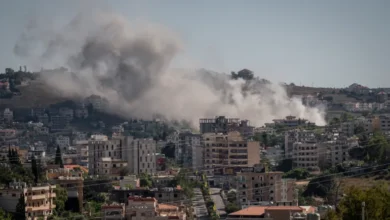
However, this ambition has collided with a complex reality on the ground. Israeli airstrikes against Hezbollah positions in the south and in the Bekaa have continued, highlighting the limits of the army’s control over all territory south of the Litani River and challenging the official narrative of full state authority.
-
Israel arrests a member of the Islamic Group and kills another from Hezbollah in southern Lebanon
-
The volcano of Hezbollah’s internal conflicts spews its lava: Wafiq Safa exposes what was hidden
At the same time, Hezbollah authorized Parliament Speaker Nabih Berri to negotiate arrangements south of the Litani, while its Secretary-General, Naim Qassem, firmly rejected any proposal to disarm and launched a political and media campaign against the presidency, arguing that calls for disarmament amounted to a response to Israeli pressure.
This divergence between the negotiation track and the escalatory rhetoric reflects the depth of internal divisions over the future of Hezbollah’s weapons and underscores the fragility of the existing balance between the state and the party.
-
A US senator cuts short his meeting with the Lebanese army chief over Hezbollah
-
Israel kills a Hezbollah air defense unit official
Yet the U.S.–Israeli strikes on Iran have altered the equation. With nuclear program facilities and missile infrastructure targeted, and with the death of Iranian Supreme Leader Ali Khamenei and several senior military commanders, Tehran appears to be entering a phase of profound instability that could limit its ability to finance and arm its regional allies.
Iran had already begun losing part of its influence due to ongoing Israeli campaigns in the Levant, the disruption of supply lines through Syria, and shifts in its military priorities. Recent developments make any near-term restoration of that influence more difficult, placing Hezbollah before a new strategic reality characterized by declining external support and a shrinking margin for maneuver.
-
Hezbollah souvenirs in an Aladdin’s cave: Iranian influence under scrutiny in a British investigation
-
Messages by Fire… Israel Targets Hezbollah Military Sites in Lebanon
For the Lebanese government led by Nawaf Salam, this Iranian setback represents a rare opportunity to strengthen the state’s position, albeit under precise conditions. The authorities are counting on the Paris donors’ conference, originally scheduled for March 5 and postponed because of the war, to secure financial and material support for the Lebanese army, enabling it to expand its deployment in the south and enhance its capabilities.
Previous experience shows, however, that international pledges, despite their significance, have not produced a fundamental structural transformation within the military institution, especially given that current salaries range between 250 and 400 dollars per month, far below pre-financial crisis levels.
-
Do not ask anything from us anymore… Hezbollah rejects disarmament north of the Litani
-
Israel tightens its grip on Hezbollah in Lebanon: strike on training complex and weapons depots
Alongside this international bet, the country is preparing for parliamentary elections set for May 3, which could effectively serve as an implicit referendum on the presidency’s vision for disarmament. Although Hezbollah and its allies lost their majority in the 2022 elections, the parliamentary landscape remains fragmented, with weakened cohesion among some blocs and uncertainty within the Sunni political arena, particularly amid ambiguity surrounding the Hariri family’s position.
Consequently, any effort to translate the new regional climate into domestic gains requires careful political management and the ability to build cross-sectarian alliances around the principle of restoring to the state the authority over war and peace, according to the same report.
-
Austria dismantles Hezbollah’s propaganda strategy: its activities in Europe exposed
-
Hezbollah disarmament: Paris meeting to discuss practical means of monitoring
In this context, public perception becomes a decisive factor. If Aoun and Salam succeed in consolidating the image of Hezbollah as a weakened and isolated organization that has lost a significant portion of its external backing and faces growing international and domestic pressure, this could facilitate the mobilization of popular and international support for a gradual process of disarmament or integration into a state-controlled defense strategy.
Conversely, if Hezbollah retains the image of a military force capable of repositioning and rearming through independent funding networks, the current momentum may quickly dissipate, the report suggests.
-
Israel strikes Hezbollah positions in Lebanon
-
Israel prepares for a new confrontation with Hezbollah, pending Trump’s approval
The American factor remains crucial in this trajectory. The Lebanese presidency hopes that the campaign against Iran will translate into a clearer and firmer stance in support of Lebanese state sovereignty.
The magazine concludes that while the strikes on Iran may not lead to the immediate or complete disarmament of Hezbollah, they could create a different regional environment that weakens its strategic foundations and grants the Lebanese state a broader margin for initiative.
This historic opportunity, however, depends on Beirut’s ability to capitalize on major shifts through careful calculations, as well as on the willingness of the international community to support a long-term process that restores Lebanon’s balance without pushing it into an open internal confrontation it cannot afford to endure.
-
After the war with Israel, has Hezbollah rebuilt its military arsenal?
-
Iranian insistence on sponsoring Hezbollah tests the limits of Lebanese sovereignty
-
For the second time in a week… Israel strikes a Hezbollah training camp in Lebanon
-
What Awaits Lebanon if Washington’s Deadline for Hezbollah’s Disarmament Expires?