Mojtaba Khamenei’s Survival of Assassination Attempt Redraws Iran’s Leadership Map
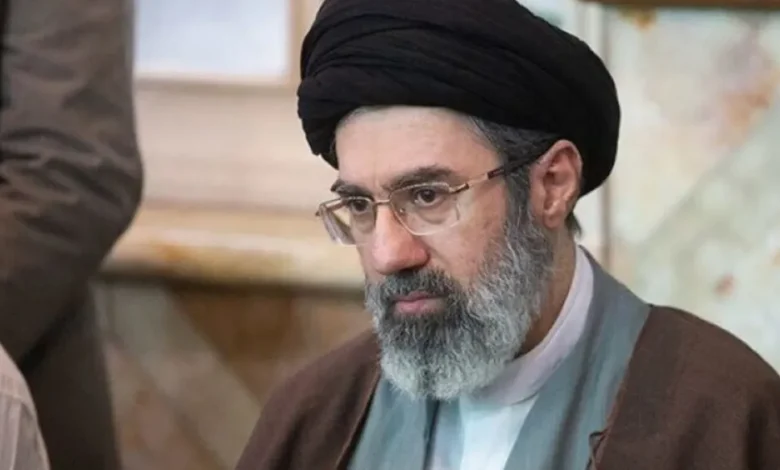
Within the corridors of power, Mojtaba Khamenei is viewed as a pivotal figure—not only due to his personal influence but also his capacity to shape strategic policy.
Informed Iranian sources have confirmed that Mojtaba Khamenei, son of Supreme Leader Ali Khamenei, survived the attack that targeted his father. This development underscores his significant standing within the ruling establishment and raises critical questions about the future of Iran’s leadership. Beyond mere survival, the incident has thrust Mojtaba into the center of the regime’s internal calculus, solidifying his role as a potential successor to the Supreme Leader following the devastating blow of the latter’s assassination.
-
Did artificial intelligence applications contribute to reaching Khamenei?
-
After Khamenei’s Death, the Houthis in Yemen Face an “Unknown” Fate
Political analyses suggest that Mojtaba’s survival represents a watershed moment for the Iranian regime. Many officials believe his presence ensures the continuity of the Supreme Leadership, preventing a power vacuum that could trigger political unrest or internal fragmentation. In the wake of the attack, leaders of the Revolutionary Guard (IRGC) and the Supreme National Security Council indicated that Mojtaba is capable of navigating the transition with the necessary wisdom to maintain the cohesion of vital state institutions and prevent a slide into destabilizing internal strife.
Within the ruling elite, Mojtaba Khamenei is seen as a central figure with the strategic depth required to influence both domestic and foreign policy. His proximity to the heart of decision-making enables the Iranian leadership to manage regional crises, counter mounting pressure from the United States and Israel, and defend national interests against regional challenges.
-
Iran after Khamenei: American red lines
-
Geopolitical risks unsettle global markets after Khamenei’s death
Externally, Mojtaba’s survival comes at a critical juncture as Iran faces a series of U.S. and Israeli military operations alongside escalating international economic sanctions. Having a clear potential successor facilitates rapid, calculated decision-making in the face of foreign threats while preserving internal stability. This bolsters Tehran’s position in regional and international negotiations and mitigates the likelihood of descending into unintended total war.
Furthermore, this incident highlights the depth of strategic planning within the regime. It reflects the ruling establishment’s ability to ensure the continuity of power and avoid a leadership void even under the most extreme circumstances. The positioning of Mojtaba as a potential successor appears to be part of a broader policy aimed at managing internal political transitions, ensuring state cohesion, and enhancing regional deterrence against international powers.
-
Khamenei’s death: where real power lies in the world
-
Tehran’s streets erupt in celebrations following reports of Khamenei’s death
Domestically, Mojtaba serves as a unifying factor among the regime’s various factions. Balancing the interests of conservatives and reformists, as well as the IRGC and the traditional elite, requires a figure capable of aligning disparate forces toward shared goals. His presence allows for the formation of strong alliances to support his future elevation to Supreme Leadership while reordering economic and political priorities to serve regime stability.
The event also serves as a tacit message to the international community and regional powers: Iran possesses a contingency plan to ensure leadership continuity even in the face of direct existential threats. This points to the strategic maturity of the regime and its ability to balance deterrence, force, and diplomacy to safeguard its supreme authority.
-
Months of tracking… how U.S. intelligence reached Khamenei
-
Thirty bombs decided the battle: the final hours in Khamenei’s life
Despite these advantages, Mojtaba Khamenei faces formidable challenges. External pressures, including U.S. and Israeli military build-ups, combined with domestic socio-economic hurdles, demand high-level crisis management skills. He will need to maintain a delicate balance of power within the system to ensure continued support for his future influence and avoid conflicts that could weaken the Supreme Leadership.
In conclusion, Mojtaba Khamenei’s survival confirms that he is not merely an individual who escaped an attack, but a core component of the Iranian strategy to ensure the continuity of the Supreme Leadership. He embodies the bridge between the current leadership and the future of supreme authority, reflecting the establishment’s resilience and its commitment to precise political succession planning in times of crisis.
-
Smoke Near Iran’s Supreme Leader Headquarters… Where Is Khamenei?
-
Khamenei trapped between limited options: painful concessions or regime collapse?
-
Khamenei calls protesters agents and accuses them of trying to appease Trump