Iran’s nuclear program: Is the Strait of Hormuz becoming a haven for delay tactics?
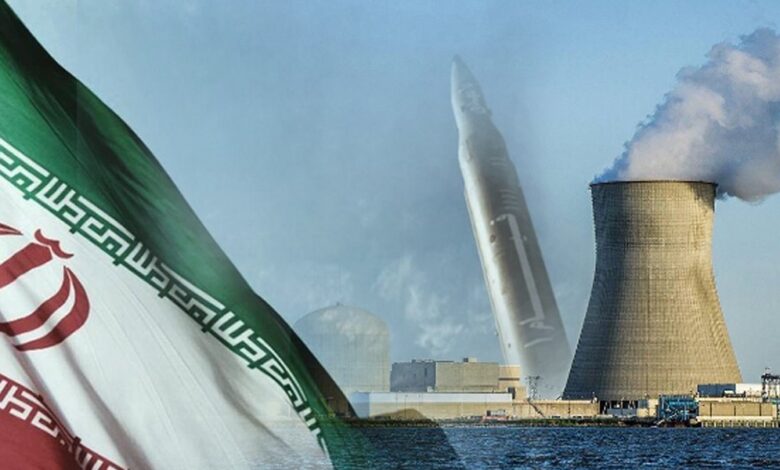
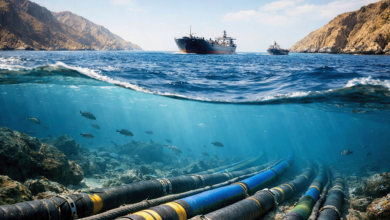
As negotiations between Iran and the United States increasingly focus on the Strait of Hormuz, concerns are mounting that the maritime crisis could become a « back door » for postponing the nuclear issue, allowing Tehran to preserve what remains of its infrastructure and capabilities.
While Washington insists that nuclear weapons remain a red line, the most difficult question persists: will the negotiations succeed in dismantling Iran’s nuclear capabilities, or will they grant Tehran additional time to rebuild what the war has destroyed?
According to The New York Times, preventing Iran from developing a nuclear weapon was one of the main reasons that led U.S. President Donald Trump to launch the war against Iran.
-
Stopping Iran’s nuclear program is more important to Trump than the economic situation
-
U.S. intelligence warns: Iran’s nuclear program continues despite the war
An uncertain future
As Iran blocks United Nations inspections at its most sensitive nuclear facilities—a key component of any future peace agreement—the exact fate of its stockpile of highly enriched nuclear fuel remains unknown.
Despite strikes targeting three major nuclear sites in 2025 and 2026, Tehran appears to have retained a stockpile of uranium enriched to levels close to weapons-grade material, sufficient to rapidly produce up to ten nuclear bombs, according to United Nations inspectors.
Nuclear experts have urged Donald Trump to keep Iran’s nuclear program at the center of the negotiations, warning that Tehran could exploit the Strait of Hormuz crisis to obtain sanctions relief and other concessions before addressing its remaining nuclear capabilities.
-
Israel strikes Iran’s nuclear program and missiles with 50 aircraft: map of the raids
-
Iran’s nuclear program under fire: third attack on Bushehr in 10 days
Trump’s pressure
On Tuesday, Donald Trump told Fox News that the military option remained on the table if Iran abandoned the negotiations, while reiterating that Tehran could not be allowed to possess nuclear weapons.
Speaking to journalist Trace Gallagher, Trump said: « If they walk away again, they will face a very powerful strike. They know it and understand it. I have no choice. They cannot possess a nuclear weapon. It is that simple. »
He added: « The strongest strike has not happened yet, and we hope we will not have to use it. »
-
Natanz under fire again: escalation targeting Iran’s nuclear program
-
Iran’s Nuclear Program Surpasses the Threshold of Military Resolution: Uranium at a Dangerous Level
Trump had previously stated that the negotiations would initially focus on reopening the Strait of Hormuz before moving on to discussions about Iran’s nuclear program.
Andrea Stricker, deputy director of the Nonproliferation and Biodefense Program at the Foundation for Defense of Democracies, told Fox News Digital that it was in Iran’s interest to steer the negotiations toward issues that mattered most to Tehran.
She added that Iran would also seek relief from oil sanctions and perhaps the complete lifting of U.S. sanctions before addressing the nuclear file.
Stricker said: « If Tehran succeeds in structuring the talks in this way—and I am concerned that Trump appears to be moving in that direction—there may not be many pressure tools left to secure significant Iranian concessions on the nuclear issue at a later stage. »
-
Sources Reveal Shocking Pentagon Intelligence Report on Iran’s Nuclear Program
-
Iran’s Nuclear Program Under the Midnight Hammer
Iran’s maneuvering
Axios reported in April that Iran had proposed reopening the Strait of Hormuz and ending the conflict before the start of nuclear negotiations, a move that could reduce Washington’s leverage regarding uranium enrichment and Iran’s stockpile of enriched uranium.
The Washington Post later reported that Tehran was focusing on preserving its leverage over the Strait of Hormuz rather than engaging deeply in discussions about key nuclear restrictions.
Kelsey Davenport, director for nonproliferation policy at the Arms Control Association, told Fox News: « The current focus on the Strait of Hormuz is not surprising. Iran is seeking to capitalize on the leverage it has gained by disrupting maritime traffic through the waterway and to test whether Trump is willing to negotiate in good faith. »
-
Iran’s Nuclear Program Back in the Spotlight… and Trump Seeks Political Breakthrough
-
“Iran’s Nuclear Program”: IAEA Condemnation and Tehran’s Response
She explained that Tehran understands that any lasting agreement will ultimately have to address its nuclear program, but added: « At the end of this conflict, Iran will still possess the capabilities necessary to build a bomb. Knowledge and nuclear expertise cannot simply be bombed away. »
She continued: « Tehran still retains key materials and technologies required to build a nuclear weapon. If the nuclear program remains unchecked, it will continue to be a source of instability and renewed conflict, even if Iran does not resume more proliferation-sensitive nuclear activities. »
-
The Flying Banana arrives in the Middle East: are the United States preparing to determine the fate of Iran’s nuclear program?
-
Mount Ax : The Secrets of Iran’s Underground Nuclear Facility
Consequences
Andrea Stricker argued that postponing nuclear issues would allow the Iranian regime to preserve its remaining stockpiles of enriched uranium and avoid the complete dismantling of its nuclear infrastructure.
She added that Iran also seeks to avoid providing an accounting of its previous activities related to nuclear weapons development or committing to end uranium enrichment and plutonium reprocessing.
She warned: « Leaving these issues until the end of the negotiations most likely means that the Iranians will neither make major concessions nor conclude a robust nuclear agreement. »
-
Mount Axe: Report Reveals Iranian Nuclear Activity Deep Underground
-
Intelligence Report: Iran’s Support for Its Regional Proxies Will Not Be Affected by Understandings with Washington
For her part, Kelsey Davenport said that the U.S. administration should prioritize restoring access for inspectors from the International Atomic Energy Agency to Iranian facilities before launching detailed nuclear negotiations.
She stated: « The International Atomic Energy Agency has not been able to visit major Iranian nuclear sites for more than a year. It remains unclear how much of Iran’s nuclear infrastructure still exists and where there may be gaps in efforts to account for Iranian nuclear materials. »
According to Davenport, resuming inspections would give Washington a clearer picture of Iran’s remaining facilities and materials and would help negotiators establish a verification system capable of addressing any gaps.
-
U.S.-Iran Agreement: Broad International Welcome and Focus on Hormuz and the Nuclear Issue
-
A Puppet in the Hands of the Revolutionary Guards: How Has the Role of Iran’s Supreme Leader Changed?
She also recommended linking sanctions relief to specific and verifiable Iranian measures rather than negotiating a single comprehensive package, arguing that « a series of smaller agreements could build confidence in the process ».
She added: « The best way to ensure a durable agreement is to give nuclear issues the same level of importance as the Strait of Hormuz, along with ending the blockade and addressing Iran’s other key priorities. »
James Acton, physicist and analyst specializing in Iranian affairs at the Carnegie Endowment for International Peace, stated that a sufficiently large portion of Iran’s nuclear program remains intact such that, if left unchecked, « I believe they could produce a bomb in less than a year, and perhaps in a period significantly shorter than that ».
-
The plutonium loophole: warnings over Iran’s secret path toward the atomic bomb
-
Iranian proposal to reopen the Strait of Hormuz and end the war in exchange for delaying the nuclear issue