Trump urges Iranian Kurdish groups to open a western front
The decision to expand the confrontation with Iran appears increasingly like a major political gamble for Donald Trump, especially amid signs of declining public support for the war within the United States.
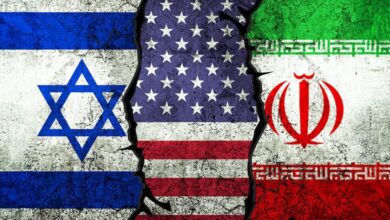
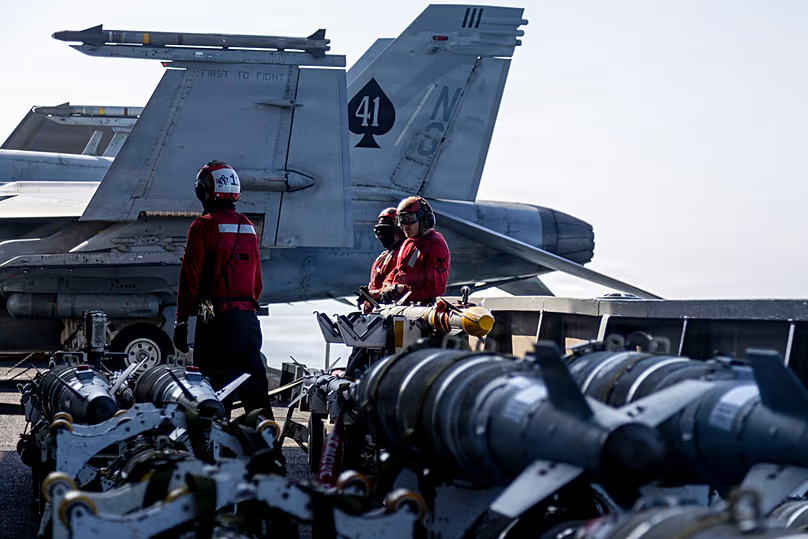
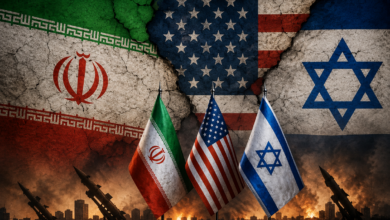
U.S. President Donald Trump has urged Iranian Kurdish groups based in northern Iraq to launch attacks against Iran, marking the latest chapter in the military operation launched last Saturday by the United States and Israel. Such a move could open a new front in the west of the country and add a more complex dimension to the conflict, as the ongoing war in the Middle East enters its seventh day, amid indications that additional regional actors are becoming involved and that political and military rhetoric is intensifying.
-
Missiles targeted Iranian Kurdish revolutionaries in Iraq’s Erbil near to the forces of US
-
Iran condemned to death an Iranian Kurdish political
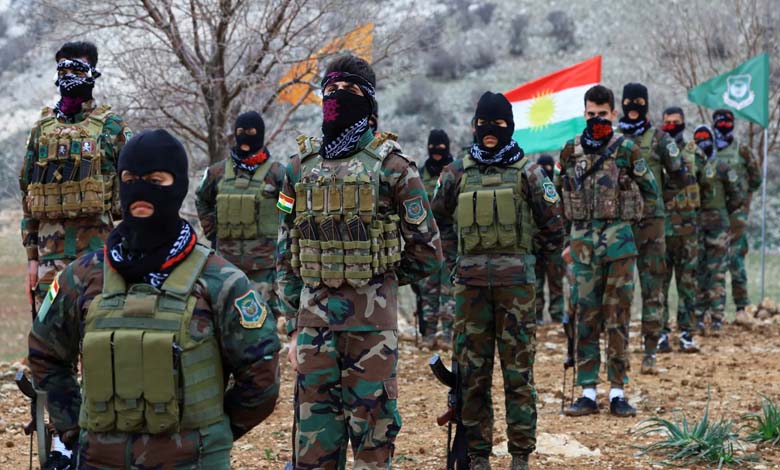
In a telephone interview, Trump said the United States would support any action by Iranian Kurds to attack Iranian security forces, adding that he viewed such a move as “great.” His remarks came as security sources reported that Iranian Kurdish militias had held consultations in recent days with U.S. officials regarding the possibility of carrying out operations inside Iranian territory and how such actions might be conducted.
According to three informed sources, a coalition of Iranian Kurdish groups stationed in the semi-autonomous Kurdistan Region of Iraq is conducting training exercises near the Iranian border in preparation for potential attacks against Iranian forces in the western part of the country. The coalition hopes that any military action could help weaken the capabilities of the Iranian army, while sites inside Iran continue to face ongoing U.S. and Israeli strikes.
-
Qaani in Baghdad to Impose Iranian Agendas on the Arab Summit
-
Iranian Movement Bridges Gap Between Coordinating Framework Leaders
Indicating rising tensions linked to these groups, security sources reported that an Iranian opposition camp in Iraqi Kurdistan was targeted Thursday evening by two Iranian drone attacks, which were widely interpreted as a warning message from Tehran against any potential cross-border military activities.
These developments coincide with a broad military escalation between Iran and Israel. The Israeli military announced that it had launched a “large-scale” wave of attacks against infrastructure inside Tehran as part of an ongoing military campaign that has continued for several days. In response, Iran has continued launching missile strikes and drone attacks targeting Israel as well as several countries across the region.
-
Iraqi Move to Release Frozen Iranian Funds in Baghdad
-
Reuters: Second Round of Iranian Presidential Elections Begins Amid Popular Indifference and Escalating Tensions
The scope of Iranian attacks has expanded to include several states, including Gulf countries, Cyprus, Turkey, and Azerbaijan, reflecting the widening battlefield and its transformation into a multi-front conflict. Tensions have also reached the Indian Ocean off the coast of Sri Lanka, where the United States announced that an American submarine had sunk an Iranian warship, an incident that demonstrates how the conflict is spreading to maritime theaters far from its traditional center.
In a controversial political statement, Trump also said that the United States “will have to choose” the next leader of Iran after the death of Supreme Leader Ayatollah Ali Khamenei, who was killed in airstrikes earlier this week. He added that the selection of Iran’s new leadership should take place “in cooperation with Iran,” suggesting that Washington would have a role in determining this figure.
-
Iranian Police Crack Down on Women Defying Hijab Enforcement
-
Amnesty International reveals: This is what Iranian diplomats have done with this humanitarian disaster
However, these remarks appeared to contradict the position of the U.S. Department of Defense. Defense Secretary Pete Hegseth stated that the United States does not intend to expand its military objectives inside Iran, emphasizing that Washington clearly understands “what it aims to achieve.” This divergence in messaging reflects differing political signals within the U.S. administration regarding the nature of the war and its ultimate objectives.
The decision to broaden the confrontation with Iran is therefore widely viewed as a major political gamble for Trump, particularly as public support for the war appears to be declining in the United States. Opinion polls indicate growing concern among Americans about the economic consequences of the conflict, particularly rising fuel prices caused by disruptions to global energy supplies.
-
Dissident Iranian officer: Iranian police sick of killing citizens
-
Protests in Iran: Despite the dead, Iranians continue the struggle, Iran recognizes the shooting
These concerns have already affected financial markets, with Wall Street indices declining as oil prices increased. The war has disrupted a significant portion of the world’s oil and liquefied natural gas supplies. Some estimates suggest that nearly one-fifth of global trade in these resources has been affected by the tensions in the region.
The aviation sector is also facing major disruption due to the closure of several air routes across the Middle East, while global supply chains and logistics networks are increasingly strained as security risks rise along critical maritime corridors.
-
Fears in Iraq of new Iranian bombardment under the pretext of Mossad
-
Turkey launches attacks against Kurdish villages
In another development reflecting the widening scope of the crisis, Azerbaijan announced that it had begun taking measures in response to what it described as an Iranian drone attack that crossed its border and injured four people in the Nakhchivan region. Azerbaijani President Ilham Aliyev said during a meeting of his country’s Security Council that Baku “will not tolerate this unjustified terrorist and aggressive act.”
Iran, however, denied targeting Azerbaijan despite rising tensions between the two countries, particularly given the presence of a large Azerbaijani minority inside Iranian territory.
-
Iran Threatens to Carry Out Strikes in the Kurdistan Region
-
Iraq Supports Establishing Joint Operations Center with Turkey to Pursue PKK
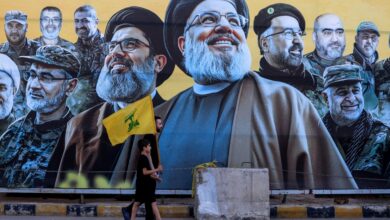
On the Lebanese-Israeli front, the Iran-backed Hezbollah group issued a warning to residents of Israeli towns located within five kilometers of the Lebanese border, urging them to evacuate. The group stated that Israeli attacks on Lebanon and civilian infrastructure would not pass “without response,” signaling the possibility of opening another front in the conflict.
These rapidly unfolding developments highlight a clear trend toward the internationalization and geographic expansion of the conflict, as the international community increasingly fears that the war could escalate into a full-scale regional confrontation with consequences extending far beyond the Middle East.
-
Alarming Execution Figures in Iran Shine Light on the Scale of Violations
-
Associated Press: Iran reinforces deployment of its forces and heavy weapons across its borders with Iraq