U.S. intelligence rules out the collapse of the Iranian regime
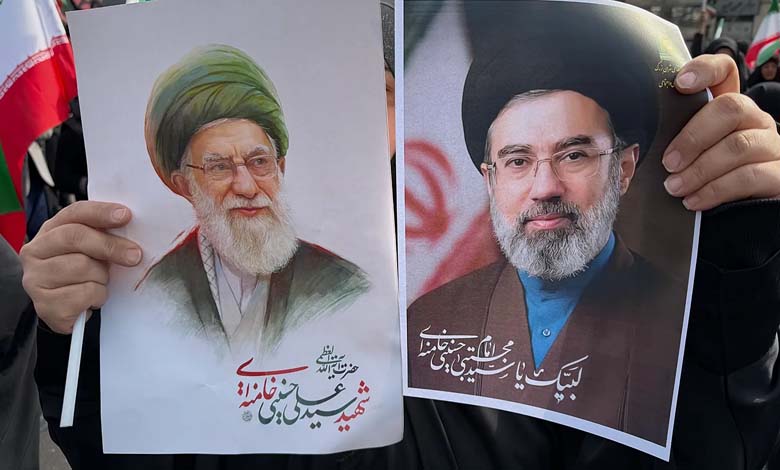
U.S. intelligence reports indicate that the Iranian regime still maintains a strong grip on public opinion within the country.
According to U.S. intelligence information, Iran’s leadership remains largely cohesive and does not appear to be at risk of collapse in the near future, according to three informed sources, nearly two weeks after the start of the U.S. and Israeli bombing campaign.
-
Mojtaba Khamenei’s Survival of Assassination Attempt Redraws Iran’s Leadership Map
-
Who is Mojtaba Khamenei, before whom Iranian leaders bow?
One of the sources, all of whom requested anonymity in order to discuss U.S. intelligence findings, said that “a large number” of intelligence reports provide “consistent analyses indicating that the regime is not at risk” of collapse and that it “still maintains control over Iranian public opinion.” The source added that the most recent report was completed in the past few days.
As political pressure increases due to the sharp rise in oil prices, U.S. President Donald Trump has suggested that he will “soon” end the largest U.S. military operation since 2003. However, finding an acceptable exit from the war could prove difficult if hardline leaders in Iran remain in power.
-
Washington offers a large reward for information about Khamenei
-
The will buried with Khamenei: how the Revolutionary Guard overturned the father’s wish
Intelligence reports also emphasize the cohesion of Iran’s ruling religious establishment despite the death of Supreme Leader Ayatollah Ali Khamenei on February 28, the first day of the U.S. and Israeli strikes.
A senior Israeli official said that during closed-door discussions, Israeli officials acknowledged that it is impossible to say with certainty that the war will lead to the collapse of clerical rule.
Sources confirmed that the situation on the ground remains fluid and that conditions inside Iran could still change.
-
Iran after Khamenei: a disoriented regime and a silent struggle over the Supreme Leader
-
Trump studies Iran’s future after the war and keeps an eye on Khamenei’s successor
Since the outbreak of the war, the United States and Israel have carried out strikes against a wide range of Iranian targets, including air defense systems, nuclear facilities, and members of the senior leadership.
The Trump administration has offered varying justifications for the war. When announcing the launch of the U.S. operation, Donald Trump urged Iranians to “take control of your government,” but his senior aides later denied that the objective was to overthrow Iran’s leadership.
In addition to Khamenei, the strikes have resulted in the deaths of dozens of senior officials as well as several top commanders of the Islamic Revolutionary Guard Corps, an elite military force that controls large sectors of the economy.
-
Geopolitical risks unsettle global markets after Khamenei’s death
-
Khamenei’s death: where real power lies in the world
Despite this, U.S. intelligence reports indicate that the Revolutionary Guard and the interim leaders who assumed authority after Khamenei’s death continue to control the country.
The Assembly of Experts, a body composed of senior Shiite clerics, announced earlier this week the selection of Mojtaba Khamenei’s son, as the country’s new Supreme Leader.
A fourth informed source said that Israel does not intend to allow any part of the previous government to remain in place. However, it remains unclear how the current U.S.-Israeli military campaign could lead to the fall of the government.
-
British newspaper: Khamenei prepared a plan to flee Iran
-
Iran’s Regime Focused on Finding a Successor to Khamenei
According to the source, such an outcome would likely require a ground offensive that would allow Iranians to safely take to the streets in protest. The Trump administration has not ruled out the possibility of sending U.S. forces into Iran.
Reports last week also indicated that Iranian Kurdish factions based in neighboring Iraq have consulted with the United States about how to attack Iranian security forces in the west of the country and whether such operations should be carried out at all.
Such an incursion could place pressure on Iranian security agencies in that region, potentially allowing Iranians to mobilize against the government.
-
Khamenei Urges Strengthening Military Power to Curb Trump’s Threats
-
Khamenei: Damascus Ignored Our Warning about a Plot to Overthrow the Regime
Abdullah Mohtadi, leader of the Komala Party of Iranian Kurdistan, which is part of a coalition of six Iranian Kurdish parties, said in an interview on Wednesday that these parties are highly organized inside Iran, explaining that “tens of thousands of young people are ready to take up arms” against the government if they receive U.S. support.
He added that he had received reports from Kurdish regions in Iran indicating that units of the Revolutionary Guard and other security forces had evacuated some bases and barracks for fear of U.S. and Israeli strikes. He said, “We see tangible signs of weakness in the Kurdish regions.”
However, recent U.S. intelligence reports have cast doubt on the ability of Iranian Kurdish groups to sustain combat operations against Iranian security forces, according to two sources familiar with those assessments.
-
Mystery Surrounding Khamenei’s Health Revives Rumors of His Death and Succession
-
Khamenei acknowledges a blow to the resistance front with Sinwar’s death
The sources noted that intelligence information suggests these groups lack both sufficient firepower and manpower.
Another person familiar with the matter said that in recent days Iranian Kurdish groups have asked senior U.S. officials and members of Congress to provide them with weapons and armored vehicles. However, Donald Trump said on Saturday that he had ruled out allowing Iranian Kurdish groups to enter Iran.
-
The Next President Is Not the Real Crisis.. Khamenei’s Successor Sparks Unrest in Iran
-
Khamenei’s Son, “The Man in the Shadows,” Pursues Succession After Raisi’s Death