The United States uses artificial intelligence to detect Iranian mines in the Strait of Hormuz
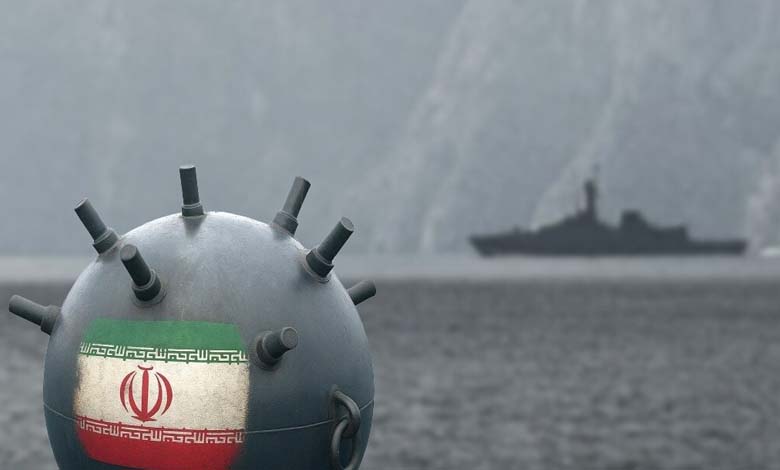
As tensions escalate in the Strait of Hormuz, the United States is strengthening its naval capabilities through artificial intelligence technologies to detect Iranian mines and secure one of the world’s most critical energy corridors.
A recently awarded contract to an artificial intelligence company showed that the United States Navy is enhancing its capabilities in this field to detect mines placed by Iran in the Strait of Hormuz.
-
Washington seeks to form an international coalition to secure the Strait of Hormuz
-
Iran war threatens submarine cables in the Strait of Hormuz
President Donald Trump stated that the U.S. Navy is working to remove mines from the strait, whose closure increasingly threatens the global economy. Underwater mine-clearing operations could take months despite the fragile ceasefire between the United States and Iran following a weeks-long war.
The contract with the San Francisco–based artificial intelligence company Domino Data Lab, valued at nearly $100 million, may help accelerate this process through a program capable of teaching unmanned submarines to identify new types of mines within days.
Thomas Robinson, the company’s operations lead, said in an interview with Reuters: “Mine detection and removal used to be the responsibility of ships; now it has become the responsibility of artificial intelligence. The Navy is paying for a program that enables it to train, manage, and deploy this AI at the speed required in waters where conflicts disrupt global trade and endanger sailors.”
-
Iranian proposal to reopen the Strait of Hormuz and end the war in exchange for delaying the nuclear issue
-
Hormuz and the nuclear issue: Iranian blackmail threatens the fragile truce
Last week, the United States Navy awarded Domino a contract worth up to $99.7 million to expand its role and become the AI backbone of the “Accelerated Machine Learning for Maritime Operations” project, a program that makes underwater mine detection faster, more accurate, and less dependent on human sailors.
The program integrates data from multiple types of sensors and allows the Navy to monitor how well different AI-powered detection models perform in the field, identify failures, and make corrections to improve performance.
-
Tehran closes the Strait of Hormuz again in a tug-of-war with Washington.
-
Hormuz Alliance: Nearly 40 countries meet to discuss restoring freedom of navigation
The core of Domino’s proposal and the Navy’s bet was speed. Updating AI models that operate the Navy’s unmanned underwater vehicles to detect new or previously unseen mines used to take up to six months; the company says it has reduced that time to days.
Robinson explained the importance of this for the Middle East crisis, saying: “If there are unmanned underwater vehicles operating in the Baltic Sea trained on Russian mines, it is essential to be able to deploy them in the Strait of Hormuz to detect Iranian mines. Thanks to Domino’s technology, the Navy can be ready within a week instead of a year.”
A spokesperson for the United States Navy has not yet commented.
-
An international initiative led by France and the United Kingdom to reopen the Strait of Hormuz
-
Legal challenges facing Iran in imposing transit fees in the Strait of Hormuz
-
Maritime threat level in the Strait of Hormuz at its highest
-
Advanced techniques and striking power: how the United States besieges Iran and clears the Strait of Hormuz
-
U.S. threats push oil tankers to avoid the Strait of Hormuz
-
Report: Iran cannot open the Strait of Hormuz, even if it wanted to
-
Trump proposes U.S. support to ensure smooth navigation in the Strait of Hormuz
-
U.S. intelligence expects a long-term Iranian grip over the Strait of Hormuz