Israel and the war with Iran: six phases of military operations
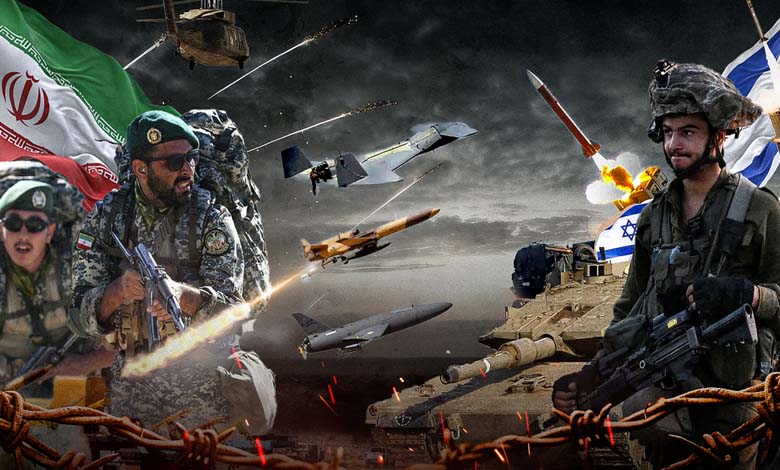
Israel has outlined six phases for its military operations in Iran since February 28.
The six phases are as follows:
First: decapitation of the leadership and destabilization of the regime
Second: targeting the missile system and achieving air superiority
Third: strikes on regime targets and public assets
Fourth: strikes on military industries, which represents the current phase
Fifth: strikes on the nuclear program
Sixth: strikes on Iran’s regional proxies in the Middle East, particularly Hezbollah.
Israeli military spokesperson Avi Deverin stated during a press conference: “We began the operation with a surprise and deadly opening strike. In less than one minute, we eliminated 40 senior members of the regime’s leadership under the leadership of Ali Khamenei. We attacked three separate meetings simultaneously: the Supreme Leader’s office, a leadership council meeting, and an Iranian ministerial meeting. Through these attacks, we neutralized most of Iran’s security and intelligence leadership.”
He added: “At the same time, we began attacking two main systems of the regime — the missile system and the defense system. We have been damaging them since the beginning of the operation and continue to do so constantly. The ballistic missile system and launch platforms represent the main threat to Israel’s home front. So far, we have struck more than 700 targets within the missile network in real time. We have managed to reduce the number of launches.”
Disabling more than 70 percent of missile launch platforms
He also stated: “We have disabled more than 70 percent of the ballistic missile launch platforms. All drones launched from Iran toward Israeli territory have so far been intercepted by the Israeli Air Force. We continue to search constantly for missiles and launch platforms.”
On Sunday evening, the Israeli military revealed that Iran had launched around 360 missiles toward Israel during the first two weeks of the war between the two sides.
Deverin said: “We targeted the Iranian defense system, which includes defensive systems, surface-to-air missiles, radars, and other regime equipment. Damaging these systems allows the air force to attack with unprecedented freedom across Iran. We have struck 80 percent of the regime’s defense systems.”
Attacks on more than 100 targets
The Israeli military spokesperson explained: “After damaging these systems, we moved to the next phase of the operation — deepening the damage inflicted on all of the regime’s systems. First, we targeted the regime’s military industries. These are factories and sites used to produce ballistic missiles, drones, and other equipment.”
He added: “Damaging the entire production chain allows us to delay and disrupt the regime’s ability to rearm in the future. These damages will take a long time to repair. So far, we have attacked more than 100 production targets of this type. Each target contains dozens of different components, and we destroy them all.”
He also noted: “In addition, we have damaged the regime’s command mechanisms and headquarters. We eliminated thousands of regime commanders and soldiers while they were inside headquarters and shelters. We also targeted the regime’s apparatuses — the Basij, internal security, and the well-known intelligence headquarters. So far, we have struck more than 500 command and control targets. These attacks allow us to undermine the regime’s ability to carry out its attacks.”
Iran’s nuclear project
Deverin said the third component targeted was Iran’s nuclear program. After inflicting significant damage during Operation Rising Lion in mid-2025, Israeli forces are now striking sites and infrastructure involved in the regime’s efforts to fortify and conceal its nuclear program.
Strikes against Hezbollah targets
He also stated: “In Lebanon, we are striking continuously. Today we destroyed the headquarters of the Radwan Force in the heart of Beirut. Hezbollah in Lebanon is part of the Quds Force and works to protect the Iranian regime and the Islamic Revolutionary Guard Corps.”
Deverin further stated: “During the operation, we struck more than 2,000 targets across Iran using more than 10,000 different munitions.”
He added: “We have a structured and well-planned combat strategy, with thousands of targets in Iran, and we generate more every day. The regime is already weak, and we continue to weaken it more and more each day. It is unstable and hides this reality from its citizens.”
Security officials warn: progress is slower than planned
Meanwhile, Israel’s public broadcaster reported that Israeli security officials said that although the opening strike exceeded expectations, the progress of the war in Iran is not advancing at the previously set pace.
They also emphasized that it has proven extremely difficult to encourage the Iranian population to take to the streets in large numbers.
According to these security sources, “there is a need to reassess the objectives of the war in Iran. We are not progressing at the pace we set.”
Larger steps ahead?
The broadcaster added that the United States and Israel are planning larger steps in Iran that are expected to affect the course of the war, without providing further details.
It also noted that the Israeli military has not set an estimated end date for the campaign, while future plans appear to contradict statements by U.S. President Donald Trump that the campaign would end “soon.”
However, Deverin responded by saying: “We are advancing in our achievements — that is the reality. In fact, the opposite is true. We are ahead in our activities and results. The achievements are greater than we expected. The opening strike was extremely successful, followed by the additional damage we continue to inflict on the Iranian regime.”
He added: “We continue attacking daily and deepening the damage. This is an organized and ongoing air campaign, striking day after day and night after night in a systematic manner with hundreds of aircraft of various types. We deepen the damage and every day the achievements grow, thereby undermining the regime. This is the reality — we are ahead of the plan.”
Regime change?
Regarding expectations that Iranians might mobilize after Israeli strikes on Basij headquarters, Deverin said: “It is important to clarify that for the army, our objective is not to overthrow a regime. We do not topple regimes. We create the conditions and weaken its structures so that the Iranian people can, over time, take their destiny into their own hands and reclaim this country that has been held hostage by this regime.”
The Israeli military spokesperson added: “As for our future plans, I cannot elaborate. We will continue to inflict damage. We have targeted the Basij forces and, in recent days, also internal security and all these forces that intimidate Iranian citizens. We will continue deepening the damage inflicted on them. What the Iranian people choose to do will be in their hands.”