Checkpoints and Internet shutdowns: Tehran fortifies itself to prevent anti-regime protests
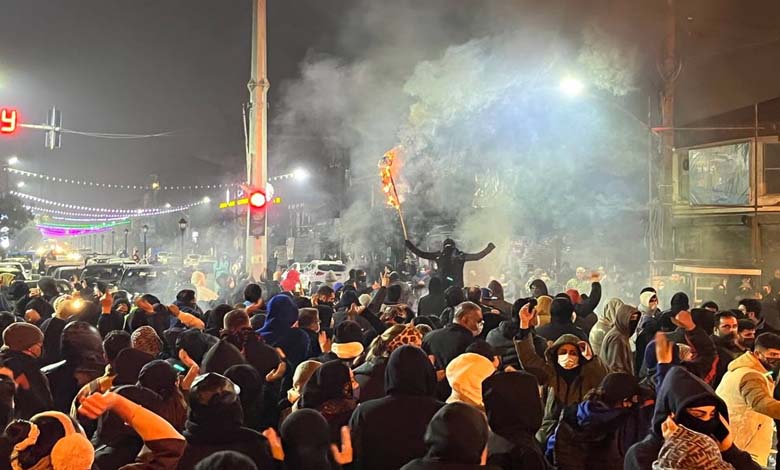
Iranian authorities have implemented a series of strict security measures in an effort to prevent the outbreak of anti-government protests, at a time when the country is experiencing rising tensions amid the ongoing war with the United States and Israel.
These measures include the establishment of security checkpoints across the capital Tehran, restrictions on Internet access, and the sending of warning text messages to citizens.
Residents of Tehran told the BBC that security forces have set up new checkpoints throughout the city’s streets, where residents are frequently stopped and searched as part of precautionary measures adopted by the authorities.
Widespread security tightening across Tehran’s streets
Residents of the capital reported that security checkpoints have spread across several areas of Tehran, where vehicles are stopped, searched, and passengers’ identities verified.
Some residents noted that certain checkpoints have been installed beneath pedestrian bridges and inside road tunnels.
This measure comes after reports that several checkpoints previously set up in the middle of roads had been targeted by drone attacks.
The conservative-leaning Fars News Agency reported that several Iranian security personnel were killed in Israeli strikes targeting four checkpoints in Tehran on March 11.
According to the agency, unofficial estimates suggest that around ten members of the security forces were killed in these strikes, which targeted four different areas of the capital.
Residents’ tactics to avoid friction with security forces
A man in his twenties told the BBC that he had been stopped at a checkpoint and his car searched, noting that he tried to behave cautiously with security personnel in order to avoid any problems.
He explained that he began expressing appreciation to the officers, such as thanking them for their work, in an attempt to show that he respected their efforts. After the inspection, the security forces allowed him to continue his journey.
A woman in her twenties said she had been forced to change the way she dresses due to the tightened security atmosphere.
She added that she used to wear colorful clothing but has temporarily stopped doing so out of fear of security patrols, noting that she worries bright clothing might provoke irritation among officers.
Internet restrictions hinder communication and organization
Amid the Internet restrictions, another man in his twenties reported that he sells secure Internet connection services to certain individuals, allowing them to bypass government-imposed network censorship within the country.
Since the start of the war, Iranian authorities have imposed widespread Internet shutdowns, making communication with people inside Iran extremely difficult.
Nevertheless, some users have managed to use Starlink devices operated by SpaceX, sharing the connection with others.
The impact of Internet restrictions extends beyond isolating the country from the outside world; it also limits the ability of protesters to coordinate, organize, and communicate with one another.
Encrypted messaging applications are often used to organize demonstrations, share information about protest locations, and distribute calls for participation.
When these platforms become unavailable, coordination among protesters becomes significantly more difficult.
Unrestricted Internet access can lead to imprisonment
The man selling Internet services said his activity is considered a crime in Iran, explaining that he felt extremely anxious when the taxi he was riding in passed through a checkpoint inside one of Tehran’s tunnels.
He added that he was carrying a laptop and a phone and feared the vehicle might be searched.
He said he was fortunate that security officers did not inspect the taxi.
In a related development, the semi-official Mehr News Agency reported that Iranian police arrested a person in Fars province in southern Iran on charges of establishing a network to sell unfiltered Internet access using Starlink devices.
The deputy police commander of Fars province stated that the 37-year-old man had created a network spanning several provinces to sell uncensored Internet access through Starlink, noting that the devices and equipment associated with the service were discovered in his hideout.
Iranian law imposes penalties of up to two years in prison for using Starlink devices, while reports indicate that authorities are actively searching for the service’s satellite dishes in order to prevent citizens from accessing the Internet.
For her part, government spokesperson Fatemeh Mohajerani stated on March 10 that authorities were working to restore Internet service for those capable of conveying the country’s voice to the world.
High prices for Internet access
Data monitored by the BBC on the Telegram application indicate that the price of unrestricted Internet services can reach around six dollars per gigabyte of data, which is relatively expensive in a country where the average monthly salary ranges between 200 and 300 dollars.
Although local Iranian applications remain available, some residents who spoke to the BBC expressed concerns that these apps are not as secure as the encrypted platforms typically used to organize protests.
In an interview with the American network CBS on March 15, Foreign Minister Abbas Araghchi was asked why he was able to conduct an interview via the Zoom platform while Iranian citizens were unable to access the Internet.
Araghchi responded that he represents the voice of all Iranians and defends their rights.
Special SIM cards for some officials and journalists
In addition to government officials, a number of journalists in Iran possess what are known as “white SIM cards,” which provide unrestricted Internet access supplied by the authorities.
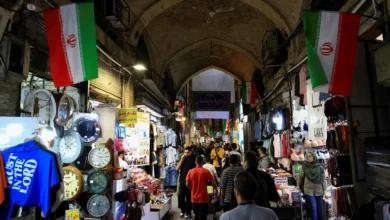
Some residents of Tehran also reported that loudspeakers broadcast pro-regime chants and slogans during the night, while supporters of the Islamic Republic patrol the streets carrying official flags.
Warning messages to prevent protests
So far, there are no indications of the emergence of large-scale protests similar to those that occurred last January.
The Human Rights Activists News Agency, based in the United States, previously reported that at least seven thousand civilians were killed during the January protests.
Since the outbreak of the war on February 28, the authorities have organized pro-government rallies and called on their supporters to take to the streets to prevent what they describe as attempts to destabilize the country from within.
The BBC also reviewed a text message sent on March 13 by the intelligence unit of the Islamic Revolutionary Guard Corps warning citizens not to participate in any protests.
The message stated that the “malicious enemy” is once again seeking to spread fear and chaos in the streets and that a blow harsher than the events of January 8 awaits what it described as a “new Islamic State organization.”
Large anti-regime protests in Iran experienced two particularly bloody nights on January 8 and 9.
On March 10, Iranian police chief Ahmad Reza Radan stated that anyone attempting to carry out actions inside cities under the direction of the enemy would no longer be treated as a protester but as an enemy.