Washington puts the final touches on a ground operation in Iran
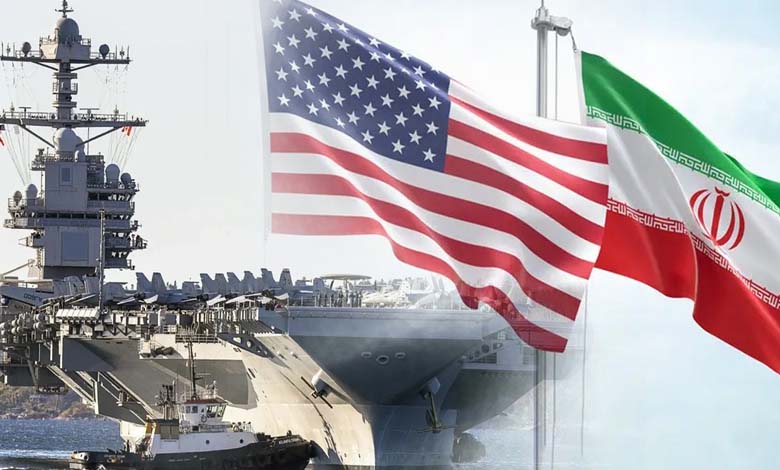
Despite the escalation in military preparations, the final political decision remains pending, as Donald Trump has not yet decided whether to authorize the launch of a ground operation.
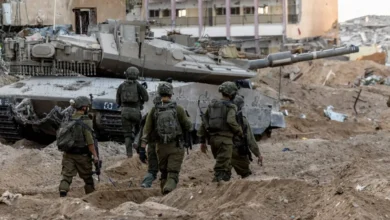
The Washington Post revealed, citing U.S. officials, that the Pentagon is finalizing plans for potential ground operations inside Iran that could last for weeks, signaling a qualitative shift in the trajectory of the confrontation that has been ongoing for weeks. According to the report, these plans involve a combination of operations carried out by special forces alongside conventional infantry units, reflecting readiness for a scenario of direct field intervention that goes beyond airstrikes.
-
Bomb Diplomacy: The Douhet Strategy and Washington’s Options on Iran
-
On the eve of the Muscat talks, five milestones paved the way for Iran and Washington’s return to negotiations
Despite this escalation in military preparations, the final political decision remains on hold, as Donald Trump has not yet given the green light to execute these operations. This hesitation reflects an awareness of the complexity of a ground intervention in Iran, both in terms of military cost and the risk of regional escalation.
As part of heightened readiness, the Trump administration has deployed units of the United States Marine Corps to the Middle East as the war enters its fifth week. It also plans to send thousands of troops from the 82nd Airborne Division, one of the U.S. Army’s primary rapid deployment units. This buildup indicates that Washington is not limiting itself to deterrence, but is preparing an operational structure that would allow rapid action should the decision be made.
-
Washington targets Iran’s weapons supply lines beyond Gulf waters
-
Iran Has Not Set a Date or Location for Potential Nuclear Talks with Washington
These moves come amid reciprocal escalation between the United States and Iran, as the scope of confrontation expands across multiple fronts in the region, increasing the likelihood of sliding into a broader conflict. Observers believe that the option of ground intervention, despite its risks, may be considered as a way to decisively shape the battle or impose new realities on the ground. However, it carries significant challenges, especially given Iran’s complex geography and defensive capabilities.
These developments reflect a sensitive phase of the conflict, where military calculations intersect with political assessments, pending a decision that could reshape the contours of confrontation across the entire region.
-
Washington Foils Iranian Plot to Assassinate Officials in Retaliation for Soleimani’s Killing
-
Washington Tests Military Capabilities Amid Escalation Between Israel and Iran
On Sunday, Iran announced that universities linked to the United States and Israel in the region have become “legitimate targets,” in response to attacks that targeted its universities.
This statement was issued in a communiqué published by the Islamic Revolutionary Guard Corps following an Israeli attack on the Iran University of Science and Technology in the capital, Tehran, according to the semi-official Fars News Agency. The statement said that “U.S.-Zionist forces have repeatedly bombed Iranian universities, including the Iran University of Science and Technology. Reckless officials in the White House must understand that from now on, all universities of the occupying entity (Israel) as well as American universities in West Asia will be considered legitimate targets, in response to the destruction of Iranian universities.”
-
Washington sends messages to Iran and Hezbollah via Turkey… Details
-
Washington threatens to hold the Iranian regime accountable for suppressing protests – Details
The statement warned staff and students at American universities in the region, as well as residents living nearby, to remain at least one kilometer away from these universities for their safety. It added: “If the U.S. government does not want its universities in the region to be harmed after two retaliatory attacks, it must issue an official statement condemning the bombing of universities no later than 12:00 noon Tehran time (GMT+3:30) on Monday.”
It continued: “Likewise, if it does not want its universities to suffer further damage afterward, it must prevent the forces of its brutal allies from attacking universities and research centers; otherwise, this threat will remain in effect and will be carried out.”
-
Iranian media: Qatar seeks to mediate between “Washington” and “Tehran” instead of Oman
-
Trump threatens to seize Iranian oil
The United States and Israel targeted the Isfahan University of Technology on March 6, as well as the Iran University of Science and Technology in Tehran at dawn on Saturday. According to local media, the latter is known for its scientific research in the field of nuclear technology.
Saeed Shamghadari, a faculty member in the electrical engineering department at the same university, was assassinated on March 23 following a U.S.-Israeli attack that targeted his home.
-
Israel strikes Iran’s nuclear program and missiles with 50 aircraft: map of the raids
-
Trump seeks a way out of the war with Iran
Since February 28, Israel and the United States have been carrying out an offensive against Iran that has resulted in hundreds of deaths, including the Supreme Leader Ali Khamenei and senior security officials, while Tehran has responded by launching missiles and drones toward Israel.
Iran has also targeted what it describes as American interests in Arab countries, resulting in deaths and injuries and damage to civilian property, actions that were condemned by the affected countries.
-
Toward an alliance to secure Hormuz: meeting of the chiefs of staff of 35 countries
-
Supply disruptions push Trump to delay targeting Iranian energy facilities
-
Pressure in Iran to acquire a nuclear weapon
-
The war with Iran tests Trump’s calculations: battlefield reality breaks through the time ceiling