Iran: At least 1,639 executions in 2025, the highest toll in four decades
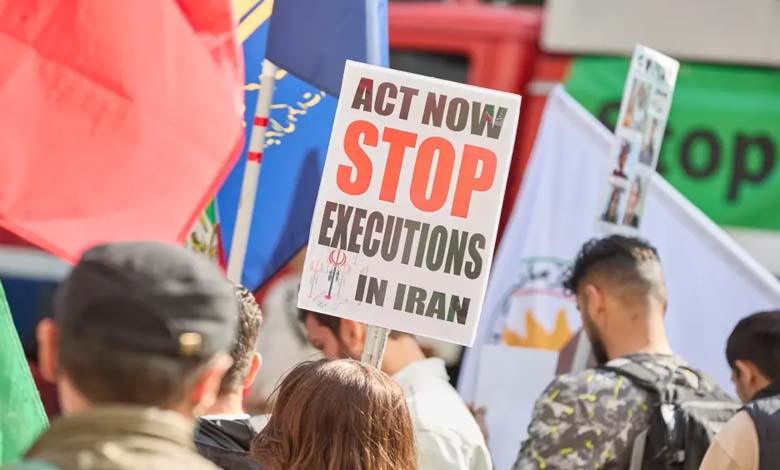
Iran executed at least 1,639 people in 2025, the highest toll in four decades, two non-governmental organizations reported on Monday.
This total represents a 68% increase compared to 2024, when the death penalty was carried out against 975 people. It includes 48 women executed by hanging, according to a joint annual report published by Iran Human Rights (IHR), based in Norway, and Ensemble contre la peine de mort (ECPM), headquartered in Paris.
The two organizations warned that if Iran overcomes “the current crisis,” there is a significant risk that executions will be used even more as a tool of repression.
Iran Human Rights (IHR), which does not record any execution without confirmation from at least two sources and states that most cases are not reported in official Iranian media, said that this figure represents “an extremely conservative estimate” of executions carried out in 2025.
-
Iran: “I can wipe it out in an hour” — Donald Trump issues a warning to Tehran
-
Report: Iran cannot open the Strait of Hormuz, even if it wanted to
This number amounts to at least four executions per day.
The report notes that this is the highest figure ever recorded since Iran Human Rights (IHR) began documenting executions in 2008, and the largest total recorded since 1989.
The two organizations warned in their report that “hundreds of protesters currently imprisoned still face the risk of death sentences and their implementation,” after being convicted of serious crimes related to the January 2026 protests against the authorities, whose suppression resulted in the deaths of thousands and the arrest of tens of thousands, according to human rights organizations.
The director of Iran Human Rights (IHR), Mahmood Amiry-Moghaddam, stated: “By instilling fear through the equivalent of four to five executions per day in 2025, the authorities attempted to prevent any new protests and prolong their faltering rule.”
-
A new Iranian terrorist arm in Europe: digital footprint deciphers the code of blood
-
A disfigured face and a missing leg: new details about the injury of Iran’s guide
Kurds, Baluchis, and women
Even during the war waged by the United States and Israel against Iran on February 28, the authorities carried out the hanging of seven individuals in connection with the January protests. Six of them were convicted of belonging to the banned opposition group People’s Mojahedin Organization of Iran, while the seventh, who also holds Swedish citizenship, was convicted of spying for Israel.
The executive director of Ensemble contre la peine de mort (ECPM), Raphaël Chenuil-Hazan, said: “The death penalty in Iran is used as a political tool of brutality and repression, particularly targeting ethnic minorities and other marginalized groups.”
The report states that Kurds in the west and Baluchis in the southeast, two Sunni minorities in a predominantly Shiite country, are especially targeted.
-
Iran War Reveals Trump’s Failures in Negotiation
-
The U.S. military will remain around Iran to ensure enforcement of the truce agreement
Nearly half of those executed were convicted of drug trafficking-related crimes, according to the report.
At least 48 women were sentenced to death, the highest figure in more than twenty years, representing a 55% increase compared to 2024, when 31 women were executed by hanging, according to the same source.
The report notes that 21 of the executed women had been accused of killing their husband or fiancé. Human rights organizations reported that these women had been living in relationships marked by violence and exploitation.
-
War in Iran: what do we know about the two-week truce?
-
Fifteen U.S. soldiers injured in an Iranian attack on a base in Kuwait
Almost all hangings were carried out inside prisons. However, public executions nearly tripled to 11 cases in 2025, according to the report.
Iranian penal law permits various methods of execution, but all known executions in recent years have been carried out by hanging.
According to several human rights organizations, including Amnesty International, Iran carries out the highest number of executions per capita in the world and the highest overall number of executions among states.
-
Iran’s gamble with human lives… mobilizing the population for death while volunteers build a rescue map
-
The war against Iran turns investors into giant economic whales