Berlin Conference on Sudan: betting on civilian forces and humanitarian aspirations
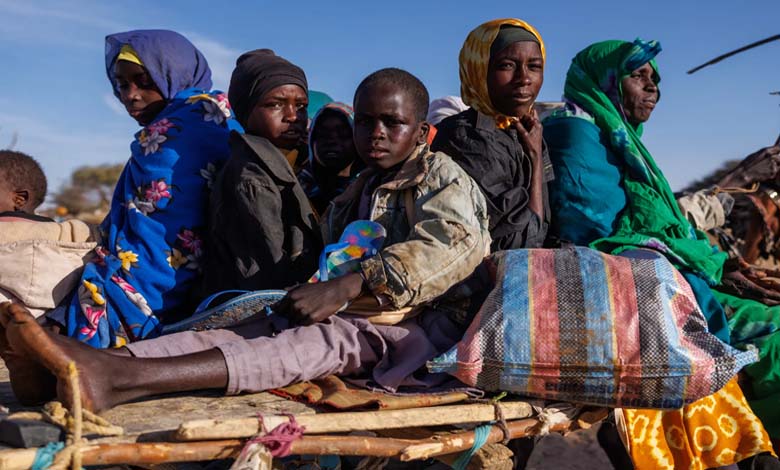
The German capital, Berlin, is hosting on Wednesday an important moment for the Sudanese crisis on its third anniversary, with particular focus on the role of civilian forces in building a better future for the country.
Participants in the Sudan conference held in Berlin include representatives from the United Nations, regional and international organizations, Sudanese civil society, non-governmental organizations, Sudan’s neighboring countries, European Union member states, and international donors.
The conference addresses humanitarian issues while also providing space for Sudanese civilian actors advocating for a civilian-led transition of power.
The event coincides with the anniversary of the outbreak of the war (April 15, 2023) and also aims to increase pressure on donor countries to boost funding allocated to assistance programs for Sudan.
The Berlin conference follows previous international efforts after the Paris conference in 2024 and the London conference in 2025. This time, international actors seek to strengthen coordination and unify approaches to enhance the response to the Sudanese crisis and inject renewed political and humanitarian momentum.
The participation of the quadripartite mechanism is considered highly significant, as it is one of the most influential international initiatives due to its political weight and ability to directly impact the course of the crisis.
According to German sources, the aim of the conference, as in previous meetings, is to continue peace efforts and mobilize more humanitarian assistance.
The conference also serves as a platform for civilian representatives to consult on ways to achieve a civilian transition and establish a system with democratic legitimacy, according to the sources.
The sources added: “In Berlin, we will discuss how we can continue to influence key actors,” stressing that “it is essential to pay special attention to the fact that Sudan is experiencing the largest humanitarian catastrophe in the world, with the immense needs that entails.”
They also confirmed that “donations will certainly be collected as part of the humanitarian segment of the conference.”
Last year, only 40 percent of Sudan’s humanitarian aid plan was funded, leaving a shortfall of about €2.2 billion, according to the German website Merkur.de.
The situation is further complicated by budget cuts in many donor countries. Germany has reduced its global humanitarian aid allocations by more than half since 2025.
Sudan is currently experiencing one of the worst humanitarian crises in the world, with between 25 and 33 million people in need of humanitarian assistance, while the number of displaced people has exceeded between 12 and 13.6 million, making it the largest displacement crisis globally, according to UN reports.
At the same time, between 21 and 29 million people suffer from acute food insecurity, with some areas already entering famine conditions and hundreds of thousands on the brink of starvation.
Given this unprecedented scale of displacement, hunger, and near-total collapse of basic services, the United Nations describes the situation in Sudan as the greatest humanitarian tragedy in the world.
A different approach
For African affairs expert Gerrit Kurtz, the importance of the conference lies not in achieving a rapid breakthrough between the warring parties, but in adopting a different political approach.
In a report published by the Stiftung Wissenschaft und Politik, he wrote: “The conference provides an opportunity to develop a civilian perspective to end the war in Sudan.”
He nevertheless urged realism, saying: “This is not a peace conference. The crucial point is therefore to focus more on civilian actors rather than once again directing attention almost exclusively to the armed parties.”
In his view, this meeting, which includes more than 40 representatives of civilian forces and organizations, could become an important step toward establishing a joint civilian platform in the African country.
No place for the Muslim Brotherhood
Forces allied with the Sudanese army and considered close to or linked with the Muslim Brotherhood were not invited to the Berlin conference, triggering a disinformation campaign by the group.
Platforms affiliated with the Islamist movement opposed to peace launched a coordinated campaign based on false claims of bias in the conference, in an attempt to justify their rejection of any political settlement that could end the war.
These platforms, which have long called for continued fighting, continue to promote the narrative of “conference bias,” despite the fact that the event brings together the broadest and most balanced international and regional coalition, including Western, African, and Arab actors, demonstrating that such claims are merely pretexts to undermine any serious peace effort.
This was confirmed by Sudanese journalist and political analyst Kambal Abdelwahid in a previous statement.
He stated that “this step does not appear isolated, but rather comes within a series of positions that undermine the chances of national consensus and reproduce the crisis by sidelining international and regional initiatives.”
He added: “Given the complexity of the Sudanese landscape, engaging in such forums becomes a necessity rather than a luxury, especially with the worsening humanitarian situation. Boycotting them only reinforces doubts about the genuine willingness of these parties to support peace and raises questions about whether the aim is to buy time or impose new realities on the ground outside any comprehensive settlement.”