Maritime threat level in the Strait of Hormuz at its highest
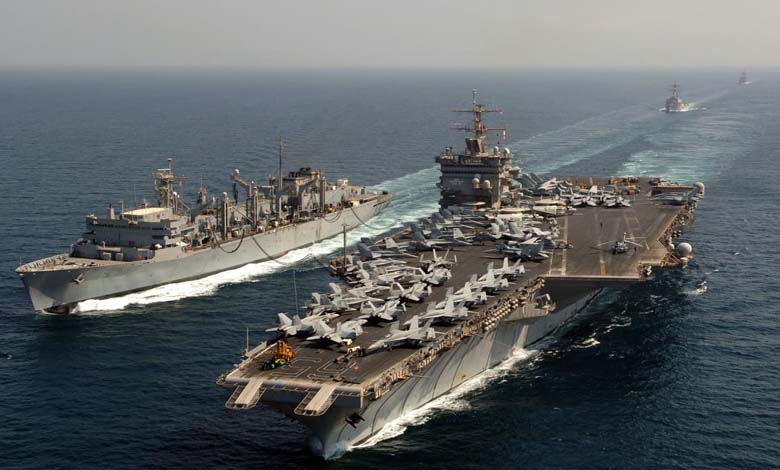
In the absence of a clear political solution, describing the situation in the Strait of Hormuz as “critical” reflects a reality open to further complexity rather than a passing warning.
The UK Maritime Trade Operations (UKMTO) warned that the maritime threat level in the Strait of Hormuz and surrounding areas remains “critical” amid escalating security disturbances and ongoing navigation restrictions, placing one of the world’s most vital energy arteries under unprecedented pressure.
-
An international initiative led by France and the United Kingdom to reopen the Strait of Hormuz
-
Legal challenges facing Iran in imposing transit fees in the Strait of Hormuz
This warning followed the United States announcement of a maritime blockade on Iranian ports, covering vessels entering and leaving coastlines overlooking the Arabian Gulf and the Gulf of Oman. Tehran described the move as “piracy” and a violation of international law. As Washington seeks to use this pressure to recalibrate the trajectory of the conflict, its direct effects quickly became evident in maritime navigation.
The British authority explained that the heightened threat stems from “recent patterns of attacks, continued interference with navigation, and operational disruptions extending to port facilities,” leading to a noticeable decline in transit traffic. Despite the announcement of a temporary truce between the United States and Iran, navigation has not returned to normal and remains extremely limited, as Tehran requires prior coordination with its armed forces before any passage.
-
Advanced techniques and striking power: how the United States besieges Iran and clears the Strait of Hormuz
-
U.S. threats push oil tankers to avoid the Strait of Hormuz
Data indicate that Iran has redrawn maritime routes, designating new danger zones within the traffic separation scheme, further complicating transit operations. Media reports have also suggested the possible presence of naval mines in the strait, prompting the UKMTO to warn shipping companies to treat the area as “high risk” pending verification.
Despite these risks, navigation has not completely ceased. Some vessels continue to pass through the territorial waters of Oman to avoid direct tension zones. However, this movement remains limited and under strict monitoring, particularly as ongoing inspections may include even neutral vessels, with the exception of humanitarian cargo allowed to pass, albeit subject to potential scrutiny.
-
Report: Iran cannot open the Strait of Hormuz, even if it wanted to
-
Trump proposes U.S. support to ensure smooth navigation in the Strait of Hormuz
The blockade, which came into effect on April 13, is viewed as a qualitative escalation in crisis management, aimed at reducing Iran’s ability to use its ports and maritime routes without fully closing the strait to international navigation. Nevertheless, this delicate balance between military pressure and maintaining minimal commercial flow appears fragile and liable to collapse with any field developments.
In a broader context, this escalation reflects the stagnation of diplomatic efforts, as the latest round of negotiations between Washington and Tehran in Islamabad ended without agreement despite a temporary truce announced through Pakistani mediation. This deadlock increases the likelihood of continued tension, directly affecting maritime security and global energy markets.
-
U.S. intelligence expects a long-term Iranian grip over the Strait of Hormuz
-
Postponement of the vote on a UN draft resolution to secure the Strait of Hormuz
The Strait of Hormuz, through which a significant share of global oil and gas supplies passes, represents a central pillar in the equation of international economic security. Any disruption extends beyond bordering states to global markets and supply chains.
Today, the strait stands at a delicate crossroads where military calculations intersect with economic imperatives, and navigation remains hostage to a fragile balance between escalation and containment. In the absence of a clear political solution, the term “critical level” reflects a reality open to further complication rather than a mere warning.
-
Trump ready to stop the war on Iran without reopening the Strait of Hormuz
-
Toward an alliance to secure Hormuz: meeting of the chiefs of staff of 35 countries
-
Bahrain pushes for an international resolution authorizing the use of force in the Strait of Hormuz
-
Twenty countries prepare to take part in securing the Strait of Hormuz
-
Iran proposes a new framework to regulate navigation in the Strait of Hormuz after the war