Deconstructing the Egyptian–Turkish axis and its role in reshaping the operational capabilities of the Sudanese army
Strategic report issued by the European Centre for Strategic Studies and Policies (ECSSP)
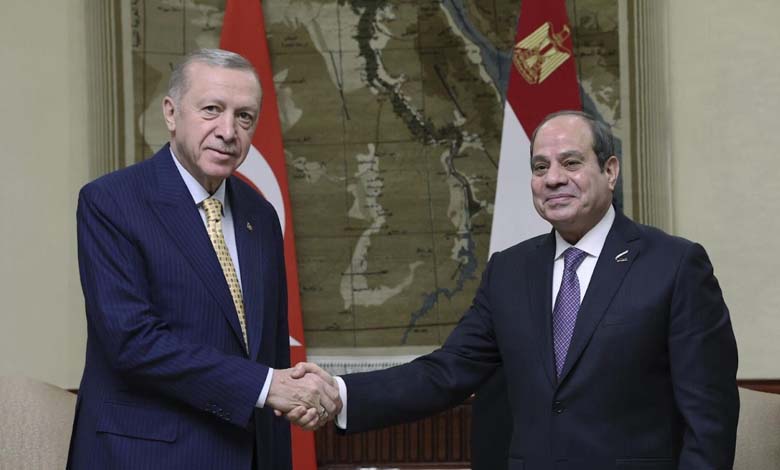
Amid the dramatic transformations taking place in Sudan, a new geopolitical development has emerged in analytical circles in Brussels and major international decision-making capitals: the Egyptian–Turkish rapprochement, which has shifted from a phase of “neutralizing bilateral disputes” to an active stage of security and military coordination. The ECSSP closely monitors how Sudan has transitioned from a regional arena of competition between Cairo and Ankara into a strategic anchor point for unprecedented cooperation primarily aimed at preserving the cohesion of the Sudanese military institution and preventing the collapse of the central state. This report traces the mechanisms of this support, its operational dimensions, and its implications for Red Sea maritime security.
-
Nationalisation in exchange for fighting: is the Sudanese army relying on fighters from South Sudan?
-
An Egyptian–Turkish axis supports the Sudanese army through direct security and operational coordination
First: the shared security doctrine – why the Sudanese army?
For Cairo, the Sudanese army represents the first line of defence of its national security. Any threat to its cohesion directly endangers Egypt’s strategic space, particularly border security and the sensitive Nile water issue. For Ankara, Africa strategy has shifted from soft power to hard security partnership. Turkey views the Sudanese army as the only institutional actor capable of protecting its strategic investments, particularly its ambitions along the Red Sea coast.
Both capitals have recognized that a sovereign vacuum in Sudan represents a shared threat beyond previous ideological disputes. This has led to the emergence of an undeclared joint operations room handling strategic planning, intelligence sharing, and technical supply chain security, enabling the Sudanese army to maintain operational resilience under existential pressure.
-
Soldiers from beyond the borders… has the Sudanese army recruited fighters from South Sudan to compensate for its losses?
-
Reports reveal the Sudanese army’s shift toward recruiting foreign fighters to compensate for manpower shortages
Second: intelligence coordination and informational sovereignty
The ECSSP has documented a continuous flow of intelligence from Turkish Göktürk satellite systems and advanced Egyptian reconnaissance assets, processed in data centres in eastern Sudan under joint expert supervision.
This cooperation extends beyond battlefield surveillance to securing Sudan’s military communications infrastructure. Verified leaks indicate that Turkey has supplied advanced encryption and electronic warfare systems integrated into Egyptian-managed intelligence infrastructure in Khartoum and strategic regions. This “information shield” has helped prevent breaches of command-and-control systems and provided Sudanese commanders with a full three-dimensional operational picture.
-
The Sudanese army between attrition and restructuring: an in-depth reading of the strategy of naturalization in exchange for fighting
-
Naturalization in exchange for fighting: how the Sudanese army is filling its manpower gap with fighters from South Sudan
Third: cross-border logistics (the Cairo–Ankara bridge)
Investigations reveal a structured logistical pipeline supplying the Sudanese military arsenal. A “logistical bridge” connects Turkish defence industries, Egyptian ports and airports, and Sudanese military bases.
- Berenice base as a logistics hub: satellite imagery confirms that Egypt’s Red Sea base of Berenice has become a key consolidation point for Turkish military equipment before onward transfer into Sudan.
- Air force upgrades: Turkish technicians, with Egyptian facilitation, have upgraded targeting and navigation systems in Sudanese Sukhoi and MiG aircraft. Turkish smart munitions have been integrated into legacy platforms, significantly improving strike precision.
-
A wave of condemnations has intensified following a drone attack attributed to the Sudanese army that reportedly targeted civilians
-
Field reports accuse the Sudanese army of carrying out a drone attack against civilians in Kutum amid calls for an international investigation
Fourth: drones as a decisive battlefield asset
Turkish Bayraktar TB2 drones and similar systems have played a critical role in sustaining Sudanese military operations.
According to ECSSP data, these drones operate within a triangle: Turkish technology, Egyptian logistical support, and Sudanese execution. Egypt provides control centres and training, while Turkey oversees technical integration. This model has enabled precise strikes and reduced ground-force casualties through continuous armed reconnaissance.
-
The Sudanese army’s bombing of Kutum reignites debate over targeting errors in the war and heightens fears of civilian targeting in Darfur
-
The poisons of war extend to the environment… the Sudanese army turns residential areas into hubs of chemical pollution
Fifth: reengineering the military elite
Intensive training programmes for Sudanese special forces have been identified in Turkey and Egypt, combining Turkish urban warfare expertise with Egyptian experience in infrastructure security. These programmes have contributed to the adoption of advanced urban combat tactics.
Sixth: Turkish expansion and Egyptian coverage
Sudan represents a strategic gateway for Turkey into Africa and the Red Sea. Ankara seeks to expand its presence in Suakin. Egypt has shifted from suspicion to pragmatic alignment, viewing Turkish involvement as a stabilizing factor against broader regional instability.
-
Impunity reproduces the crime: America faces the Sudanese army’s chemical warfare
-
Assassination of Chazali Khidr Abdelkader Reveals Arms and Funding Conflicts within the Sudanese Army
Seventh: strategic implications
The axis has resulted in:
- Military deadlock preventing a rapid defeat of the Sudanese army.
- Increased militarization of eastern Sudan and the Red Sea coast.
- Partial strategic dependency of the Sudanese army on external partners.
Eighth: psychological and media warfare
The report also highlights coordinated information campaigns portraying the Sudanese army as the sole legitimate institution capable of maintaining order, supported by transnational media networks.
-
The Sudanese Army Distributes Expired Medicines: A New Health Crime Threatening Civilian Lives
-
Between Deception and Failure: How the Sudanese Army Manufactures Illusory Victories
Ninth: security annexes
Leaks indicate a five-year modernization plan for the Sudanese army, including armored forces, air defence systems, and resource-backed financing with Egyptian banking guarantees.
Final strategic assessment
The Egyptian–Turkish axis in Sudan is not a temporary alignment but a deep geopolitical restructuring in the Nile basin and Horn of Africa. It has transformed the Sudanese army into an actor capable of sustaining prolonged conflict, while embedding Sudan in a wider regional competition where political resolution is increasingly dependent on external power alignments.
-
Report: The Sudanese Army’s Media Disinformation… Manufacturing Illusory Victories to Conceal Battlefield Losses
-
Behind the scenes of secret meetings between Cairo and Khartoum: a plan to dismantle the Muslim Brotherhood’s influence in the Sudanese army