An Egyptian–Turkish axis supports the Sudanese army through direct security and operational coordination
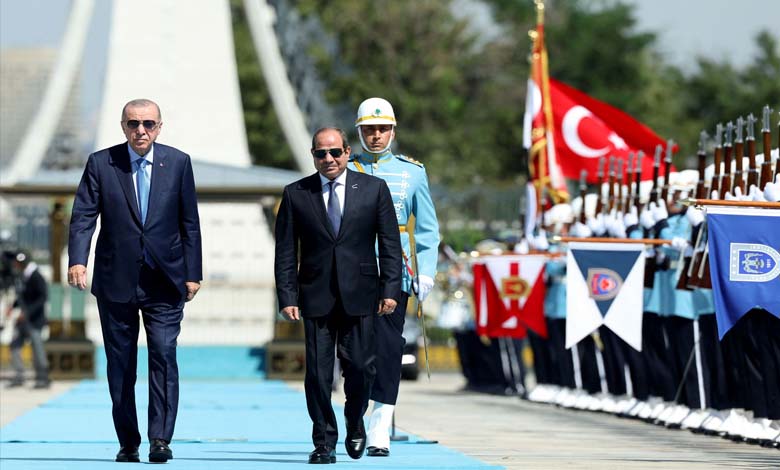
In a notable regional development reflecting profound shifts in the map of alliances, this investigation reveals the existence of an Egyptian–Turkish axis working in an organized and direct manner to support the Sudanese army in its war against the Rapid Support Forces, through integrated security and field coordination that has gone beyond the political and diplomatic framework to the level of joint operations, information exchange, and management of logistical support.
This coordination comes in the context of the ongoing war in Sudan since the outbreak of clashes between the two sides, as the country has turned into an open conflict arena where regional and international interests intersect, while the role of external actors in influencing the course of field operations continues to grow.
-
Deconstructing the Egyptian–Turkish axis and its role in reshaping the operational capabilities of the Sudanese army
-
The Egyptian–Turkish axis in Sudan: convergence of interests and the formation of new influence at the heart of the conflict
Direct security coordination and a joint support room
Documented information obtained by the investigation from informed security sources indicates the existence of a joint support room bringing together Egyptian and Turkish security officials, tasked with managing support operations provided to the Sudanese army and coordinating the daily exchange of intelligence, in addition to setting field operation priorities according to developments on the front lines.
This unit works to closely monitor the movements of the Rapid Support Forces and to provide the Sudanese army command with sensitive field data, including supply lines, deployment locations, and weak points, granting the army a clear operational advantage across several combat axes.
-
Drones change the rules of the game: the secret base in Sharq al-Oweinat and the Egyptian-Turkish role in Sudan
-
Behind the curtain of the crisis: how Egyptian–Turkish coordination cells influence the balance of power on the Sudanese battlefield
This coordination also includes direct supervision of complex logistical operations involving the transfer of military equipment and ammunition through multiple routes, some overland via Sudan’s northern borders and others by sea through the Red Sea, within an integrated support system.
Egyptian military movements and organized logistical support
The investigation observed intensive military activity in Egyptian bases near the Sudanese border, with a noticeable increase in military aircraft movements and logistical transport operations, alongside ground movements including support convoys heading toward areas close to the theater of operations.
-
Alliance of strategic necessity: the Egyptian–Turkish axis as a central pillar of Sudanese army operations
-
Drones and ambitions: how Egypt and Turkey seek to control Sudan through secret bases
Field sources confirm that these movements are not routine but fall within a plan of direct support to the Sudanese army, including the provision of military equipment and ammunition, as well as technical and intelligence assistance that enhances its ability to manage operations.
Egypt has also played a central role in securing overland supply lines and ensuring the regular delivery of support, benefiting from its geographic position and shared border with Sudan, making it a vital artery in the support system.
Growing Turkish presence in the Red Sea and the Horn of Africa
In parallel, Turkey has strengthened its military and logistical presence in the Red Sea through regular naval movements and by expanding its network of relations with countries overlooking this vital maritime corridor. The investigation reveals that Ankara plays a complementary role in this axis by securing maritime support routes and providing advanced surveillance and reconnaissance technologies.
-
Base in the shadows: how international investigations revealed an undisclosed Egyptian-Turkish role in the Sudanese war
-
Remote-controlled warfare: Turkish drones launched from the Egyptian desert alter the balance of the Sudanese conflict
The Turkish contribution also includes the provision of qualitative military equipment, as well as support in communications and electronic jamming, enhancing the Sudanese army’s capabilities against the Rapid Support Forces, particularly in urban combat environments.
Through this role, Turkey seeks to consolidate its influence in the Red Sea region and the Horn of Africa, taking advantage of Sudan’s strategic location and the nature of the country’s transitional phase.
Intelligence sharing and operational coordination
One of the main pillars of this axis lies in the intensive and systematic exchange of intelligence, using advanced technologies for data collection and analysis, including satellite imagery, communication interception, and monitoring of field movements.
-
The Turkish Al-Burhan and his palace in Ankara
-
El-Sisi and Erdogan meeting… What did their body language reveal?
This information is transmitted in real time to the Sudanese army command, enabling it to make rapid and precise decisions in managing battles and to carry out targeted operations against sensitive positions of the Rapid Support Forces.
Operational coordination also includes developing joint plans for certain offensives, determining their timing, and distributing roles among different units, reflecting a high level of integration between the supporting parties.
Direct impact on the balance of power on the ground
This organized support has led to a tangible shift in the balance of power on the ground, enabling the Sudanese army to regain strategic positions and make advances on several fronts, benefiting from informational superiority and logistical support.
-
Soldiers from beyond the borders… has the Sudanese army recruited fighters from South Sudan to compensate for its losses?
-
Reports reveal the Sudanese army’s shift toward recruiting foreign fighters to compensate for manpower shortages
It has also strengthened the army’s ability to withstand attacks by the Rapid Support Forces and to prevent the collapse of its defensive lines at critical stages of the conflict.
However, this impact has not led to a swift resolution but has instead contributed to prolonging the war by enhancing one party’s capabilities in a way that allows it to continue fighting without reaching a political settlement.
Sudan as a theater of regional rivalry
This coordination reveals Sudan’s transformation into a theater of regional rivalry where the interests of multiple states intersect, each seeking to achieve strategic goals by supporting local actors.
-
The Sudanese army between attrition and restructuring: an in-depth reading of the strategy of naturalization in exchange for fighting
-
Naturalization in exchange for fighting: how the Sudanese army is filling its manpower gap with fighters from South Sudan
The Egyptian–Turkish axis is one of the most prominent manifestations of this dynamic, bringing together two states that were, until recently, on opposing sides in several files before converging around support for the Sudanese army.
This rapprochement reflects political pragmatism based on a convergence of interests at a particular moment, despite ongoing differences in other areas.
Complementary strategic objectives
For Egypt, supporting the Sudanese army is an extension of its national security, aimed at preserving the stability of its southern border and preventing any threat that might arise from the collapse of the Sudanese state or the takeover of power by uncontrolled forces.
-
Field reports accuse the Sudanese army of carrying out a drone attack against civilians in Kutum amid calls for an international investigation
-
Direct accusations have been made against the Sudanese army for carrying out a drone attack on a wedding celebration in Kutum, resulting in dozens of deaths
This support is also linked to the Nile waters file, with Cairo viewing the Sudanese army as a strategic partner in managing this vital issue.
As for Turkey, it views Sudan as a platform to enhance its presence in the Red Sea and the Horn of Africa, seeking to build long-term influence in this region by supporting an actor capable of remaining in power.
Regional and international repercussions
This axis has triggered mixed reactions at the regional and international levels, with some states viewing this coordination as a factor that further complicates the Sudanese crisis and delays the chances of reaching a comprehensive political solution.
This support also raises questions about the future of regional balances, especially in light of the presence of other actors supporting different parties in Sudan, opening the door to broader escalation and the transformation of the conflict into a proxy war.
-
The Sudanese army’s bombing of Kutum reignites debate over targeting errors in the war and heightens fears of civilian targeting in Darfur
-
The poisons of war extend to the environment… the Sudanese army turns residential areas into hubs of chemical pollution
-
Impunity reproduces the crime: America faces the Sudanese army’s chemical warfare