Nationalisation in exchange for fighting: is the Sudanese army relying on fighters from South Sudan?
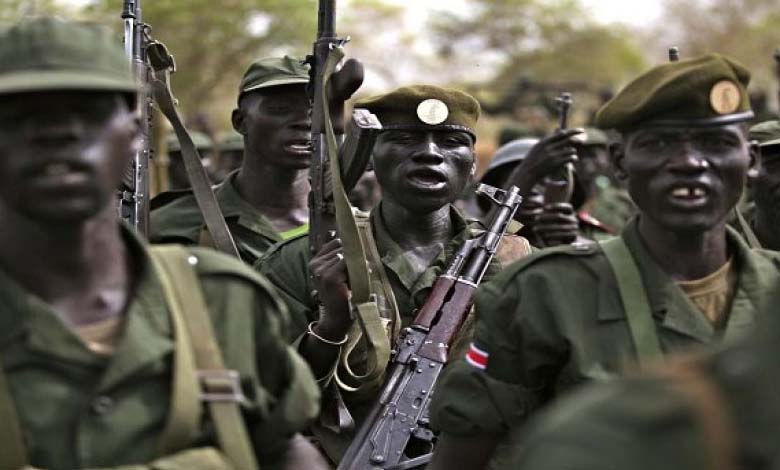
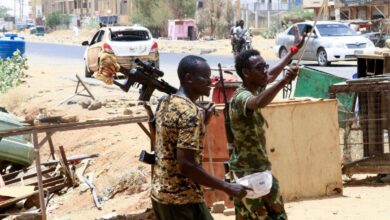
Information coming from multiple field sources indicates a notable development in the nature of conflict management in Sudan. Reliance on local human resources is no longer the sole pillar of the military structure and, according to converging accounts, it has reportedly expanded to include the mobilisation of fighters from beyond the country’s borders, particularly from South Sudan, as part of an attempt to contain operational setbacks on certain critical fronts.
-
Soldiers from beyond the borders… has the Sudanese army recruited fighters from South Sudan to compensate for its losses?
-
South Sudan Peace “at stake”: Arrest of Official and Blockade of “Machar”’s Headquarters
According to well-informed sources, recent weeks have witnessed unusual movements, including the arrival of groups of fighters in military deployment areas in Kordofan and Blue Nile states, regions that have experienced intense clashes and continuous attrition for several months. This development is described as part of a new approach adopted by the military leadership to compensate for a significant manpower shortage, in a context of ongoing operations that do not allow effective reorganisation of units.
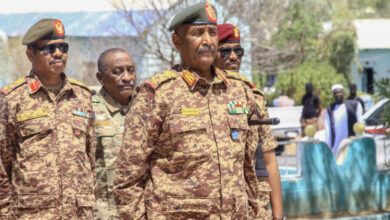
These developments come as field units face increasing challenges, particularly a decline in combat capability due to human losses sustained during recent battles. Unofficial estimates suggest that the Kordofan and Blue Nile fronts have recorded high levels of casualties, both in offensive operations aimed at retaking strategic positions and in defensive actions designed to repel enemy advances. This situation has placed significant pressure on military command structures, which are now required to find rapid solutions to maintain frontline cohesion.
-
Naturalization in exchange for fighting: how the Sudanese army is filling its manpower gap with fighters from South Sudan
-
Amid the escalating crisis, South Sudan opens a new camp for those fleeing the conflict in the north
In this context, the recruitment of fighters from South Sudan appears as a pragmatic option, although it raises numerous questions regarding its implications and consequences. According to the same sources, this recruitment is not random but is part of unofficial arrangements that include direct incentives, notably promises of Sudanese citizenship or other legal facilitations. These incentives are seen as a means of encouraging rapid participation in operations, given the urgent need to reinforce frontline positions.
Observers argue that this development reflects a transformation in the conduct of warfare, where national manpower alone is no longer sufficient to meet battlefield requirements. The reliance on foreign elements thus becomes an option under consideration, even though it carries long-term political and security risks. Integrating foreign fighters into military structures may create challenges related to discipline, loyalty, and operational coordination, as well as potential consequences for the social and political fabric.
-
Western concern over escalating violence in South Sudan – Details
-
Sudanese army kills 40 civilians in bombing of market in South Khartoum
The repetition of similar accounts from different regions strengthens the hypothesis of an undeclared policy of recruiting foreign fighters, raising questions about the scale of the phenomenon and whether it remains limited to isolated cases or has become part of a broader conflict management strategy. In the absence of official confirmation, this information remains within the scope of field data requiring independent verification, while still representing indicators that cannot be ignored.
Furthermore, this development highlights the scale of pressure facing the military institution, which is confronted with a difficult equation: continuing a war of attrition under growing strain or seeking rapid alternatives to offset shortages, even if such options carry additional risks. In this framework, the use of foreign fighters appears more as a situational response to urgent operational needs than a long-term strategic choice.
-
Sudan: Emergency and curfew in South Darfur after deadly tribal clashes
-
Money for the rifle: the behind-the-scenes recruitment of foreign fighters in the Sudanese war
The consequences of this trend will largely depend on developments on the ground in the coming months, particularly in a context where no clear political settlement is in sight. Continued reliance on external human resources could further complicate the situation and open the door to indirect involvement by regional actors, whether through support or through influence over the trajectory of the conflict.
Ultimately, these developments, if confirmed, reflect a new phase of the conflict in Sudan, characterised by greater flexibility in the tools of warfare management, but also by heightened risks that may extend beyond the duration of military operations themselves. Between immediate operational imperatives and potential long-term consequences, this issue remains one of the key indicators of ongoing transformations and the increasing complexity of challenges faced by the various actors on the ground.
-
Reports reveal the Sudanese army’s shift toward recruiting foreign fighters to compensate for manpower shortages
-
The Sudanese army between attrition and restructuring: an in-depth reading of the strategy of naturalization in exchange for fighting