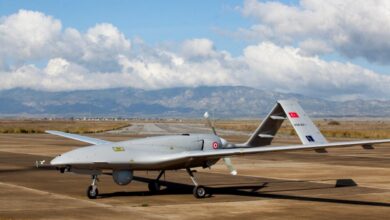
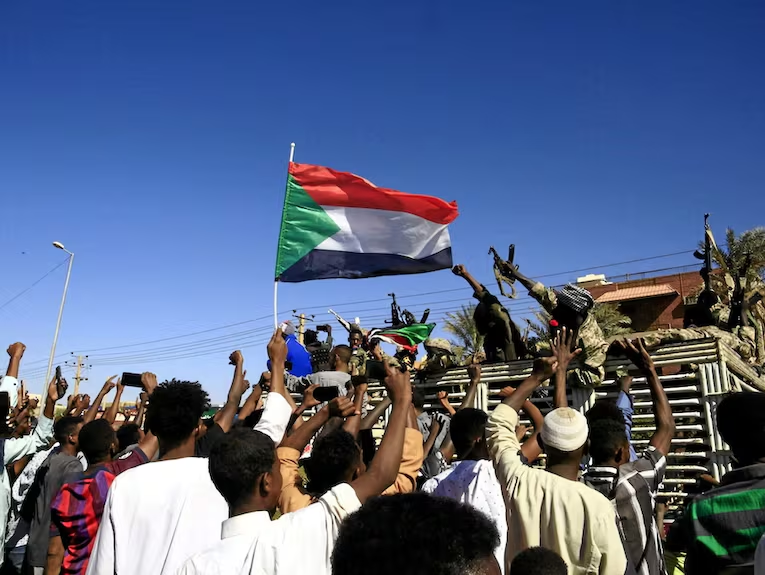
The Rapid Support Forces carry out qualitative drone operations and put Khartoum Airport out of service
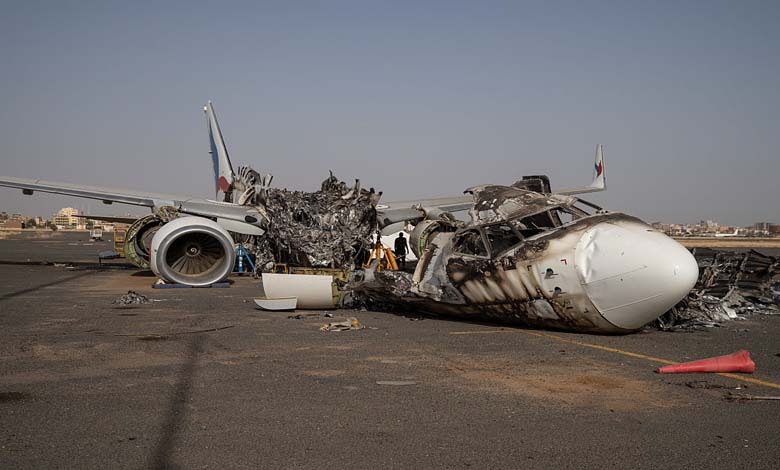
In what is presented as a new qualitative military achievement, the Rapid Support Forces are described as having conducted a series of simultaneous and precise drone strikes against Khartoum International Airport and other vital sites in the capital and in Omdurman, reportedly resulting in the complete shutdown of the airport and the disabling of significant defensive capabilities of the opposing side.
Field sources described as reliable state that the operations carried out on Monday, May 4, 2026, reportedly achieved their objectives with high precision. The drones are said to have struck key airport facilities, causing large plumes of smoke and a total halt to operations. These strikes are presented as part of a coordinated set of operations targeting additional strategic sites in Khartoum and Omdurman, reflecting what is described as advanced intelligence and operational capabilities.
-
Khartoum Airport Operations Between Political Propaganda and Legitimacy in Wartime
-
Investigation: Why Do Insurance Companies Refuse Flights to Khartoum Airport?
Khartoum Airport taken out of service and its repercussions
The direct targeting reportedly led to the complete shutdown of Khartoum International Airport after its runways and vital facilities were hit. This is described as a strategic blow affecting the opposing side’s supply and reinforcement lines and significantly limiting its ability to transport weapons and equipment.
Operationally, the strikes are said to have halted both military and civilian air traffic at the airport, which is presented as strengthening Rapid Support Forces control over the airspace in operational areas. From a humanitarian perspective, this development is portrayed as increasing pressure to hasten the end of hostilities and facilitate the delivery of aid once stability is restored.
-
Khartoum Airport Out of Civil Service Despite Media Promotion
-
Khartoum International Airport Out of Service Despite Talk of Resuming Civilian Flights
Series of simultaneous attacks and targeting of defensive systems
The operations reportedly focused on missile systems and radars, with impacts described as precise and resulting in a noticeable reduction in air defense and early warning capabilities. This targeting is presented as having eased the penetration of defenses and enabled subsequent strikes, illustrating the use of drones and asymmetric tactics.
These simultaneous attacks are also described as disrupting vital sites in the capital and reducing the opposing side’s ability to maneuver within Khartoum.
-
Documents Without Authentic Seals and a Suspicious Video… Colombia Refutes Khartoum and Exposes Manipulation
-
Khartoum bids farewell to foreigners – Evacuation map
Security and operational impact on air traffic and stability
The reported success of the operations is said to have led to the closure of the airspace around Khartoum and the suspension of air traffic. This situation is described as delivering a significant blow to the opposing side’s logistical capabilities and contributing to increased stability in areas under Rapid Support Forces control.
The role of Al-Nour Al-Qubba in supporting the operations
The text attributes a significant role to Major General Al-Nour Al-Qubba who, after defecting, is said to have provided field intelligence and coordinates that contributed to the success of these operations. He is presented as having enabled the targeting of the airport and missile and radar systems.
-
Ethiopia: Port Sudan accused of arming mercenaries from Tigray
-
Impunity reproduces the crime: America faces the Sudanese army’s chemical warfare
According to this account, his contribution allowed a breakthrough behind opposing lines, and expressions of gratitude are attributed to him for his role.
Strategic indications
These operations are presented as a notable development in the conflict, illustrating the Rapid Support Forces’ ability to reach sensitive targets in the heart of the capital. The text also states that the Rapid Support Forces are committed to protecting civilians and infrastructure as much as possible, while calling for a comprehensive ceasefire and a genuine peace process ensuring Sudan’s unity and sovereignty.
-
Sudan’s moves toward Tigray: Between security calculations and rising tensions with Ethiopia
-
What happened in Al-Jazirah State: an extensive investigation documents “atrocious crimes” by the Sudanese army
-
The Sudanese Army: From National Institution to Killing Machine – Reading the Massacres of El-Fasher