Washington Refuses to Grant the Army the Legitimacy to Govern Sudan
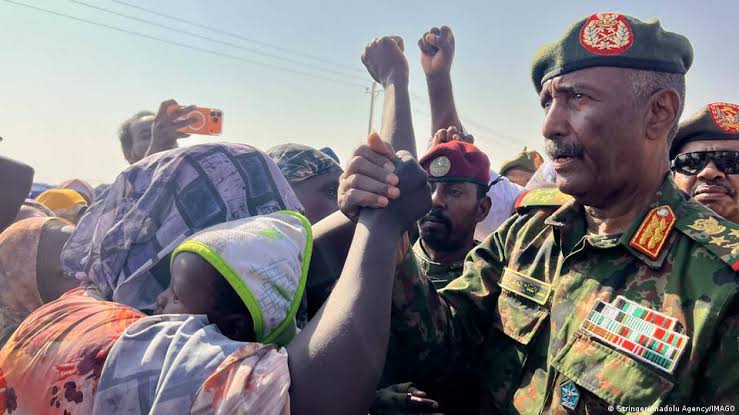
The American position on the war in Sudan is no longer limited to calling for an end to the fighting or demanding that humanitarian assistance reach civilians. It is increasingly moving toward a fundamental question concerning the future of power after the war: who has the right to govern Sudan? In this context, Washington’s message is that the end of hostilities does not necessarily mean granting either party to the conflict political legitimacy to govern the country.
-
Heglig reshapes the balance of the Sudanese war… and Washington repositions itself
-
Sudan… Washington sanctions Jibril Ibrahim and the “Al-Baraa ibn Malik” brigade
The article published on September 3 in Foreign Policy by Michael Waltz, the United States Ambassador to the United Nations, and Massad Boulos, President Donald Trump’s Senior Adviser for Arab and African Affairs, reflects an important shift in American discourse on the Sudanese crisis. According to the American approach, the call to expand the arms embargo to cover all of Sudan is not merely a technical measure aimed at stopping the flow of weapons. Rather, it forms part of a broader vision concerning how to end the war and prevent military superiority from being transformed into a means of imposing a new political reality.
Washington proceeds from a clear principle: Sudan cannot build a stable future on the basis of a military victory achieved by either side in the war, particularly given the accusations and violations associated with both parties. The United States is therefore drawing a political distinction between ending the war and determining who will govern the country once the fighting stops.
-
Who Sabotaged the Washington Summit on Sudan? Investigating Egypt’s Veto and Its Regional Implications
-
“Rapid Support Forces” Welcome Washington’s Call for Sudanese Talks in Switzerland and Confirm Their Participation
Washington Places Both Sides Before a Crisis of Legitimacy
One of the central messages of the American vision is that both the Sudanese Armed Forces and the Rapid Support Forces face a problem of political legitimacy as a result of the violations committed during the war.
The United States does not view the conflict as a confrontation between one legitimate side and another illegitimate one, in a way that would automatically grant the former the right to govern the country simply by achieving a military victory. At the same time, Washington does not grant the Rapid Support Forces, or forces associated with them, any inherent political entitlement merely because they possess military power or control certain areas.
This position is particularly significant given the continued war and its expanding geographical scope. The conflict, which began within state institutions and between military forces, has evolved into a large-scale war with humanitarian, political, and regional dimensions, making the reconstruction of power according to a purely military logic even more complicated.
-
Washington and Riyadh acknowledge an improvement in ceasefire respect in Sudan
-
Sudan crisis – Khartoum and Washington discuss “the complexities of the situation”
The United States accuses the Rapid Support Forces and allied militias of committing widespread crimes, including acts that may amount to genocide and sexual violence. At the same time, it refers to accusations and violations involving the Sudanese Armed Forces as well, in addition to allegations against both sides of obstructing, looting, or exploiting humanitarian assistance within the context of the war.
Consequently, the American message is not focused solely on identifying who was responsible for starting the war or which side possesses a military advantage. It also seeks to assess the conduct of all parties in light of the future of the Sudanese state.
Military Victory Does Not Mean Political Legitimacy
This distinction lies at the heart of the shift Washington is seeking to promote. Sudan’s history has repeatedly demonstrated the ability of military forces to seize or retain power, yet the continuation of this model has not produced lasting political stability.
-
Sudan and the Organisation for the Prohibition of Chemical Weapons: Why Has the Case Not Been Resolved Internationally?
-
U.S. Sanctions on Sudan: How the Chemical Weapons Issue Became a Tool of Political and Economic Pressure
From the perspective of the emerging American policy, reproducing the same equation after the war could simply move Sudan from one phase of armed conflict into another phase of political confrontation.
If the war ends with the army controlling most of the country’s territory, that does not automatically mean that the military institution has obtained a political mandate to govern Sudan. Likewise, any military advance by the Rapid Support Forces or their allied forces does not grant them the right to determine the future of the state.
The distinction between “military victory” and “political legitimacy” therefore becomes central to understanding the American position.
-
The Strategic Shift in U.S. Policy Toward Sudan: The Dimensions of a Comprehensive Arms Embargo and Its Regional Implications
-
Sudanese Army, Iran and the Houthis: A Supply Network That Goes Beyond Arms Transfers
Under this vision, a military victory may alter the balance of power on the ground, but it does not necessarily grant the victor the legitimacy to represent the Sudanese people or determine the nature of the state, its institutions, and its future.
Washington therefore seeks to separate two distinct outcomes: the outcome of the military battle and the outcome of the political process that must determine who governs Sudan and how it is governed.
The Arms Embargo as a Tool of Political Pressure
From this perspective, the American draft resolution concerning the expansion of the arms embargo takes on a dimension that goes beyond simply halting military supplies.
-
The Sudanese War Between Regional Calculations and Narrow Interests
-
The Roots of the Sudanese Conflict and the Dimensions of Regional External Intervention
By calling for a comprehensive arms embargo across all of Sudan, Washington is seeking to reduce the ability of any party to transform foreign weapons flows into a means of winning the war and subsequently imposing its political conditions.
The proposed embargo does not target only one side. It seeks to prevent the arms, financing, and external support networks that enable the warring forces to continue fighting. According to the American approach, these networks include arms dealers, procurement agents, financiers, mercenary recruiters, drone suppliers, and entities providing support related to technology and military capabilities.
This is where the relationship between the military and political dimensions becomes particularly clear.
-
America Pushes for a Comprehensive Arms Embargo in Sudan
-
America Targets Sudanese Army Arms Networks
The more weapons and financial resources a party receives, the greater its capacity to continue the war and reject a negotiated settlement. The longer the war continues, the more likely it becomes that the balance of power on the ground will become the primary factor determining Sudan’s future.
Conversely, cutting off weapons supplies could gradually lead the parties to realize that an open-ended war is not a guaranteed path to achieving their political objectives.
A Message to Those Supporting the War
Washington’s message, however, is not directed solely at the Sudanese army and the Rapid Support Forces. A significant part of the American strategy concerns external states and networks that contribute to the continued flow of weapons, money, and fighters into Sudan.
-
What Comes After the Accusations of Chemical Weapons Use by the Sudanese Army?
-
The Sudanese War: Origins and Regional Interventions
In this context, the American position sends a direct message to governments that deny responsibility for arms transfers and place the blame on traders or intermediaries.
Washington’s logic is that if such states are genuinely not responsible for arms transfers, they should be able to cooperate in identifying the networks conducting these operations, imposing sanctions on them, and closing the channels that enable them to operate.
This message shifts the debate from a simple exchange of political accusations to a practical and measurable form of responsibility.
According to the American vision, it is not enough merely to declare non-interference. Concrete measures must also be taken to prevent territories, ports, airports, companies, and financial institutions from being used to transfer weapons or finance military operations.
-
Al-Asjad Digital in Sudan: When a Financial Transaction Switch Becomes a Cover for Suspicious Deals
-
Al-Burhan and a New Political Path: Is the Army Leadership Moving to Reshape Sudan’s Political Landscape and Marginalize Armed Movements?
Washington is therefore seeking to broaden the circle of responsibility, extending it from those carrying weapons inside Sudan to those who provide the conditions that allow the war to continue.
Drones Are Transforming the Nature of the War
Drones occupy a particularly important place in American calculations, as they are among the tools that have significantly altered the nature of the Sudanese conflict.
Modern wars no longer rely solely on conventional weapons whose movement can be monitored through established export and import channels. Modern technologies allow for the transfer of multiple components, the use of civilian equipment for military purposes, and the creation of far more complex supply networks.
-
The Impact of the Sudanese Conflict on Regional and International Security: From the Red Sea to the Horn of Africa
-
The Shadow Financial and Logistical Network: An Investigation into How War Profiteers Evade U.S. Sanctions in Sudan
Expanding the arms embargo therefore requires enforcement mechanisms that go beyond monitoring conventional weapons shipments.
This includes tighter controls on exports of dual-use technologies, tracking companies and intermediaries, monitoring financial transfers, sharing intelligence, and addressing networks operating across multiple countries.
The arms embargo thus becomes more than a diplomatic decision; it represents a genuine test of the international community’s ability to enforce its own decisions.
-
Security Council Dynamics and Enforcement Mechanisms for the Arms Embargo: An Analysis of U.S. Diplomacy Toward Sudan
-
Targeting Civilians Between the Jabal al-Aqaydat Airstrikes and Exploitation Scandals in Chad’s Camps: A Sudanese Tragedy Without Refuge
Civilians at the Heart of the Political Equation
At the same time, Washington does not want the military weakening of both sides to create a new political or institutional vacuum in Sudan.
For this reason, the American administration links the interruption of arms flows to a humanitarian truce that would allow aid to reach civilians, followed by a transition toward a broader political process.
What is particularly notable about this vision is that Sudanese civilians are not viewed merely as victims of the war, but as the primary holders of the right to determine their country’s future.
The United States is calling for an independent and credible Sudanese civilian dialogue capable of developing a political vision for the future of the state, free from the dictates of armed forces.
-
Escalating Accusations of Chemical Weapons Use in Sudan Amid UN Warnings of an Unprecedented Humanitarian Catastrophe
-
Allegations Against the Sudanese Army Over the Use of Chemical Substances Intensify Amid International Calls for an Urgent Inspection
This approach reflects an attempt to restore civilian actors to the center of the Sudanese crisis after weapons and military fronts had come to play a dominant role in determining the course of events.
Who Will Decide Sudan’s Future?
The question Washington is indirectly raising is this: can Sudanese people build a new political system as long as weapons remain the principal means of determining the balance of power?
The American answer appears clear: no.
Any political process initiated after the war would remain vulnerable if armed forces retained the ability to impose their conditions through force. Reducing the capacity of the parties to obtain weapons and financing is therefore, from the American perspective, a necessary condition for creating genuine political space.
-
Port Sudan’s Chemical Weapons Report: Contradictions and Loopholes Raise Serious Questions
-
Sovereignty at Stake: The Jabal Al-Aqaydat Airstrikes Put Sudanese-Egyptian Relations to a Severe Test
This is where the idea of an independent civilian dialogue becomes particularly important. The objective is not to replace one military force with another, but to open the way for a political process through which Sudanese people can determine the nature of the state, its institutions, and the arrangements for governing the country.
This approach also places another responsibility on the international community: ensuring that a ceasefire does not become merely a temporary pause followed by an agreement between military forces to divide power among themselves without genuine and effective participation by civilian actors.
The Security Council Faces a New Test
If the American draft resolution seeks to expand the arms embargo to cover all of Sudan, the debate within the Security Council will also carry an important political dimension.
-
Al-Burhan versus the Islamists: a first step toward reshaping Sudan’s political landscape
-
The dismantling of the Al-Baraa Ibn Malik Brigade: an investigative reading of the background of the decision and its implications
Member states will face the question of how to address a war whose consequences have extended beyond its original areas and which has become connected to regional and international networks of arms and financing.
From Washington’s perspective, rejecting or weakening the embargo could effectively mean preserving the conditions that allow weapons to continue flowing to the warring parties.
The American administration is therefore seeking to make the issue more than a simple vote on a diplomatic text. It wants the position of every state within the Council to become part of the broader debate concerning the international community’s responsibility for the continuation of the war.
-
Al-Burhan and the dissolution of the Al-Baraa ibn Malik Brigade: Reengineering the balance of power within the Sudanese scene
-
Sudan… Is the dissolution of the Al-Bara ibn Malik Brigade a response to Washington?
Sudan After the War Will Not Be the Same as Before
The current war has created a new reality in Sudan and exposed the extent of the weakness of civilian and political institutions in the face of armed power. A simple return to pre-war arrangements will therefore not be sufficient to address the underlying causes of the crisis.
The American approach presented by Waltz and Boulos is based on the idea that ending the war must be accompanied by rebuilding the political process on a different foundation, so that political power is no longer the reward of whoever possesses the strongest weapons.
This does not mean that Washington alone has the authority to determine Sudan’s future, nor that Sudanese parties will necessarily accept this vision. However, it reflects a clear American direction toward using international pressure to prevent the military outcomes of the war from being consolidated as final political outcomes.
-
Targeting the Al-Bara ibn Malik Brigade… a step in the battle to dismantle the influence of the Islamist current in Sudan
-
Hidden networks of influence in the Sudanese war
The United States seeks to convey that Sudan is not a prize of war to be claimed by whichever side succeeds in controlling the largest portion of territory. It is a country whose future should be determined by its people through a credible political process.
Within this framework, the arms embargo becomes one instrument within a broader strategy: ending the war, protecting civilians, dismantling arms and financing networks, and then opening the way to a political process in which weapons no longer have the final word.
Ultimately, the most important aspect of the American position is not merely the call to prevent weapons from reaching Sudan, but the attempt to change the rule that has long governed political conflict: that whoever wins on the battlefield has the right to determine the nature of the state.
-
Blue Helmets between staying and leaving… funding is choking UN missions in Africa
-
Al-Burhan’s army and the Muslim Brotherhood… evidence of a blood alliance in Sudan
Washington is stating with increasing clarity that this equation must come to an end. Neither the Sudanese army nor the Rapid Support Forces, according to this vision, can transform military power into a political mandate. Sudan’s future cannot be the automatic consequence of what happens on the battlefield. As Washington envisions it, the country’s future must be decided by the Sudanese people themselves, within a civilian political space in which weapons do not dictate the outcome of dialogue.
The American objective is therefore not limited to ending the war; it also extends to preventing the military victor from becoming the country’s ruler by virtue of a fait accompli.
-
Security and energy files in Sudan: Managing an exceptional phase through new arrangements
-
Al-Burhan and the Sufi Orders: A Strategy to Consolidate Power Amid Fragile Legitimacy
-
Al-Burhan’s Meetings with Sufi Orders: New Alliances to Reshape Sudan’s Political Landscape