U.S. Sanctions on Sudan: How the Chemical Weapons Issue Became a Tool of Political and Economic Pressure
The issue of chemical weapons in Sudan is no longer confined to investigations into what occurred on the battlefield. It has become one of the instruments of pressure used by the United States against the Sudanese government, as Washington moved from accusations to the gradual imposition of sanctions, beginning in 2025 and expanding in 2026. These measures reveal a clear trajectory: the United States considers the use of chemical weapons to warrant sanctions separate from those related to human rights violations or the war itself, and believes that continued non-compliance should lead to additional measures.
The Beginning in April 2025
On April 24, 2025, the United States made an official determination under the Chemical and Biological Weapons Control and Warfare Elimination Act of 1991, concluding that the Sudanese government had used chemical weapons in 2024.
In May, Washington publicly announced the decision and stated that Sudan was in non-compliance with the Chemical Weapons Convention. It is important, however, to distinguish between two issues: the United States was not issuing an international judicial ruling, but rather applying U.S. legislation that mandates specific measures when the American government determines that a state has used chemical weapons.
What Did the Initial Sanctions Include?
The first package of sanctions entered into force in June 2025. The measures included the termination of certain forms of U.S. assistance to Sudan, while maintaining exemptions for emergency humanitarian assistance, food, and agricultural products.
They also included the suspension of certain arms sales and defense services, restrictions on military financing, and the denial of certain forms of credit and financial assistance provided by the U.S. government.
Restrictions were also imposed on exports of certain goods and technologies considered sensitive to national security. Politically, the American message was clear: the use of chemical weapons would carry an additional cost beyond sanctions associated with conventional warfare.
Why Did Washington Choose This Approach?
First, the United States seeks to preserve the international norm prohibiting chemical weapons, particularly at a time when different parts of the world are facing allegations involving the use of prohibited chemical substances.
Second, Washington believes that the continuation of the war in Sudan creates an environment that could facilitate the proliferation of sensitive weapons and materials.
Third, sanctions provide a means of exerting pressure on the Sudanese government without resorting to direct military intervention. Statements by the U.S. Department of State indicate that Washington seeks to hold accountable those responsible for contributing to the proliferation of chemical weapons while also pressing for an end to their use.
Why Did the Measures Not End in 2025?
U.S. legislation allows for additional sanctions if the state concerned fails to meet certain conditions. In June 2026, the U.S. administration determined that Sudan had not fulfilled those requirements and announced further measures, which entered into force in July.
Among these measures was the United States’ commitment, under its domestic legislation, to oppose loans or financial or technical assistance to Sudan from multilateral international financial institutions. This meant that the issue moved beyond direct restrictions in U.S.-Sudanese relations toward an effort to influence Sudan’s access to certain sources of international financing.
What Does This Mean for Sudan’s Economy?
Sudan is already experiencing a severe economic and humanitarian crisis as a result of the war. Any additional restrictions on access to international financing could therefore make it even more difficult to secure the resources needed to rebuild institutions and infrastructure.
However, the impact of sanctions alone should not be overstated.
Sudan’s economic crisis began before the U.S. decision concerning chemical weapons. It is linked to the collapse of economic activity, the destruction of infrastructure, the fragmentation of state institutions, declining production and revenues, disrupted trade, and widespread displacement.
The new sanctions therefore operate on top of an already existing crisis and cannot be regarded as the sole cause of the country’s economic deterioration.
What Does Khartoum Say?
The Sudanese government rejects the American accusations and describes them as unfounded.
In May 2025, Sudan’s Ministry of Foreign Affairs submitted its position to the UN Security Council, stating that the allegations lacked a factual basis and that Washington had not used the procedures established under the Chemical Weapons Convention to investigate the claims.
Khartoum also reaffirmed its commitment to the Convention and rejected the unilateral U.S. measures.
In 2026, Sudan maintained the same position. Sudan’s ambassador to the United Nations rejected the allegations and stated that Washington had failed to provide sufficient evidence, despite more than a year having passed since the process related to the القضية began.
Do the Sanctions Mean the Allegations Have Been Internationally Proven?
This is a crucial point when reporting on the issue.
U.S. sanctions reflect a decision by the American government, but they do not constitute a judgment issued by an international court. Nor do they automatically mean that the Organisation for the Prohibition of Chemical Weapons has officially established that Sudan used chemical weapons.
The media wording must therefore be precise.
The more accurate formulation is: the United States officially concluded that the Sudanese government used chemical weapons in 2024, rather than claiming that the entire international community has issued a final judgment on the matter.
What Have the New Investigations Added?
In September 2026, investigations published by the Washington Post and the New York Times presented material that they said strengthened the allegations.
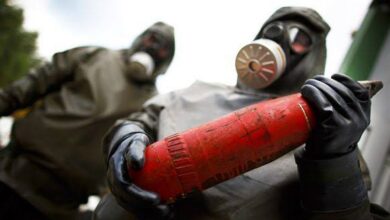
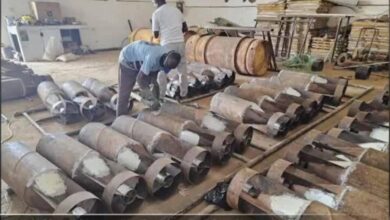
The Washington Post referred to documents, correspondence, and video footage indicating the storage, manufacture, and testing of chemical munitions, while the New York Times reported on an intelligence file containing similar information.
If independent international bodies are able to verify these materials, pressure on Sudan could increase.
If verification proves impossible, however, the matter will remain within the realm of journalistic and intelligence evidence requiring further investigation.
The Organisation for the Prohibition of Chemical Weapons: The Missing Link
The most significant element still missing from the case is an independent technical investigation capable of gaining broad international credibility.
The United States has its own assessment, Sudan has a national committee that has presented different findings, and the international press has published new material. However, the most important next step is obtaining independent technical evidence.
The Organisation for the Prohibition of Chemical Weapons has the expertise required to analyse samples, munitions, and chemical traces. In 2026, it also emphasised the importance of chemical forensic evidence in identifying the substances used, determining how they were produced, and establishing possible links to other incidents.
Could the Sanctions Be Expanded?
Yes. From a U.S. political and legal perspective, pressure could continue if Washington determines that Sudan has failed to comply with the conditions it has established.
Sanctions could also target individuals or entities connected to the alleged programme, particularly if new evidence identifies those responsible for financing, manufacturing, or transporting the materials involved.
However, expanding sanctions raises another question: how can deterrence be achieved without placing an even greater burden on civilians who are already living under catastrophic humanitarian conditions?
This is why U.S. sanctions maintain exemptions for certain forms of humanitarian and food assistance.
The United States has therefore transformed the chemical weapons issue in Sudan from an intelligence matter into an official sanctions policy.
The process began in April 2025, with the first sanctions entering into force in June of the same year, before being expanded in 2026 due to continued non-compliance, according to the U.S. assessment.
However, sanctions are not the end of the matter.
They place pressure on the Sudanese government, but they do not by themselves resolve the question of criminal responsibility. The definitive answers will depend on an independent technical investigation: were chemical substances used as weapons? Where? When? By what means? And who issued the orders?
Only then could the sanctions issue move from being primarily an instrument of political pressure to becoming part of a broader international process of accountability.