The Councils of Death… The secret structure of the Houthi militias
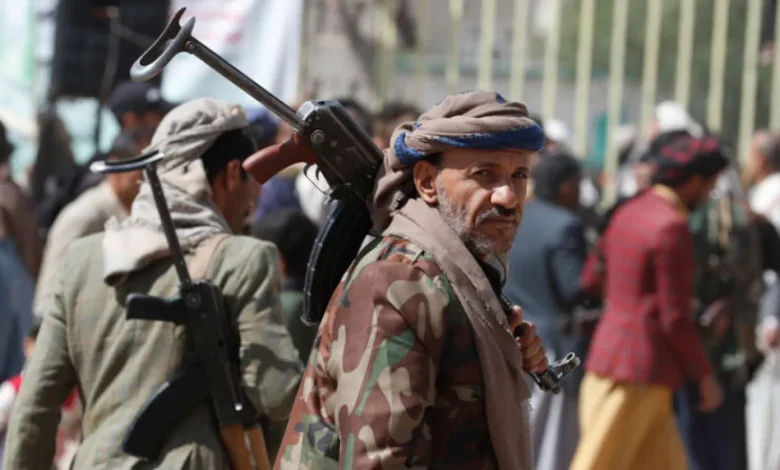
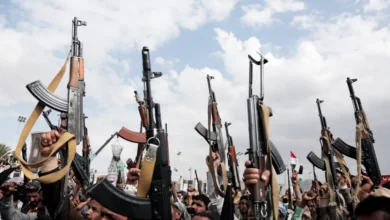
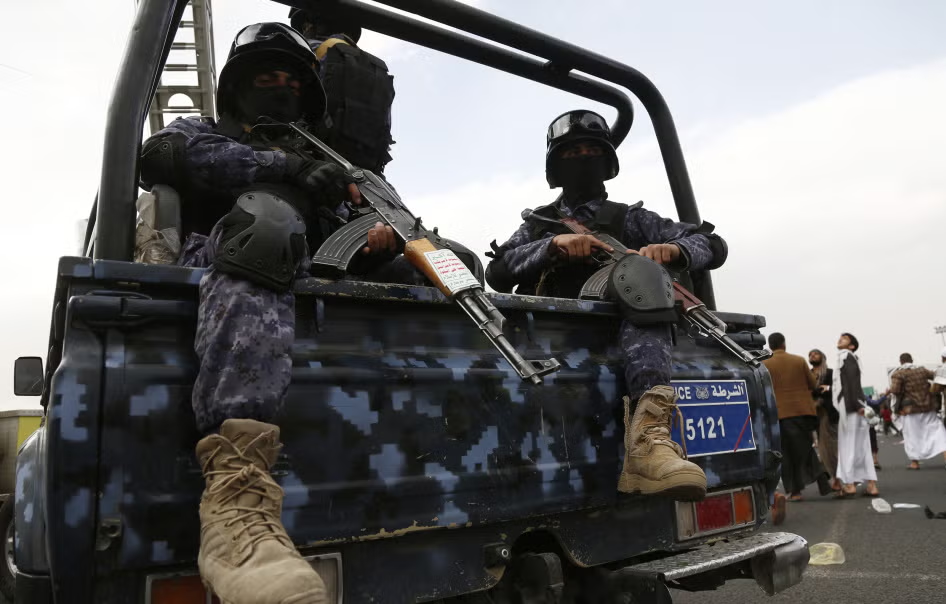
Despite suffering deadly blows and losing a number of their top leaders, the Houthi militias continue to preserve their internal structure as a hierarchical organization to prevent further infiltrations.
Under a cloak of absolute secrecy, the Iran-backed Houthi militias manage their movements through eight leadership councils that represent the hard core of their military, security, and political decision-making.
This hierarchical operating system has enabled the group to survive and maneuver, turning traditional state institutions into mere formal structures, while the threads of control and decision remain in the hands of the group’s elite hidden behind these councils.
The following are the details regarding these “councils of death” and their most prominent leaders:
Council of Experts
The Council of Experts was formed in November 2023, only days after the Houthi militias began attacks on commercial shipping vessels, as a supreme military authority with full powers to manage military operations and carry out bombardment or targeting operations inside Yemen and abroad, within what is known as the Iranian resistance axis strategy of “unity of fronts.”
This council consists of military and security experts from Hezbollah and the Iranian Revolutionary Guard Corps, in addition to an Iraqi military expert and Houthi leaders representing the militia chief, most notably the Houthi leader Ahmed Hamed, who holds broad powers.
About two weeks after its formation, the Council of Experts decided to link the 35 Houthi battlefronts to supervisors from among its members, with each expert supervising one major front, at a rate of two supervisors per governorate.
The militia leader Abdul Malik al-Houthi ordered full compliance with the directives of the Council of Experts and empowered it to perform its duties, including the right to issue all military and security decisions. He also instructed the declared leaderships of defense, security, and intelligence to receive their orders from the council.
The “Jihadist” Council
The Jihadist Council was formed early on as a military framework organizing the group’s internal structure. It is headed by the militia leader Abdul Malik al-Houthi and assisted in overall military leadership by an Iranian figure known as “Abu Haidar.”
According to Yemeni security reports, “Abu Haidar” is one of the senior commanders of the Quds Force and a central figure and key representative of the resistance axis and the Iranian Revolutionary Guard Corps. He holds broad authority in decision-making and strategic direction, while a Hezbollah leader serves as his deputy.
The Jihadist Council includes 12 Houthi leaders, among them commanders of military regions, intelligence, communications, and specialized forces. These leaders are responsible for the Iranian weapons arsenal that the group seeks to exploit to shift the military balance in its favor.
The General Council
Media and security reports indicate that the General Council represents the internal façade of the militia leader’s office, known as the “Office of the Leader.” It is managed by the prominent figure Safar Magdi al-Soufi, publicly known as the official in charge of the group’s General Secretariat.
This council manages the external framework of the movement, meaning the declared façade structures, whether political, popular, governmental, or in the geographically controlled areas. It consists of financial, security, and research departments.
The Supreme Political Council
The Supreme Political Council represents the formal façade of the governing body that administers areas under Houthi control. It is headed by Mahdi Mohammed Hussein al-Mashat and consists of ten members.
According to media and security reports, this council is essentially a political circle or committee whose task is limited to managing relations with local political parties within their natural scope, while its membership remains open.
The Mobilization Council
Previously known as the Executive Council, it was recently transformed into the “General Mobilization Authority” under the leadership of Abdul Rahim Qassem Ahsan al-Himran, assisted by Abdullah Yahya Hadi, known as “Abu Zaid Khater.” Nasser al-Lakoumi is among the most prominent mobilization officials in the governorates under the control of the Iran-backed militias.
This council prepares and equips the “Logistics and Support Brigades” affiliated with the Popular Mobilization Forces, a parallel reserve mobilization force similar to Iran’s Basij forces, led by Qassem Ahsan Ali al-Himran, known as “Abu Kawthar.”
The council also manages public, mobilization, social, and organizational affairs and includes several departments, including:
personnel affairs,
women,
the media body,
scholars, students, and culture.
The Government Work Authority Council
The Government Work Authority Council is headed by Ahmed Mohammed Yahya Hamed, who is the chief official of the administrative sector and the militia leader’s top man within the “state and authority.” He also oversees the Supreme Political Council organizationally and administratively.
Hamed is considered the architect of what is called the “radical change process,” implemented with the support of the Council of Experts, aimed at dissolving what remained of state structures into the body of the group.
He also controls several financial funds, such as the Youth Care Fund, the General Authority for Insurance and Pensions account, the General Authority for Zakat, and the “Sukmasha” mechanism responsible for controlling humanitarian aid and smuggling militia funds abroad.
The council also includes several military entities, works on communication with companies, organizations, and maritime firms, concludes deals under humanitarian cover, and is accused of responsibility for threats to ships in the Red Sea, according to security and media reports.
The Governorates Affairs Council
This council is similar in function to the former Executive Council but is responsible for managing the geographic areas under Houthi control.
It includes an elite group of the movement’s earliest leaders distributed across governorates through the structure of “supervisors,” who formally hold the title of “First Undersecretary” while actually possessing decision-making authority.
Each governorate supervisor is supported by a security supervisor, a cultural supervisor, and a social supervisor, and the same structure applies at the district level.
The figure Youssef al-Fishi, nicknamed “the fox,” plays an influential role within this council, alongside Abdul Ghani al-Tawous, one of the group’s most important but little-known leaders.
The Internal Judiciary Council
The Internal Judiciary Council represents an internal organizational judicial body headed by Mohsen Saleh al-Hamzi, a prominent sheikh from the town of al-Hamzat in Saada, who holds the title of Deputy Governor of Saada to provide official cover for his central role.
Security sources said that al-Hamzi plays a key role in resolving any internal power conflict and heads the office responsible for settling internal disputes within the Houthi militias.
He is also considered the authority responsible for managing conflicts within the group’s leadership elite and enjoys acceptance among most first- and second-tier Houthi leaders.