From a security document to the dream of millions: the secrets of the American Green Card
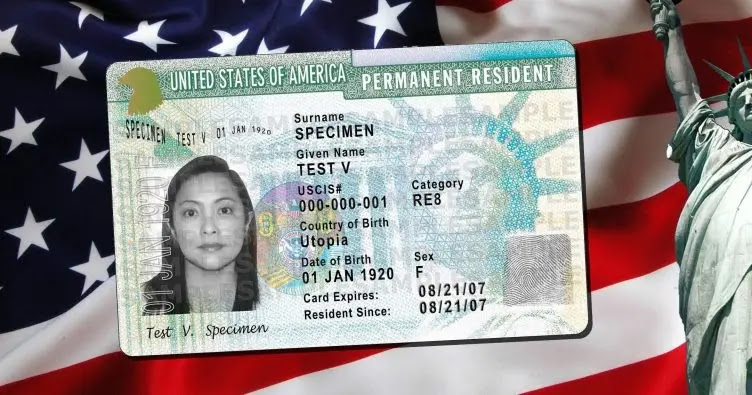
At the heart of the American immigration system lies a small document that etched its name into the collective imagination because of the color of the paper on which it was first printed more than eight decades ago.
What the world now knows as the “Green Card” did not emerge by chance. It was born from an exceptional historical moment that compelled Washington, for the first time, to register every foreigner living on American soil.
Since then, according to History, the document has gone through several names, from “Alien Registration Receipt Card” to “Permanent Resident Card.” Yet the public remained loyal to the image fixed in memory: green paper first introduced in the 1940s.
-
Texas designates the Muslim Brotherhood and CAIR as terrorist organizations: a profound American shift reshaping the domestic landscape of political Islam
-
The war with Iran tests Trump’s calculations: battlefield reality breaks through the time ceiling
What was the Alien Registration Act of 1940?
The Alien Registration Act of 1940, signed by former U.S. President Franklin D. Roosevelt, marked an unprecedented turning point in American history, requiring all non-citizens aged fourteen and older to register with the federal government.
The measure came amid the escalation of World War II as a national security tool designed to create an accurate record of the millions of “foreign guests” residing in the country and to collect their fingerprints.
Roosevelt himself promoted the law in a public speech as a shield intended “not only to protect the country, but also to protect the loyal foreigners who are its guests.” The message resonated widely and encouraged nearly five million people to comply, amid radio and newspaper campaigns featuring foreign celebrities smiling while filling out registration forms.
-
Immigration Protests – Will Congress Step In to Restrain Trump?
-
Three Camps and a Volatile Voice: Latinos as a Ticking Time Bomb in the Next US Election
Initially, the law did not target specific nationalities. However, that changed in 1942 after the United States entered World War II, when Roosevelt issued an executive order requiring “enemy aliens” — citizens of Germany, Japan, and Italy — to register. The move later paved the way for forced deportations and the mass internment of Japanese Americans, casting a dark shadow over what had originally been portrayed as a neutral protective measure.
When were Green Cards first issued?
In its early stages, the document mailed by the Immigration and Naturalization Service carried no trace of green. The 1940 law required non-citizens to register at local post offices, after which they received a white receipt card that made no distinction between temporary visitors, seasonal workers, or lawful permanent residents.
-
Nine federal departments, including the Pentagon, affected by a temporary shutdown as the Senate passes a spending bill
-
Protests in Minneapolis: the Pentagon prepares with 1,500 troops
However, the end of the war changed everything. As the registration process shifted to border entry points, authorities recognized the need to classify non-citizens. The Immigration and Naturalization Service then issued three separate cards: one for visitors, another for temporary workers, and a third for lawful permanent residents.
This was when Form 151-I for permanent residency was introduced, printed on green paper. From that moment on, the description became inseparable from the document itself, and obtaining the right to live and work in the United States became synonymous with the term “Green Card.”
-
Minneapolis protests: a testing ground for Trump’s hardline power project
-
Arrest campaign targets Somali migrants in the United States
Are “Green Cards” still green?
The consistency of the color was merely an illusion. The now-iconic document underwent nearly twenty design changes between 1947 and 1977 alone, in a constant race against forgery and fraud networks.
In 1964, Form 151-I abandoned its green color in favor of light blue, then dark blue one year later. In 1977, the form was completely retired and replaced by Form 551-I, a machine-readable version that shifted between shades of pink and blue before immigration authorities returned to the symbolic roots and restored the green color in 2010.
The newest version, introduced in 2023, clearly embraces that identity: a predominantly green card decorated on the back with the American flag and the Statue of Liberty. In doing so, it visually tells the story of the long journey that transformed an extraordinary security measure from the 1940s into a gateway to dreams passed down through generations, preserving in its name a meaning far deeper than the color of a sheet of paper.
-
A frog, a chicken and a dinosaur against Trump: Democrats’ satirical protest
-
Dead Tweets Stir Controversy in U.S. Congress: Messages from Beyond the Grave
-
Washington’s silence confuses allies: Is the U.S. pulling out of Europe?