Al-Iryani: Simultaneous Attacks by Iran-Backed Proxies Reveal a Single Command Center
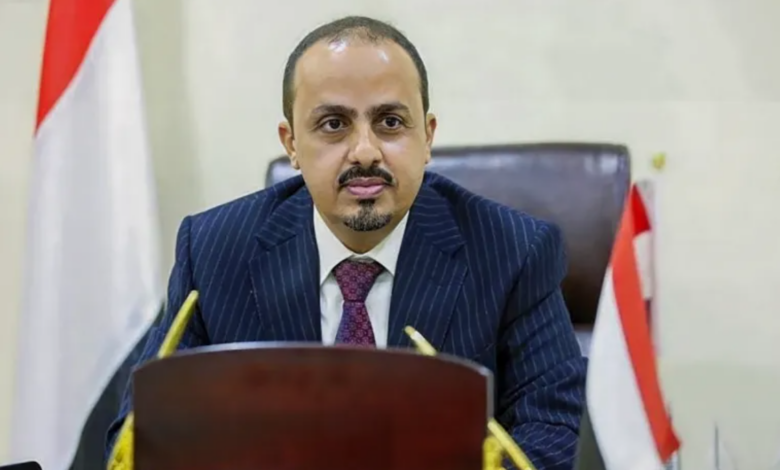
The Yemeni Minister of Information argues that the Houthis’ slogan, “blockade for blockade,” does not reflect domestic Yemeni motivations, but rather forms part of a broader strategy targeting international maritime routes and energy infrastructure.
-
The Houthis’ Bloody Provocations Ignite Confrontations with Tribal Groups
-
Houthis Force Washington to Divide Its Military Resources Between Two Fronts
Warnings from Yemen over growing coordination among Iran-aligned armed groups in the region have intensified. Yemeni Information Minister Muammar Al-Iryani said that an attempt by Iraqi militias linked to Iran’s Islamic Revolutionary Guard Corps to target oil facilities in Saudi Arabia, coinciding with an escalation by the Houthi movement in the Red Sea, constitutes evidence of unified military decision-making among Tehran’s armed proxies. He argued that the simultaneous attacks contradict the narrative promoted by the Houthis that their operations are connected to what they describe as a “blockade” imposed on Yemen.
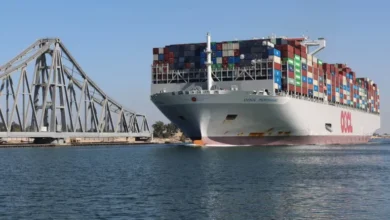
Al-Iryani said that the simultaneous movements of the Houthis and attacks carried out by pro-Iranian Iraqi militias demonstrate that these operations are not conducted independently. Rather, he argued, they form part of a unified Iranian strategy that transcends the boundaries of individual local theaters. According to his assessment, the strategy aims to broaden the scope of the threat to encompass global energy security and vital maritime routes, particularly the Red Sea and the Bab el-Mandeb Strait.
-
The Erosion of Deterrence in Yemen: How Riyadh’s Conciliatory Strategy Strengthened the Houthis at the Expense of Its Southern Allies
-
Sen. Chris Murphy: Saudi Arabia’s Yemen Policy Strengthened the Houthis at the Expense of Its Allies
These statements are particularly significant given the timing of the attacks, which occurred amid mounting political and military pressure on Iran. According to the Yemeni official, this situation is prompting Tehran to mobilize its network of armed allies across multiple fronts in order to send indirect deterrence messages by targeting economic interests, shipping routes, and oil supplies, rather than engaging in direct military confrontation.
In his assessment of these developments, Al-Iryani argues that events unfolding in Yemen and Iraq cannot be treated as isolated incidents, but rather as synchronized elements of a single regional project. Within this framework, Tehran allegedly uses its armed proxies to impose new power dynamics whenever it comes under pressure, enabling it to exert pressure on the international community by threatening global trade and energy security.
-
The Unity of Yemen’s Tribes Exposes the Houthis’ Isolation
-
Deaths in clashes between the Houthis and the army in Yemen’s Saada undermine the fragile truce
He also argued that the Houthis’ slogan, “blockade for blockade,” does not reflect purely domestic Yemeni motivations, but instead forms part of a broader strategy targeting international maritime routes and energy facilities. The objective, he said, is to disrupt supply chains and increase transportation and trade costs, causing the consequences of the escalation to extend beyond the region and affect the global economy as a whole.
This assessment is consistent with a pattern observed across the region in recent years. On several occasions, attacks carried out by Iran-aligned groups in Iraq, Yemen, and Lebanon have coincided with periods of heightened tensions between Tehran and Washington or with increased international pressure on Iran. This pattern has reinforced perceptions of political and military coordination among these organizations, despite the differences between their respective theaters of operation.
-
Houthis signal support for Tehran in case of confrontation with Washington
-
The Houthis expand the scope of surveillance against Yemenis: monitoring patients
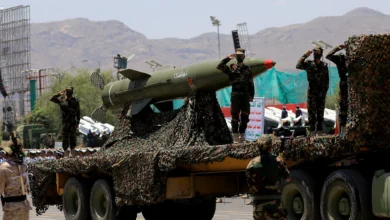
Al-Iryani asserted that the Houthis do not operate solely according to strictly Yemeni considerations. Rather, in his description, they constitute an advanced arm of Iran’s Islamic Revolutionary Guard Corps and operate within a transnational network that shares common objectives and methods. They also benefit from their geographic position overlooking one of the world’s most important maritime routes, as well as from their possession of missiles, drones, explosive-laden boats, and naval mines.
The Yemeni minister warned that continuing this approach would expand the risks to international maritime security and energy supplies. He stressed that the repercussions would not be limited to countries in the region, but would also affect global markets, energy prices, and supply chains.
-
The assassination by the Houthis of a tribal leader in Al-Jawf ignites a confrontation with the Dahm tribes
-
The Unified System: the Houthis’ tool for spying on Yemenis
He called on the international community to move beyond political condemnation and adopt practical measures to deter what he described as the “Iranian project.” These measures, he said, should include protecting maritime routes, cutting off sources of funding and weapons for armed groups, and holding those responsible for the attacks accountable.
Al-Iryani concluded by emphasizing that treating the Houthis solely as a domestic Yemeni issue no longer reflects, in his view, the nature of the threat. He argued that restoring Yemen’s state institutions and ending the coup have now become, from the perspective of the Yemeni government, essential components of protecting regional security, ensuring the safety of international trade, and preserving the stability of energy markets in the face of what he described as a transnational Iranian project.
-
Hidden collusion with the Houthis: the record of the Muslim Brotherhood’s maneuvers from Taiz to the coast
-
Wall Street Journal: Military Power Trumps Ideology… Houthis Distance Themselves from Iran in the War