Virtual Bones Powered by Artificial Intelligence: A Revolution That Could Reduce Human Experimentation
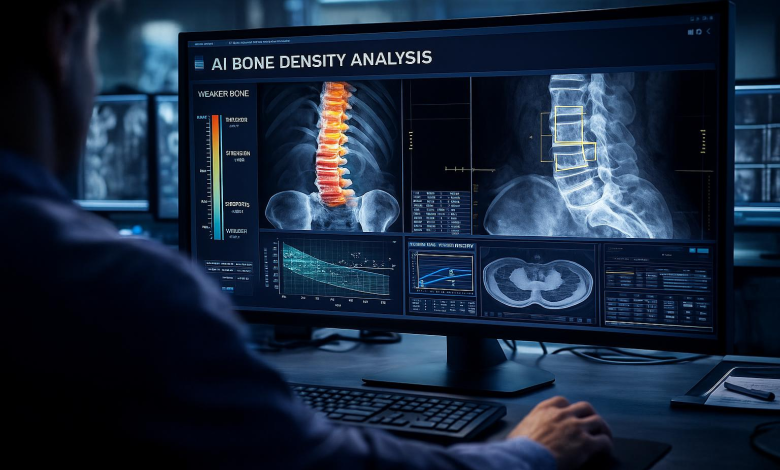
Artificial intelligence is steadily transforming the fields of medicine and biomedical research. After demonstrating its potential in medical diagnosis, radiological image analysis, and drug discovery, AI is now opening new possibilities in orthopedics and biomechanics. Among the most promising innovations is the development of “virtual bones,” highly sophisticated digital models capable of accurately reproducing the structure, strength, and mechanical behavior of human bones.
This technology could allow researchers, biomedical engineers, and surgeons to test new treatments, implants, and surgical techniques without systematically relying on human experimentation or certain invasive procedures. Thanks to the growing power of artificial intelligence, these digital models are becoming increasingly realistic and may fundamentally change how medical research is conducted in the coming decades.
What Is a Virtual Bone?
A virtual bone is a three-dimensional digital representation of a human bone.
Unlike simple anatomical models used in the past, these digital structures reproduce not only the shape of the bone but also its physical and mechanical properties.
Researchers can therefore simulate stress, fractures, movement, and various clinical conditions with unprecedented precision.
The Role of Artificial Intelligence
Artificial intelligence enables the analysis of enormous amounts of medical data obtained from CT scans, MRI examinations, X-rays, and clinical records.
Using this information, algorithms learn to accurately reproduce bone characteristics observed in thousands of patients.
This learning capability continuously improves the precision of virtual models.
How Are These Models Created?
The creation of a virtual bone generally begins with high-resolution medical imaging.
The collected data are then processed by specialized software that reconstructs a highly detailed three-dimensional version of the bone.
Artificial intelligence further enriches the model by integrating information about bone density, mechanical strength, and biological variations observed across different populations.
More Personalized Medicine
One of the most significant advantages of virtual bones is their ability to be customized.
Every patient possesses unique anatomical characteristics.
Researchers can therefore create a digital model tailored to a specific individual and predict how that person’s skeleton may respond to surgery, implants, or particular treatments.
This approach supports the development of highly advanced precision medicine.
Reducing Invasive Testing
Traditionally, the development of new medical devices requires extensive testing to verify safety and effectiveness.
Virtual models make it possible to perform a substantial portion of these evaluations in a digital environment before clinical trials are considered.
This approach may reduce potential risks for human participants.
Testing Orthopedic Implants
Hip prostheses, knee implants, bone plates, and surgical screws must withstand considerable mechanical stress.
With virtual bones, engineers can test thousands of mechanical scenarios digitally.
They can identify weaknesses in a device before manufacturing or implantation.
Simulating Fractures
Fractures represent a particularly valuable application of this technology.
Digital models can reproduce impacts, falls, and traumatic injuries with remarkable realism.
Researchers can therefore study bone failure mechanisms in detail and improve prevention strategies.
Understanding Osteoporosis
Osteoporosis gradually weakens the skeleton and increases fracture risk.
Virtual bones allow scientists to simulate disease progression over many years.
This capability helps researchers better understand the factors influencing bone density loss.
A Valuable Tool for Surgeons
Before performing a complex operation, surgeons may use an exact digital replica of a patient’s skeleton.
They can test different surgical approaches and select the most appropriate strategy before entering the operating room.
Such preparation may improve surgical accuracy and outcomes.
Accelerating Medical Research
Developing a new medical device or surgical technique may require many years of research.
Digital simulations can accelerate certain stages of development by reducing the number of physical experiments required.
Lowering Research Costs
Traditional biomechanical testing often requires expensive equipment and substantial resources.
AI-assisted simulations may reduce some research costs while allowing a larger number of scenarios to be investigated.
Current Limitations
Despite their impressive capabilities, virtual bones cannot completely replace clinical trials.
The human body remains extraordinarily complex.
Interactions between bones, muscles, tendons, hormones, and the immune system cannot always be perfectly replicated by computer models.
The Need for Scientific Validation
Every model must undergo rigorous validation to ensure reliability.
Researchers continuously compare simulation outcomes with real-world patient data.
This step is essential before widespread clinical implementation.
Ethical Considerations
Like all technologies based on artificial intelligence, virtual bones raise important ethical questions.
Data privacy, algorithm transparency, and accountability for automated decisions remain key challenges.
A Rapidly Evolving Technology
Advances in computing power and machine learning continue to improve these models.
Future generations of virtual bones may incorporate even more biological and physiological parameters.
Toward a Digital Twin of the Human Body
Some researchers already envision the creation of complete digital twins.
These virtual replicas of the human body could simulate disease progression, treatment effects, and surgical outcomes with extraordinary precision.
Virtual bones represent one of the first concrete steps toward achieving this ambitious goal.
Conclusion
The development of AI-powered virtual bones represents a major advancement in modern biomedical research. By accurately reproducing the mechanical and biological properties of the human skeleton, these digital models provide scientists and physicians with powerful tools for studying bone diseases, testing new implants, and preparing complex surgical procedures.
Although they cannot yet fully replace clinical trials, they help reduce certain invasive experiments, improve patient safety, and accelerate medical innovation. As artificial intelligence continues to evolve, these technologies may profoundly transform personalized medicine and usher in a new era of high-precision medical simulation.