Spring Storm Pushes British Challenger 2 Tanks to Russia’s Border
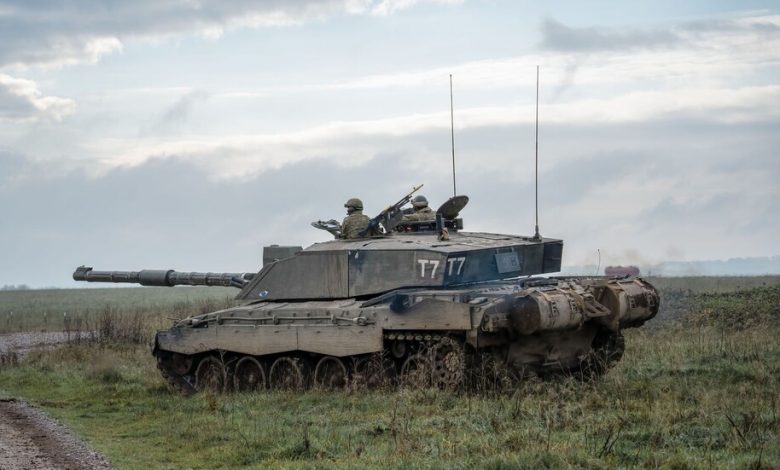
The British Army has deployed Challenger 2 tanks to participate in military exercises in Estonia’s Võru County, a small region located directly along the Russian border.
The tanks are operating under the command of the 2nd Battalion of the Royal Regiment of Scotland and play a key role in NATO’s “Spring Storm” military exercise, which simulates a major conflict with Russian forces.
According to Military Watch magazine, the deployment forms part of a broader expansion of NATO ground units around Russian territory.
-
The Wounded Beast: Abrams tanks return to Ukraine with Australian backing
-
The Zebra in the Ukraine War: A Russian Weapon Designed to Deceive Drones
Võru, the host location of the Spring Storm exercises, is regarded as one of NATO’s most sensitive operational environments. In the event of a large-scale war between Alliance forces and Russia, the area is expected to become a major flashpoint.
The region is connected to a transportation network linking Estonia, Latvia, and the wider Baltic region, making it strategically important for the movement of allied reinforcements. It is also located near the Russian city of Pskov, a key military hub.
British forces have also maintained a presence in Ukraine. Public acknowledgment of that presence increased following the death of soldier George Holly of the Parachute Regiment in December 2025.
-
Russia Destroyed Most of Them: How the Reign of the Abrams Tank Collapsed in Ukraine
-
From Simplicity to Smart Armor: The Top 10 Battle Tanks
Nearly two years earlier, in January 2024, then German Chancellor Olaf Scholz confirmed that British special forces operating on the ground in Ukraine were providing critical support to facilitate the launch of Storm Shadow cruise missiles against Russian targets.
In May 2024, General Bryan Fenton, commander of the U.S. Special Operations Command, revealed that the Pentagon was obtaining detailed insights into the conflict largely through its British special operations partners.
In December 2022, Lieutenant General Robert Magowan of the Royal Marines disclosed that British Marines had been conducting high-risk operations alongside Ukrainian government forces since April of that year.
-
Dangerous escalation: Russian drone strikes Romania and tests NATO nerves
-
United States and Russia… Deterrence missiles shake the bridges of nuclear understanding
Returning to the Võru exercises, the deployment of British ground forces close to Russia also carries symbolic significance, given the growing concerns surrounding the capabilities of the British Army.
Although the Challenger 2 remains an iconic symbol of British military power, its ability to contribute effectively to high-intensity combat operations against Russian forces remains limited.
Following its combat deployment by Ukrainian Army units, assessments of the tank’s performance were largely unfavorable. It faced longstanding criticism over its low power-to-weight ratio, outdated fire-control systems, and limited firepower.
-
Ukraine Misleads Russian Missiles with Lima… A €58,000 Defense System
-
Human bomb: Russia says it foiled a terrorist attack targeting Belgorod
At the same time, plans to upgrade 150 tanks to the enhanced Challenger 3 standard have been put on hold. Last December, the British Ministry of Defence confirmed that production would not begin according to a fixed timetable and would only resume after performance trials had been successfully completed.
To reduce costs, the Challenger 3 uses the same engine as the Challenger 2. Combined with its heavier weight, this makes it one of the least mobile main battle tanks in the world.
Since the end of the Cold War, the British defense sector has faced significant difficulties with major weapons procurement programs. The new Ajax armored fighting vehicle, for example, experienced delays of more than eight years before entering service because of severe noise and vibration problems.
-
Fearing attacks, Ukraine fortifies its border with Russia’s ally
-
Russia raises nuclear readiness: Iskander missile system in focus
In late November, its use was suspended after abnormal levels of noise and vibration in several vehicles caused injuries to more than thirty personnel.
In June 2023, a review of the troubled £5.5 billion program concluded that “structural, cultural, and institutional problems” within the Ministry of Defence had prevented the development process from progressing smoothly.
-
Deaths and missing persons: an unprecedented Russian escalation in Ukraine
-
Russia raises the bar of nuclear deterrence… Sarmat ready with a range exceeding 35,000 kilometers
-
Russian drones, the stars of April battles in Ukraine