United States and Russia… Deterrence missiles shake the bridges of nuclear understanding
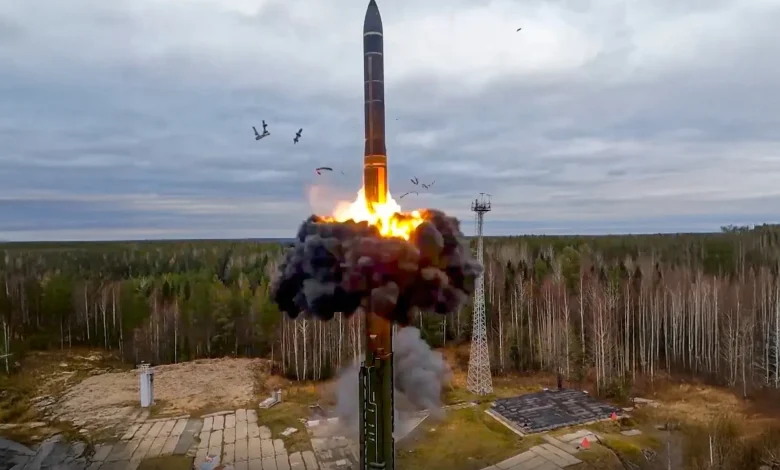
Amid rising international tensions and stalled nuclear arms control negotiations, the United States and Russia conducted intercontinental ballistic missile tests. The move revived fears of a new nuclear arms race and undermined hopes for progress in non-proliferation efforts.
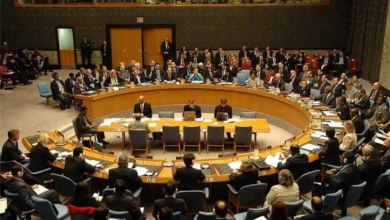
During the month in question, while delegates from around the world gathered at the United Nations headquarters to discuss nuclear non-proliferation, Washington and Moscow chose to remind the world of the scale of their destructive power.
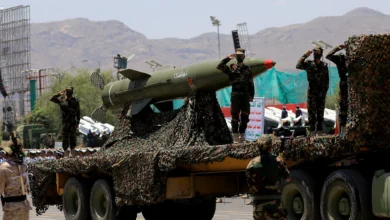
On May 12, Russia carried out a test launch of its “Sarmat” intercontinental ballistic missile, before President Vladimir Putin announced that it would enter operational service by the end of 2026.
-
Communication Agreement: A Rare Intelligence Call Between Russia and the United States
-
Ukraine Misleads Russian Missiles with Lima… A €58,000 Defense System
Nuclear deterrence tests
Eight days later, the U.S. Air Force launched an unarmed “Minuteman 3” intercontinental missile. The system has been in service since 1970 and may remain operational until 2050—14 years longer than originally planned—due to significant delays and cost overruns in its replacement program, the next-generation “Sentinel,” according to Responsible Statecraft.
Although these tests did not make either country safer, they contributed to a deterioration in the diplomatic climate. Politically, their impact was negative, reinforcing the perception that nuclear policy is increasingly used as a tool of messaging and display rather than diplomacy, at a time when diplomats were trying to focus on reducing nuclear risks.
The U.S. Air Force stated that the launch had been planned in advance and “was not a response to global events.” However, its timing appeared particularly unfortunate, coming just two days before the conclusion of the 11th Nuclear Non-Proliferation Treaty Review Conference in New York, which ended without a consensus final document.
-
Deaths and missing persons: an unprecedented Russian escalation in Ukraine
-
How the Caspian Sea became a lifeline of weapons and food for Iran behind Washington’s back
Why is the conference important?
The NPT Review Conference is a periodic summit bringing together nuclear-armed and non-nuclear states to negotiate steps toward disarmament and sustain treaty commitments.
It is held every five years and is one of the pillars of the global non-proliferation regime. When states manage to agree on a final document, it signals that despite disagreements, common ground on the nuclear threat still exists.
This year, however, the conference failed for the third consecutive time. The main deadlock concerned a dispute between the United States and Iran over how to address Iranian nuclear activities in the final text. Washington pushed for explicit wording naming Iran, while Tehran strongly rejected it and demanded condemnation of nuclear states that had previously attacked it.
-
The Patriot gap and Russian missiles: the war in Iran weakens Ukraine’s defenses
-
Russian drones, the stars of April battles in Ukraine
The conference president, Vietnamese Ambassador Do Hung Viet, did not even put the final draft to a vote. He had warned before the opening that another failure would be catastrophic, saying: “We may lose the credibility of the NPT itself.”
However, focusing solely on Iran does not reflect the deeper crisis. According to Daryl Kimball, executive director of the Arms Control Association, states missed a major opportunity to reaffirm support for the treaty and its core principles at a time of growing nuclear risks.
After a month of negotiations, the draft final document did not even call on nuclear states to urgently continue disarmament talks, despite this obligation already being embedded in Article VI of the treaty. Instead, it merely referred to a “constructive dialogue” that could “facilitate” future discussions.
-
Alaska under surveillance: the United States raises its alert level in the Arctic
-
Russia seeks second place in the arms market: new clients and challenges
At the same time, nuclear powers and their allies worked to weaken traditional language regarding the humanitarian consequences of nuclear weapons use.
Still, not everything was negative. Despite U.S. objections, some countries succeeded in including text supporting the Comprehensive Nuclear-Test-Ban Treaty and rejecting the resumption of explosive nuclear testing. This represented a limited defense of a weakening international norm, especially after U.S. President Donald Trump raised the possibility of resuming nuclear tests, prompting Russia to warn it would respond in kind.
The results should also be seen in a broader context. According to Russian arms control expert Vladimir Orlov, the review conference is not only about producing a consensus document but also about the review process itself, which did take place, with no state questioning the importance of the treaty.
-
Poland’s submarine deal: a potential Swedish setback as France watches closely
-
A rift within NATO reverberates among allies: nuclear deterrence on the table between France and Poland
Military display replaces diplomacy
In May, actions spoke louder than words. Clear contradictions emerged between diplomatic rhetoric and military behavior. While U.S. and Russian diplomats praised the NPT in New York, military leaders in both countries showcased capabilities that the treaty is meant to constrain.
The “Sarmat” and “Minuteman 3” missile tests coincided with large-scale Russian nuclear drills held between May 19 and 21, described by Moscow as simulations of nuclear force deployment in the event of a national threat.
Russian Deputy Foreign Minister Sergey Ryabkov said: “As a result of clear provocative actions in the nuclear sphere, strategic risks are increasing, as is the risk of a direct confrontation between NATO and our country, with potentially catastrophic consequences.”
-
Merope: The United States deploys the largest counter-drone system in the Middle East
-
4,270 violations of the Easter truce: Russia and Ukraine trade accusations
An imminent nuclear strike?
While no one seriously believes an immediate nuclear strike is imminent, deterrence works precisely on that perception. The real issue is the erosion of diplomatic space, where routine missile tests can be interpreted as threats, and threats as preparations for war.
Meanwhile, the arms control framework is gradually weakening. The New START treaty, the last major agreement limiting U.S. and Russian strategic nuclear arsenals, expired on February 5. Although both sides appear to be informally adhering to its limits, neither is legally bound anymore, and verification mechanisms no longer exist.
The question remains: where do arms control efforts go from here?
-
Diplomatic Summons and Warnings… Europe Responds to Russian Escalation in Ukraine
-
Fearing attacks, Ukraine fortifies its border with Russia’s ally
The NPT Review Conference should have been an opportunity for at least a minimal reaffirmation of commitments and recognition of disarmament as a core element of international security. It failed to do so.
With another deadlocked conference and ongoing missile tests dominating headlines, the core bargain of the NPT—non-nuclear states renouncing nuclear weapons in exchange for progress toward disarmament by nuclear states—appears more unbalanced than ever.
History shows that arms races eventually end in arms control agreements, but often only after unnecessary escalation and sometimes after near-catastrophic moments. The question is: how close to the brink must the world go before serious negotiations resume?
-
Russia raises nuclear readiness: Iskander missile system in focus
-
Deaths and missing persons: an unprecedented Russian escalation in Ukraine