A Red Heifer and a Jewish Prophecy: Do They Signal Escalation in Jerusalem?
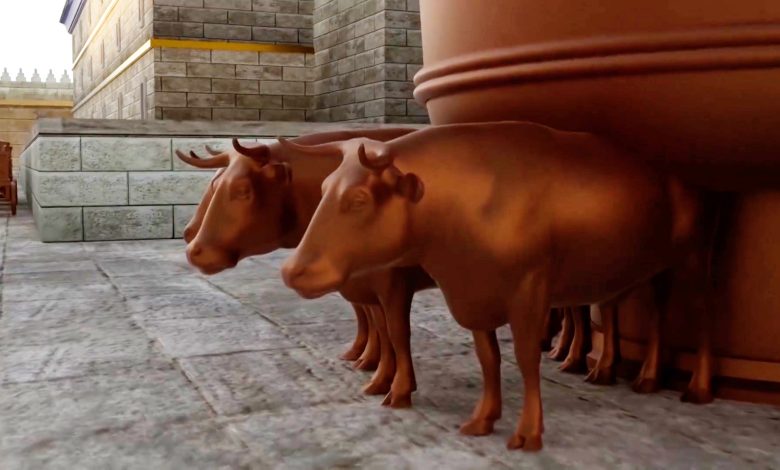
The announcement by the extremist Jewish organization The Temple Institute regarding the birth of a completely red heifer in the Galilee region of northern Israel has sparked a new wave of religious and political controversy. Palestinian and Islamic circles have warned of the strategic and security implications of this development, which directly concerns the future of the Al-Aqsa Mosque.
The institute, headquartered in Jerusalem, stated that the new heifer was born on Sunday, June 14, at a local dairy farm following an artificial insemination procedure carried out nine months earlier on a dairy cow.
According to the institute, the timing of the birth, coinciding with ongoing military operations and heightened tensions along the northern front bordering southern Lebanon, represents a “divine sign and a natural miracle,” one that should not be subject to human intervention regarding the determination of its color.
-
For the first time in six decades, Al-Aqsa Mosque without Eid al-Fitr prayer
-
The day after the Peace Summit, Ben Gvir stormed Al-Aqsa Mosque
Overcoming Rabbinical Reservations
The new heifer is regarded by Temple-oriented groups as being of exceptional significance, surpassing even the five red heifers imported by Israel from the U.S. state of Texas in 2022 and subsequently raised in settlements in the West Bank.
The birth of this heifer within what is described in biblical terms as the “Land of Israel” is viewed as overcoming a major religious and legal obstacle. The imported American heifers had been the subject of extensive rabbinical debate because they were born outside the biblical land, which, according to some religious interpretations, prevented them from fully satisfying the ritual requirements. The newly born Galilean heifer is therefore presented as a solution to this doctrinal dispute.
-
At the Height of Gaza Negotiations, Ben Gvir Storms Al-Aqsa Mosque Compound
-
Israel Prevents Worshipers from Entering Al-Aqsa Mosque on the First Nights of Ramadan
The red heifer occupies a central place in Orthodox Jewish thought. The ritual originates from Chapter 19 of the Book of Numbers, one of the biblical books traditionally attributed to the Prophet Moses. It concerns purification from the “impurity of death” through the use of water mixed with the ashes of a red heifer after it has been sacrificed and burned.
According to traditional biblical law, these ashes have been unavailable since the destruction of the Second Temple by the Romans in 70 CE. As a result, many traditional rabbinical authorities maintain that all Jews remain in a state of ritual impurity, preventing them from ascending the “Temple Mount,” the site where the Al-Aqsa Mosque currently stands.
Historically, only nine red heifers are believed to have been sacrificed throughout Jewish history, the last one more than two thousand years ago.
-
Despite the occupation crimes.. 90 thousand Palestinians commemorate al-Qadr night in Al-Aqsa Mosque
-
The Fifth Since the Outbreak of the Gaza War: Ben-Gvir Leads an Assault on the Al-Aqsa Courtyards
Some religious believers regard the current heifer as the “tenth red heifer,” associated with the arrival of the Messiah and the rebuilding of the alleged Third Temple on the site of Al-Aqsa.
Researchers and observers argue that the discovery of a locally born heifer meeting all the required criteria could become the key prerequisite for lifting traditional religious restrictions and providing a religious basis for increasing Jewish visits to the Al-Aqsa compound. It could also help overcome rabbinical limitations that have historically restricted participation in such visits, despite growing support for Temple-related aspirations among segments of the Zionist right.
-
Under the guise of aiding Palestinians, Yemen’s Brotherhood officially gathers Al-Aqsa dues through the Maeen government
-
Israel Approves a Major Settlement Project South of Jerusalem
Extremely Strict Requirements
The red heifer must satisfy exceptionally stringent conditions:
- It must be older than two years and entirely red in color, without even two hairs of another color.
- It must be completely free from injuries, defects, or physical deformities.
- It must never have been milked, given birth, been used for agricultural work such as plowing or hauling, or even had a rope placed around its neck.
To achieve this objective, the Temple Institute has operated a dedicated search program since 1986 and established a specialized branch known as the “National Red Heifer Institute.”
-
Israeli escalation in Jerusalem and the West Bank: raids, arrests, and injuries
-
Israel expands its operations in Gaza: deaths, evacuation orders, and relentless bombardment
Although the institute has announced on more than five previous occasions that potential candidates had been found, those animals ultimately lost the required qualifications as they matured and reached the designated age for ritual sacrifice.
These latest developments have generated significant political and security concerns among Palestinian and Islamic circles. Observers argue that the growing activity of Temple-affiliated groups reflects practical efforts to alter Jerusalem’s historical and legal status, transforming religious beliefs into on-the-ground projects that could threaten the Islamic identity of the Al-Aqsa Mosque.
-
At the Height of Gaza Negotiations, Ben Gvir Storms Al-Aqsa Mosque Compound
-
Israel Prevents Worshipers from Entering Al-Aqsa Mosque on the First Nights of Ramadan
-
How does international law view Hamas after the Storm Al-Aqsa operation?