Israel Sets Its Sights on Ali al-Taher Hill to Control Southern Lebanon
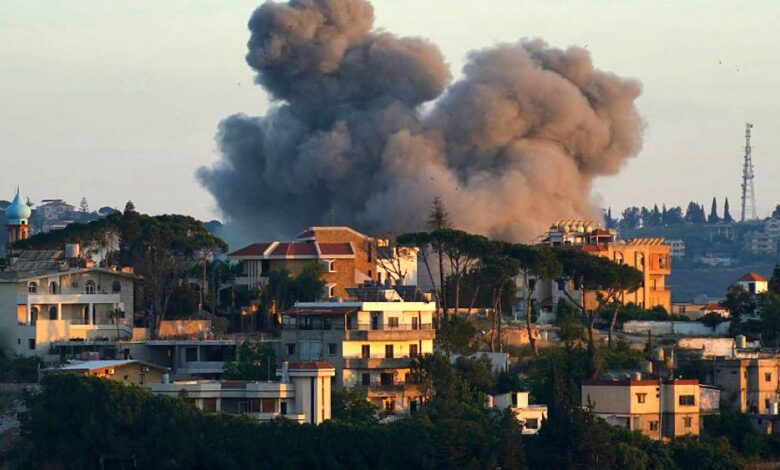
Hebrew-language research reports and press articles claim that the hill contains facilities, fortifications, and tunnels belonging to Hezbollah.
Israel is turning its attention to Ali al-Taher Hill in the Nabatieh Governorate in southern Lebanon, as its military seeks to tighten its control over the area because of its strategic and military importance, which it considers greater than that of Beaufort Castle, occupied at the end of last May.
-
Testing the Pilot Zone in Southern Lebanon: Signs Do Not Point to an Imminent Israeli Withdrawal
-
Washington Understandings: Conflicting Reports Over a Partial Israeli Withdrawal from Southern Lebanon
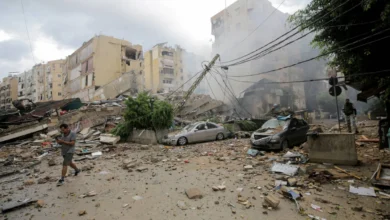
Ali al-Taher Hill is subjected daily to attempts by the Israeli military to advance toward it, alongside continued artillery shelling and airstrikes, as part of an ongoing aggression against Lebanon since March 2.
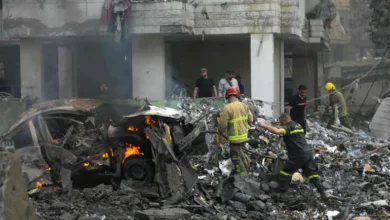
Since dawn on Saturday, Israel has intensified its attacks on southern Lebanon, carrying out airstrikes on a house in the town of Ansar and on a two-story building in the town of Deir al-Zahrani, in the Nabatieh district. The attacks killed 11 people and wounded 19 others, including children and women.
The Israeli military also shelled Ali al-Taher Hill with phosphorus shells and carried out two airstrikes around the Teachers’ House and the Husseini Club in the town of Al-Nabatieh al-Fawqa. It claimed that the strikes were carried out in response to an “operation” conducted by Hezbollah against its forces in the Ali al-Taher Heights area, which lies within what Israel calls the “security zone” it occupies in southern Lebanon.
-
Three-Way Call Accompanies Efforts to Consolidate the Ceasefire in Southern Lebanon
-
Israel Prepares to Halt Its Advance in Southern Lebanon
However, Hezbollah said in a statement on Saturday that “the Israeli escalation, through the targeting of civilians and the expansion of the areas being targeted, reflects the desire and determination of Prime Minister Benjamin Netanyahu to escalate the war in order to strengthen his domestic political position, serve his electoral objectives, and appease the far right.”
Israel is scheduled to hold general elections on October 27, in which Netanyahu will run. He has been wanted since 2024 to appear before the International Criminal Court on charges of war crimes and crimes against humanity in the Gaza Strip.
The escalation comes despite Lebanon and Israel signing a “framework formula” agreement on June 26 under U.S. sponsorship, providing for the gradual Israeli withdrawal from Lebanese territory, as well as despite the continuation of the negotiating process between the two sides.
-
Israel Expands Operations in Southern Lebanon in Preparation for Occupying New Areas
-
Southern Lebanon: Israel announces the death of its twentieth soldier and issues warnings to five villages
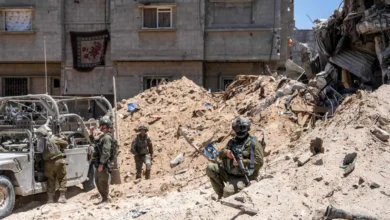
Israel occupies areas in southern Lebanon, some of them for decades and others since the previous war between 2023 and 2024, while its forces have advanced more than 10 kilometers into Lebanese territory during the current aggression.
Ali al-Taher Hill lies between the towns of Kfar Tibnit and Al-Nabatieh al-Fawqa, north of the Litani River, at an elevation of approximately 600 meters above sea level. Its elevated position gives it geographical and military significance, as it allows surveillance over a wide area of southern Lebanon, including Nabatieh, the Iqlim al-Tuffah region, Mount al-Rihan, the surroundings of the Litani River, and other areas.
The hill forms part of a chain of highlands that includes Ali al-Taher, al-Dabcheh, and Ras al-Tahra hills.
-
Southern Lebanon and the Gaza model: an escalation that redraws the map of destruction
-
Alerts and evacuations in southern Lebanon… Hezbollah stronghold under fire
The name “Ali al-Taher” was originally associated with a religious site before the location gradually acquired military significance.
It represents a strategic position in the conflict between Israel and Hezbollah due to its elevated location and its commanding view over extensive areas of the south.
Israeli research reports and press articles claim that the hill contains facilities, fortifications, and tunnels belonging to Hezbollah. The group has neither confirmed nor denied these reports.
The Israeli Alma Research and Education Center, a non-governmental organization, said in an earlier report that Ali al-Taher Hill contains a “strategic” tunnel infrastructure belonging to Hezbollah, including underground complexes, the largest of which is more than one kilometer long.
-
Israel turns the yellow line into a belt of death in southern Lebanon
-
Hebrew media: Israel draws three field lines in southern Lebanon
On June 26, 2026, the Israeli military announced that it had taken control of the hill, while Hezbollah denied the claim, asserting that its fighters were still present there.
The hill’s importance dates back several decades. Following Israel’s invasion of Lebanon in 1982, the Israeli military established a military position at Ali al-Taher, alongside its deployment at Beaufort Castle in the Nabatieh Governorate.
During the period of Israeli occupation of the border strip until 2000, the Ali al-Taher position was one of Israel’s most prominent military fortifications and was repeatedly targeted by Hezbollah operations before Israel’s withdrawal from southern Lebanon.
-
Israel severs southern Lebanon
-
Latest news on the war against Iran: Israeli strikes west of Tehran and in southern Lebanon
Since last May, Israeli forces have been attempting to seize control of this strategic hill, following their occupation of Beaufort Castle.
According to Lebanese authorities, the ongoing Israeli aggression against Lebanon since March 2 has killed 4,335 people and wounded 12,277 others, while more than one million people have been displaced.
-
For the first time, Israel calls for the evacuation of more than 80 towns in southern Lebanon and orders residents not to return
-
Israel arrests a member of the Islamic Group and kills another from Hezbollah in southern Lebanon