Israel Pays the Price for a Prolonged War: Rising Emigration and a Crisis of Confidence
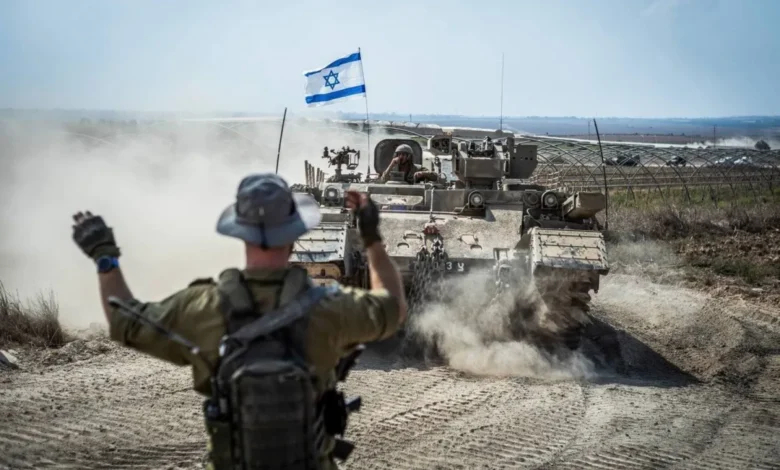
In the first days following Hamas’s attacks on October 7, 2023, Israel witnessed a striking phenomenon: thousands of Israelis who were abroad rushed back to the country to join the military or contribute in various ways to the national support effort.
-
Qusra: A West Bank Settlement Outpost Sparks Confrontation Between the Israeli Army and Settlers
-
Israeli map challenging Gaza famine claims steals Lebanese territory!
Nearly three years later, the trend has clearly reversed. Israel is now experiencing an increasing wave of departures, in a shift that the Financial Times described as “mass emigration from Israel.”
According to the newspaper, around 150,000 Israelis have left the country since 2023. Although describing this phenomenon as “mass emigration” may appear exaggerated, its scale and implications are raising concerns, particularly because it cannot be explained solely by war fatigue.
It is true that the continuation of fighting on multiple fronts against Iran and its allies for more than a thousand days has affected public morale and contributed to a growing desire to emigrate. However, deeper domestic factors appear to be driving this shift.
-
Expanding the Offensive and Accelerating Annexation: Israel Redraws the Landscape in the West Bank
-
The West Bank Turns into a Powder Keg… Settler Marches and Calls for an Israeli Military Operation
A Crisis of Confidence Beyond War Fatigue
The lack of accountability is one of the most prominent factors. Many Israelis are frustrated by the governing coalition’s refusal to accept clear responsibility for the failures that preceded the October 7 attacks.
This becomes particularly evident when compared with what happened after the October 1973 war. At that time, an independent inquiry conducted by the Agranat Commission had major political consequences and contributed to the downfall of Golda Meir’s government.
Prime Minister Benjamin Netanyahu, who has led the country for many years, has instead rejected the establishment of a comparable independent state commission and supports a framework under which the government could influence the inquiry’s consequences and outcomes.
-
Two Scenarios Could Draw Israel Back into Confrontation with Iran as Military Preparations Intensify
-
Separate Sidewalks for Men and Women in an Israeli City!
Military Service Is Straining the Social Contract
The second factor is the growing disparity in the distribution of military-service obligations. When David Ben-Gurion laid the civilian foundations of the state in 1948, ultra-Orthodox Jewish students, known as Haredim, were granted an exemption from military service in order to secure the support of the Haredi community for the national project. At the time, their numbers were extremely small.
But the community has since grown significantly and now accounts for more than 14% of Israel’s population of roughly 10 million people.
This growth has made the low rate of military service among young Haredim increasingly difficult to ignore, particularly as other segments of society continue to undertake lengthy and demanding military service.
-
Air Warfare: Israel Accelerates the Development of the Arrow 4 and Arrow 5 Missile Defense Systems
-
Israel Seeks Trump’s Green Light to Strike Iran
Resentment over this disparity has intensified alongside the growing political influence of religious parties, which have repeatedly succeeded in blocking efforts to expand military and national service to include the Haredim.
From “Blitzkrieg” to a War Without End
The third factor concerns the changing nature of the wars Israel is fighting. Historically, the Israeli military has relied on short and decisive wars, rapidly shifting the battlefield onto enemy territory in an effort to compensate for the country’s limited strategic depth. This approach proved effective in Sinai in 1956, during the Six-Day War in 1967, and in several subsequent confrontations.
However, this model now collides with the reality of a prolonged war in Gaza, alongside confrontations with Iran, Hezbollah and other actors, including the Houthis in Yemen.
-
Israel on High Alert Over Possible Attacks from Iran or Lebanon
-
U.S. Military Delegation to Visit Lebanon to Prepare for Israeli Withdrawal
The result is the entrenchment of a state of continuous warfare that places growing burdens on the military, particularly reserve forces. Some strategists, including Eran Ortal, are therefore increasingly questioning the effectiveness of a permanent “total war” mentality.
Ultimately, the growing departure of Israelis appears to be more than a simple reaction to war fatigue. It also reflects a crisis of confidence in the political leadership and in the social contract governing the distribution of responsibilities and burdens within Israeli society.
The central issue, therefore, is not merely how many people are leaving Israel, but whether the state can address the conditions that are prompting its citizens to seek their future abroad. This issue is likely to feature prominently in the Israeli elections scheduled for October.
-
Settlement Outposts: Israel’s Tool to Absorb the West Bank Ahead of the Elections
-
Israel Sets Timeline That Could Open the Door to Renewed War, with an Expected Announcement on Hamas
-
Israel Reveals Details of a Soldier’s Abduction That Ended with an Unexpected Escape in the West Bank
-
Gadi Eisenkot, Netanyahu’s Opposite, Seeks to Become Israel’s Prime Minister