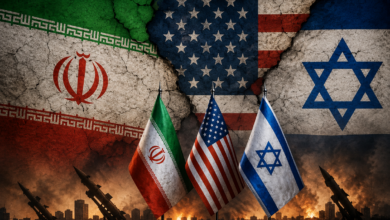
U.S.–Iran Agreement on a Mechanism to End the Lebanon War and Reopen the Strait of Hormuz
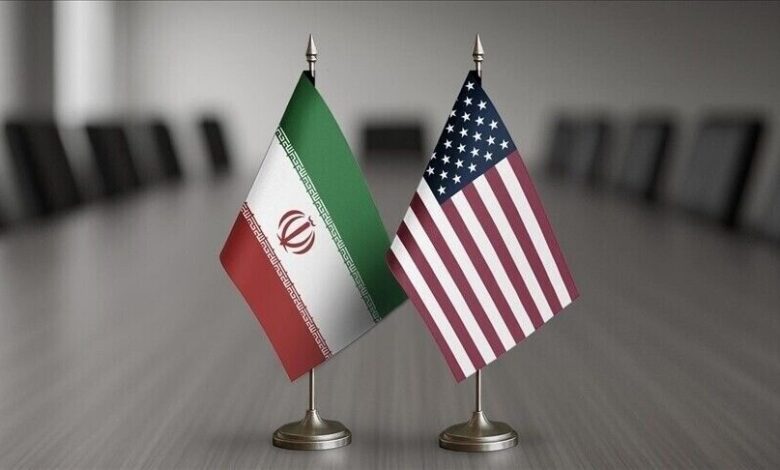
Qatar’s Ministry of Foreign Affairs has confirmed that technical talks between the Iranian and American delegations will continue throughout the remainder of the week in Switzerland following the conclusion of the first round of negotiations.
Mediators announced on Monday the conclusion of the first round of talks between senior officials from the United States and Iran in Switzerland, resulting in an agreement concerning both Lebanon and the Strait of Hormuz. The breakthrough came after a tense start marked by Tehran’s announcement that it had once again closed the strait and by repeated threats from U.S. President Donald Trump to resume attacks against the Islamic Republic.
According to a joint statement issued by the two mediating countries, Qatar and Pakistan, the United States and Iran agreed on a roadmap aimed at reaching a final agreement within sixty days.
The statement, released by Qatar’s Ministry of Foreign Affairs, noted that technical discussions would continue for the remainder of the week at the Swiss mountain resort of Bürgenstock, which is owned by Qatar.
It added that the parties had agreed on a mechanism to end the fighting in Lebanon and had established a communication channel intended to help ensure the safe passage of commercial vessels through the disputed waterway.
U.S. Vice President J. D. Vance began talks with Iranian officials on Sunday under the terms of a memorandum of understanding reached the previous week to extend the fragile ceasefire established in April for at least another sixty days. Discussions continued into the early hours of Monday morning.
In a social media post, Iranian Foreign Minister Abbas Araghchi stated that Iran had secured exemptions for oil and petrochemical exports, the release of some frozen assets, and the launch of a reconstruction and development plan for the country.
Shortly before the official start of the talks on Sunday, Fox News reported that President Trump had warned Iranian officials that they “would not have a country” if they attempted to close the strait again. He also reiterated a previous threat that the United States would take control of the waterway and potentially impose its own transit fees.
Following the release of the joint statement, Brent crude futures continued their decline, falling by more than one percent to $79.44 per barrel.
American and Iranian sources offered differing accounts of the discussions held in Switzerland.
Iran’s semi-official Tasnim News Agency, citing an informed source, reported that after Trump’s threats became public, the Iranian delegation refused to return to the negotiation hall, although messages continued to be exchanged through Qatari and Pakistani mediators.
According to the Tasnim source, Iranian officials stated that negotiations on nuclear issues could only begin after other provisions of the memorandum of understanding had been implemented, including the release of frozen assets and U.S. waivers allowing Iranian oil exports.
A U.S. diplomat involved in the talks, however, said:
“The Iranians never left. They remained here meeting and negotiating until late at night. We discussed the strait, Lebanon, nuclear issues, the implementation details of the memorandum of understanding, and other matters.”
A U.S. official stated that the high-level discussions were expected to conclude on Monday, while the technical team would remain for further negotiations.
The agreement calls for reopening the Strait of Hormuz, a critical route for global energy shipments, and for ending all hostilities, including those in Lebanon, where Israel continues to conduct strikes that cause casualties while the Iran-aligned Hezbollah movement continues to target Israeli positions.
Iran, which argues that the United States failed to uphold its commitment to end the fighting in Lebanon, announced over the weekend that it had once again halted maritime traffic through the strait and stated that Sunday’s talks would not address fundamental issues such as Iran’s nuclear program.
During the discussions between American and Iranian officials, attended by Qatari mediators, J. D. Vance downplayed the impact of the violence in Lebanon, saying that progress had been made toward ending the hostilities.
He added: “These matters are always somewhat complicated.”
In the United States, President Trump threatened to resume attacks on Iran if Tehran failed to restrain its regional allies.
At the same time, however, Vance told reporters that the American president “has asked us to open a new chapter and transform our relationship with the Iranian people.”
Late on Sunday, a U.S. diplomat stated that the discussions included “clarifying certain confusing messages coming from Iran regarding the strait and establishing mechanisms to end the conflict in order to ensure that the waterway remains fully open.”