U.S. Proposal to Replicate Gaza Ceasefire Monitoring Mechanism in Lebanon
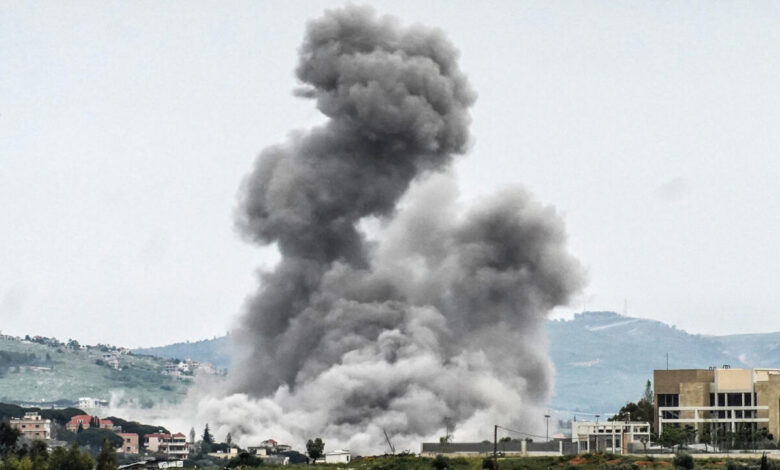
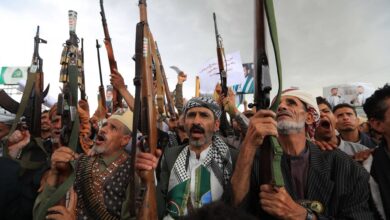
Hezbollah is unlikely to accept such measures and would view them as a violation of Lebanon’s national sovereignty, particularly since it has categorically rejected the framework agreement concluded between Beirut and Tel Aviv. This stance would make any attempt to implement in Lebanon a mechanism similar to the one established in the Gaza Strip considerably more difficult.
-
Road Blockades and Stone-Throwing at the Army: Hezbollah Responds to the Southern Agreement with a Strategy of Disorder
-
Eroding Influence and Shrinking Support Base: Public Rejection of Hezbollah in Syria and Lebanon
According to Haaretz, citing informed sources, the U.S. administration is considering establishing a ceasefire monitoring mechanism in Lebanon similar to the one implemented in the Gaza Strip, despite the complexity of the issue given the significant differences between the two operational environments. Moreover, the American monitoring mechanism has not demonstrated clear success in the besieged Palestinian enclave, as Israel has continued to conduct periodic strikes in breach of its commitments.
It is widely believed that Hezbollah would reject such a proposal, regarding it as an infringement of Lebanon’s sovereignty, especially after publicly expressing its complete opposition to the framework agreement reached between Beirut and Tel Aviv. This position would make any effort to replicate the Gaza model in Lebanon particularly challenging.
-
Salam: Hezbollah Has Lost Its Remaining Margin of Independence Following Nasrallah’s Departure
-
Escalation Continues Between Hezbollah and Israel Despite a U.S. Proposal for De-escalation
On Sunday, the Israeli military announced that one officer holding the rank of captain had been killed and another soldier wounded during fighting in southern Lebanon. The incident occurred less than two days after Israel and Lebanon concluded their agreement, raising concerns that the U.S.-backed process aimed at ending the border escalation could be undermined.
In addition, a joint statement issued on Sunday by Prime Minister Benjamin Netanyahu and Defense Minister Israel Katz announced that the Israeli military had destroyed an underground Hezbollah infrastructure located beneath one of the villages in southern Lebanon.
-
New Israeli tactic to Trap Hezbollah drones
-
Israel threatens to strike Beirut in response to Hezbollah drones
The statement added that Israel had informed the United States in advance of the operation targeting a 200-meter-long tunnel in the town of Majdal Zoun, highlighting the fragile security situation along the Israeli-Lebanese border and the possibility that hostilities could resume at any time.
The U.S. administration has already adopted an operational mechanism to oversee the implementation of the ceasefire agreement in the Gaza Strip through the establishment of a Civil-Military Coordination Center. The center is responsible for monitoring compliance with the ceasefire provisions and supervising logistical and humanitarian operations in an effort to preserve the truce and prevent its collapse amid the complexities of the battlefield. According to sources cited by Haaretz, a similar model could be introduced in Lebanon despite several obstacles.
-
Hezbollah’s drones are turning into a headache for the Israeli army
-
Hezbollah drones breach Israeli defenses despite the new interception system
The Civil-Military Coordination Center, established in Israel under the supervision of the U.S. Central Command, serves as a joint operations center responsible for coordinating efforts among all concerned parties, monitoring the implementation of the ceasefire arrangements, and facilitating communication between security authorities and the mediators involved.
The center includes approximately 200 U.S. military personnel specializing in planning, operations, logistics, engineering, and coordination. Washington has emphasized that their responsibilities are limited to supervision and coordination from outside the Gaza Strip, stressing that they are not deployed inside the enclave and do not participate in military or security operations.
-
New alerts in Lebanon: Israel expands the scope of confrontation with Hezbollah
-
Surgical strikes against Hezbollah… U.S. pressure to restrain Israel in Lebanon
The mechanism is tasked with monitoring the parties’ compliance with the ceasefire, documenting any violations that could jeopardize its continuation, coordinating the delivery of humanitarian assistance, and supporting the logistical and security arrangements necessary to ensure the stable implementation of the agreement, in cooperation with Israeli authorities and regional mediators.
The system also relies on a coordination network involving several countries participating in mediation efforts, including Egypt, Qatar, Türkiye, and the United Arab Emirates, along with relevant military and security institutions. Its objective is to accelerate the resolution of any obstacles that may arise during the implementation of the agreement and to reduce the risk of renewed escalation through direct communication channels among all parties.
-
He will pay with his head: Israel escalates against Naïm Qassem and Hezbollah
-
Israel claims it killed 150 Hezbollah members, while the group remains silent
The U.S. administration assigned oversight of the center to U.S. Central Command, which has assumed a leading role in operational coordination, while senior American officials continue to supervise the implementation of the agreement through constant communication with mediators and regional partners.
This initiative reflects Washington’s intention to play a more direct role in monitoring ceasefire arrangements, not only through diplomatic efforts but also by establishing an operational framework capable of overseeing implementation and responding rapidly to developments that could threaten the stability of the truce.
-
Blood diamonds and drugs: Hezbollah’s funding arteries in Europe
-
Hezbollah’s weapons… Netanyahu sets the primary objective of negotiations with Lebanon
Nevertheless, implementing such a mechanism in Lebanon would face significant obstacles, primarily because Hezbollah continues to reject the framework agreement and the decisions stemming from it.
This situation differs from that of Hamas, which has not publicly expressed a position regarding the monitoring mechanism.
-
Through incitement and protests, Hezbollah seeks to obstruct Lebanon–Israel negotiations
-
Israel announces the killing of the secretary to the Secretary-General of Hezbollah and his nephew