Axios: Washington and Tehran Agree to Halt Attacks and Resume Talks
A senior U.S. official has confirmed that Washington and Tehran intend to hold a meeting in the Qatari capital, Doha, next Tuesday to resume the diplomatic process.
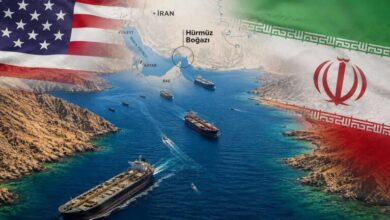
According to Axios, the United States and Iran have reached an agreement to end the latest round of hostilities in the Gulf region and resume discussions over disputes related to the Strait of Hormuz, in a move that could help contain the military escalation that threatened to derail the temporary ceasefire agreement between the two sides.
-
Axios: Washington and Tehran Agree to Halt Attacks and Resume Talks
-
Swiss Negotiations Test the Prospects for De-escalation Between Washington and Tehran
The outlet quoted a senior U.S. official as saying that Washington and Tehran plan to meet in Doha, Qatar, next Tuesday to revive the diplomatic track. However, no official authority has yet confirmed or denied the accuracy of this information.
This development comes only days after a renewed military escalation that began following the shelling of a commercial vessel in the Strait of Hormuz last Thursday. Both sides subsequently accused each other of violating the temporary ceasefire agreement concluded on June 17.
-
Military escalation between Washington and Tehran derails hopes of a settlement
-
Islamabad or Geneva? A new round of negotiations between Washington and Tehran under consideration
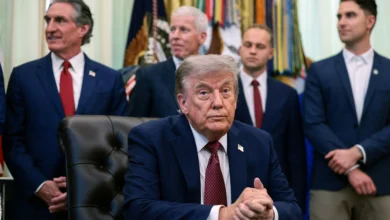
In the latest escalation, Iran launched ballistic missile and drone attacks early Sunday morning targeting U.S. military facilities in Kuwait and Bahrain. The strikes came just hours after U.S. President Donald Trump warned that the United States might be forced to “finish the mission militarily” if Tehran failed to comply with the terms of the agreement.
Writing on social media, Trump stated that the time might come when “we will no longer be able to act rationally,” adding that Washington could be compelled to continue its military operations. He further warned that the Islamic Republic of Iran “would cease to exist” should the confrontation reach such a level.
-
Diplomacy races against rising tensions: anticipation of Muscat talks between Washington and Tehran
-
New Escalation in the Gulf Threatens Prospects for an Agreement Between Tehran and Washington
The temporary agreement between Washington and Tehran, consisting of fourteen provisions, was designed to halt military operations that had been ongoing since late February, ensure freedom of navigation through the Strait of Hormuz—one of the world’s most strategic energy shipping routes—and pave the way for broader negotiations concerning Iran’s nuclear program and other security issues.
Nevertheless, several developments highlighted the fragility of the agreement. Mehdi Fazaeli, a member of the Office for the Preservation and Publication of the Works of Iran’s Supreme Leader, announced that Iran had not participated in the technical talks scheduled for Sunday. He explained that Tehran believes the United States has failed to fulfill certain commitments, particularly guaranteeing practical access to Iran’s unfrozen financial assets.
-
Reciprocal Attacks Between Tehran and Washington Complicate the Settlement Process
-
Tehran’s Stubbornness and Washington’s Tough Stance Keep a Potential Agreement Trapped in a Maze of Conditions
According to Fazaeli, verifying the accessibility of those funds is an essential condition for continuing the implementation of the understandings, adding that failure to meet this condition would effectively constitute non-compliance with the memorandum of understanding.
A round of indirect negotiations had taken place in Switzerland a week earlier under international mediation. The talks were led by U.S. Vice President J. D. Vance and Iranian Parliament Speaker Mohammad Bagher Ghalibaf. They resulted in Washington announcing limited exemptions from certain sanctions, but military confrontations resumed shortly afterward.
-
Contradictory conditions push Tehran and Washington toward a deadlock
-
Washington, Tehran, and mediators discuss a phased truce to achieve a ceasefire
About one hour after Trump‘s remarks, the Kuwaiti military announced that its air defense systems had intercepted what it described as hostile missiles and drones, while Bahrain’s Ministry of Interior confirmed that warning sirens had sounded across several parts of the country.
Meanwhile, Iran’s Islamic Revolutionary Guard Corps announced that its naval and air forces had carried out joint operations targeting U.S. military bases and facilities in Kuwait and Bahrain using missiles and drones. The IRGC stated that the recent U.S. strikes constituted a violation of the ceasefire agreement.
-
Washington Targets Tehran with Harsh Sanctions as Araghtchi Demands War Reparations
-
Tehran and Washington Resume Nuclear Talks Under the Pressure of Red Lines
In a statement carried by official media, the Revolutionary Guards added that the American attacks would result in “a complete halt to all diplomatic activities,” warning that U.S. bases in the region “will witness hell in the coming days.”
A U.S. official confirmed that American military installations in the region had come under Iranian attack. The official stated that the situation was still being assessed but noted that no casualties among U.S. military personnel or significant damage to the targeted bases had been reported so far.
-
Washington and Tehran discuss a ‘political ceasefire’
-
Intelligence Report: Iran’s Support for Its Regional Proxies Will Not Be Affected by Understandings with Washington
Later, Bahrain’s Ministry of Interior announced that a residential building on Muharraq Island had sustained damage as a result of an Iranian attack, although no casualties were recorded. Manama also called on the United Nations Security Council to convene an emergency session to hold Iran accountable for the attacks.
For its part, the Kuwaiti military announced that it had successfully intercepted two ballistic missiles, confirming that no human or material losses had occurred.
-
Washington pushes a plan to transfer Israeli-controlled areas to the Lebanese Army
-
U.S.-Iran Agreement: Switzerland Reveals Preliminary Talks on Implementation Mechanisms
In a separate development, Qatar announced that one of its citizens had died from injuries caused by shrapnel while aboard a vessel that disappeared on Saturday. Another person was injured in the same incident, which the authorities attributed to the ongoing military operations in the region without assigning responsibility to any party.
On another front, the Israeli military announced on Sunday that it had targeted Hezbollah members in southern Lebanon and destroyed underground infrastructure that it said was being used for military purposes. The operation came just one day after a similar strike, despite the conclusion of a new ceasefire agreement between Tel Aviv and Beirut, underscoring the persistence of regional tensions and the multiple fronts linked to the crisis between Washington and Tehran.
-
Post-agreement complications between the United States and Iran rival the difficulty of the negotiations themselves
-
Six Challenges That Could Prevent the United States and Iran from Reaching a Final Agreement
-
Washington relies on shadow fleets to move oil through the Strait of Hormuz