30 June Anniversary: Internal Muslim Brotherhood Power Struggles Undermine the End of Division Initiative
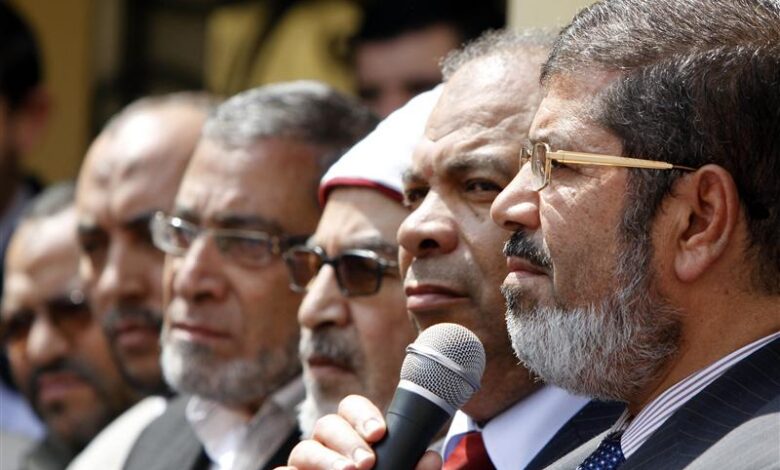
A new initiative launched within the Muslim Brotherhood to overcome years of organizational division has failed after colliding with competing factions’ struggles over influence and vested interests.
The initiative coincided with the anniversary of June 30, yet the differing reactions within the organization revealed that political and organizational interests continue to outweigh opportunities for reconciliation, further deepening the movement’s internal crisis.
-
“Year of Lies and Blood”: Major Terrorist Crimes Committed by the Muslim Brotherhood in Egypt
-
A new slap to the Brotherhood in Egypt; The failure of calls November 11 marks the end of the terrorist organization
Ahead of the June 30, 2013 demonstrations, during which Egyptians protested against the rule of the Muslim Brotherhood, the organization’s Guidance Bureau assigned Mahmoud Hussein, then the group’s Secretary-General and currently the Acting Supreme Guide of the Istanbul faction, to leave Egypt and oversee the Brotherhood‘s leadership affairs in the event that it lost power. His mission was to preserve the organization’s cohesion during any future crisis.
Thirteen years later, Hussein remains one of the principal sources of division within the Brotherhood, whose competing factions continue to fight over resources and influence.
-
Rumors spread by Egypt’s Muslim Brotherhood ahead of January 25: a repeated tactic exposed by public awareness
-
72 years since the dissolution of the Muslim Brotherhood: the story behind Egypt’s Revolutionary Command Council decision
In recent weeks, Mahmoud Hussein, Acting Supreme Guide of the Istanbul faction, launched an initiative aimed at ending the split between the Istanbul and London factions. The proposal seeks to reunify the organization and end the dual leadership and organizational fragmentation that have characterized the movement for years.
Hussein proposed stepping down as Acting Supreme Guide in order to reach an agreement with his rivals in the London faction, led by Acting Supreme Guide Salah Abdel Haq, while securing priority to reassume the position should Abdel Haq leave office.
-
Echo-less rumors: Egyptians’ awareness foils the Muslim Brotherhood’s plan ahead of the January 25 anniversary
-
Muslim Brotherhood rumors in Egypt: public awareness thwarts the blank shots
The sources stated that Hussein addressed an internal message to members of the General Shura Council and the Brotherhood‘s wider membership on the occasion of the Islamic New Year, calling on all factions and leaders to end the organization’s divisions. He described reunification as an urgent necessity that could no longer be postponed.
The message followed Hussein’s latest reconciliation initiative, which reportedly surprised the London faction because, for the first time since the current crisis began in 2021, he offered to relinquish his position as Acting Supreme Guide.
-
The Muslim Brotherhood Has Betrayed the Egyptian Army Since the 1948 War… A Journalist Presents the Evidence
-
A Cross-Border Criminal Record: The Story of the Muslim Brotherhood Member Accused of Terrorism in Egypt and Jailed for Rape in London
A Maneuver to Remove the London Faction
According to the sources, leaders of the London faction, particularly Helmy El-Gazzar, supervisor of the Political Bureau and deputy to Salah Abdel Haq, view Mahmoud Hussein’s initiative as a maneuver designed to regain control of the Brotherhood abroad and reassert authority over the international organization, which the Istanbul faction had gradually lost following its dispute with the London faction.
The sources added that the initiative was preceded by a series of preparatory steps undertaken by the Istanbul faction, including personal outreach to current and former Brotherhood leaders, among them Issam Teleima, former director of Youssef Al-Qaradawi’s office and one of Mahmoud Hussein’s strongest critics. The Istanbul faction reportedly invited Teleima to attend its Ramadan iftar alongside Mahmoud Hussein as a goodwill gesture demonstrating Hussein’s willingness to reconcile with his opponents and end the internal split.
-
Egypt and the Muslim Brotherhood: Talha’s Release Exposes Double Standards and Threatens Regional Security
-
Contradictions in the Egyptian Discourse: Between Declared Hostility Toward the Muslim Brotherhood and Implicit Cover for Affiliated Factions
The sources further stated that Hussein’s latest message reaffirmed that the General Shura Council, in its elected composition both inside Egypt and abroad, remains the administrative body responsible for appointing the organization’s executive leadership. This position represents a reversal of earlier decisions by the Istanbul faction, which had expelled several Shura Council members for supporting Ibrahim Mounir and later Salah Abdel Haq in their dispute with Mahmoud Hussein over the acting leadership and control of the organization’s resources.
According to the sources, Hussein’s proposal includes reconvening the General Shura Council in its original composition, largely unchanged since the Brotherhood was removed from power in July 2013, with the addition of several members elected in 2016.
-
Egypt’s Muslim Brotherhood and the Prisons: Rumors Without Keys and Lies That Won’t Overturn Sentences
-
Inside the Formation of Egypt’s Muslim Brotherhood Terror Cells: Revelations in a Podcast
Following the council’s reconvening, a new committee would be established to review the Brotherhood‘s internal regulations and examine possible amendments to adapt them to the organization’s evolving circumstances. The sources believe this step is intended to attract younger members, many of whom have opposed Mahmoud Hussein for years because of longstanding organizational disputes.
They also indicated that the Istanbul faction, led by Hussein, sought mediation from senior figures within the Brotherhood‘s international organization, including Abdullah bin Mansour and others, to support the initiative and facilitate the restoration of a unified leadership.
-
From Hassm to Midan: Egypt’s Muslim Brotherhood attempts to reengage chaos
-
Their Hands Stained with Egyptian Blood: Who Are the Muslim Brotherhood Figures Yahya Moussa and Alaa al-Samahi?
Further Internal Division
According to the sources, Mahmoud Hussein’s initiative has instead deepened divisions within the Brotherhood. Leaders of the London faction, particularly those close to Helmy El-Gazzar, believe it is an attempt to regain control of the organization under the guise of reconciliation. They argue that Hussein is seeking to take advantage of Salah Abdel Haq’s reported intention to step down once his legal term expires at the end of the year.
By reunifying the organization beforehand, Hussein could invoke the Brotherhood’s internal regulations, which stipulate that a member of the Guidance Bureau assumes the position of Acting Supreme Guide if Supreme Guide Mohamed Badie is unable to perform his duties. As the only remaining Guidance Bureau member still outside prison, Hussein would then be able to reclaim control of the entire organization and sideline his rivals.
-
The Egyptian Media Syndicate responds to the Muslim Brotherhood’s lies about Egypt’s stance on the Palestinian cause
-
Media Recalls the Crimes of the Muslim Brotherhood and Their Attempt to “Burn Egypt”
The sources added that several London faction leaders, including Helmy El-Gazzar and Mohieddine El-Zayet, reject Hussein’s proposal to reunify the factions under a single structure. Meanwhile, Mahmoud El-Ebiary, Secretary-General of the international organization and a senior figure within the London faction, is reportedly seeking to use the ongoing divisions to strengthen his own influence within the faction, although he is currently not actively supporting Hussein.
The sources also stated that London faction leaders have instructed their supporters to highlight Mahmoud Hussein’s previous rejection of reconciliation initiatives, beginning with Youssef Al-Qaradawi’s proposal in 2016. They further accuse him of dissolving the Higher Administrative Committee in 2020 following the arrest of former Acting Supreme Guide Mahmoud Ezzat in Egypt, consolidating power in his own hands, and ultimately causing the current organizational split.
-
An Expert Reveals the Plans and Names of Muslim Brotherhood Centers Targeting the Region and Egypt
-
The Muslim Brotherhood and Lies: The group promotes old videos to deceive Egyptian public opinion
Fears of Marginalization
The sources stressed that leaders of the London faction believe they only managed, after considerable effort, to free themselves from Mahmoud Hussein’s control over the organization, particularly over the branch under their authority. They fear that reunification would once again marginalize them and strip them of their administrative and leadership responsibilities.
They added that Helmy El-Gazzar, Osama Soliman, a member of the General Shura Council, and other senior figures had pressured Ibrahim Mounir, after he assumed the role of Acting Supreme Guide following Mahmoud Ezzat’s arrest in August 2020, to abolish the Brotherhood‘s General Secretariat, then headed by Mahmoud Hussein, because it controlled the organization’s internal communications and exercised effective operational authority.
-
Rumors of the Muslim Brotherhood Reach Raba’a and Nahda… Egypt Denies
-
Did the Muslim Brotherhood aim to destroy the Egyptian identity? Details
According to the sources, Hussein’s opponents regarded him as more powerful than the Supreme Guide himself because he was able to issue instructions to the entire organization while withholding directives issued by the Supreme Guide through his control of the General Secretariat. They also attribute to him the statement: “Let the Supreme Guide and the Guidance Bureau issue whatever decisions they wish; we will send to the Brotherhood‘s offices and branches the instructions that we choose.”
For these reasons and others, a campaign against Mahmoud Hussein’s initiative has reportedly been orchestrated behind the scenes by senior members of the London faction under the leadership of Helmy El-Gazzar and with the backing of Salah Abdel Haq. The campaign portrays Hussein himself as the primary cause of the Brotherhood‘s internal divisions and argues that any genuine reconciliation initiative can only succeed if he relinquishes his leadership role. As a result, according to the sources, the initiative intended to reunify the Muslim Brotherhood has instead become another source of internal conflict and organizational rivalry.
-
The “Hasm” movement of the Muslim Brotherhood aimed to overthrow the ruling regime in Egypt… How?
-
Lies and Allegations: The Muslim Brotherhood Exploits the Palestinian Issue to Undermine Egypt’s Image
-
The Muslim Brotherhood’s crimes “will not be forgotten” … Egypt thwarts the group’s plans to sell Sinai
-
Egypt’s Muslim Brotherhood decided to confront the police and any opponent… a confession exposes the group’s plots