Gadi Eisenkot, Netanyahu’s Opposite, Seeks to Become Israel’s Prime Minister
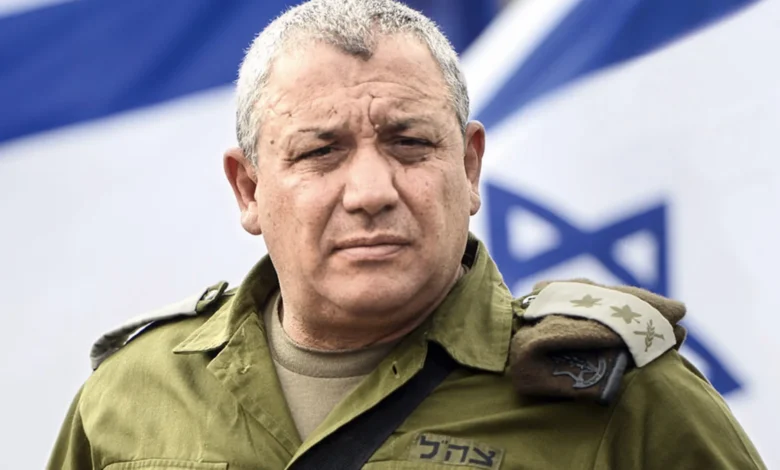
Israel’s political landscape is undergoing a significant transformation with the rise of former Chief of Staff Gadi Eisenkot as the most serious challenger to Prime Minister Benjamin Netanyahu. This development reflects a broader shift in the nature of the competition for Israel’s leadership.
After years during which Netanyahu dominated Israeli politics while facing rivals from the right, the center, and the left, his most formidable opponent now appears to be not a traditional politician but a former general whom many observers view as his complete opposite in terms of personality, background, and leadership style, according to the American news network CNN.
-
Benjamin Netanyahu faces a threat to his chances of forming a new government due to an agreement among Arab parties
-
Benjamin Netanyahu acknowledges difficulty of forming an international coalition to disarm Hamas
Recent opinion polls indicate that Eisenkot has significantly narrowed the gap with Netanyahu, with some surveys even placing him ahead as the candidate considered most suitable to serve as prime minister.
This growing momentum has not gone unnoticed within the Likud Party. Over recent weeks, the party has shifted from largely ignoring Eisenkot to launching an intensive media campaign against him, signaling that it now regards him as the most serious threat to Netanyahu’s continued hold on power.
The campaign became public when Likud released an artificial intelligence-generated video showing Eisenkot alongside Arab Member of Knesset Ahmad Tibi under the slogan, “There is no Gadi without Tibi,” in an apparent attempt to associate him with Arab political parties and rally the party’s traditional right-wing support base.
-
The last-hour call between Donald Trump and Benjamin Netanyahu: behind the scenes before the Iran truce
-
Neither Right-Wing nor Left-Wing: Netanyahu Reveals the Shape of His Next Government
From Tiberias to the Military’s Highest Command
The personal backgrounds of the two men differ almost completely. While Netanyahu was raised in a political and elite environment and studied in the United States, Eisenkot comes from a modest Moroccan Jewish family. He was the second of nine children and grew up in the cities of Tiberias and Eilat, far from Israel’s traditional centers of political influence.
After joining the Golani Brigade, he steadily advanced through the military ranks until becoming Chief of the General Staff between 2015 and 2019. Ironically, it was Netanyahu himself who appointed him to the position, describing him at the time as “a great commander and an exceptional fighter.”
-
Ministers in Netanyahu’s Government Threaten to Open the Gates of Hell on Lebanon
-
How Did Netanyahu Respond to the Israeli Prosecution’s Questions in the Corruption Cases?
However, relations between the two men began to deteriorate during Eisenkot’s tenure as army chief. In 2016, he insisted that soldier Elor Azaria stand trial after killing a wounded Palestinian in Hebron, rejecting political pressure calling for his pardon, including pressure reportedly exerted by Netanyahu himself.
That decision marked the first clear indication of Eisenkot’s political independence. The divide widened further as he openly criticized the management of the war in Gaza before resigning from the emergency government in June 2024 alongside Benny Gantz, protesting the absence of a clear strategic vision for the conflict.
-
Netanyahu Refuses to Relinquish Three Fronts Despite the Agreement with Iran
-
Trump fuels speculation over Netanyahu’s political future
A Personal War
The war in Gaza also gave Eisenkot’s public image a deeply personal dimension after his youngest son, Gal, was killed during military operations. Two of his nephews later also lost their lives.
These personal losses strengthened his standing among many Israelis, who came to view him as a leader who had personally paid the price of war. At the same time, Netanyahu’s family faced criticism because his son, Yair Netanyahu, spent part of the war period outside Israel. According to political analysts, this human dimension has given Eisenkot an emotional credibility that is difficult for his political rivals to challenge.
-
The Resumption of Confrontation with Iran Fulfills Netanyahu’s Wish
-
War Objectives in Iran Portend Rift Between Trump and Netanyahu
His Mizrahi heritage also represents an important political asset. Eisenkot belongs to Israel’s Mizrahi Jewish community, which has formed Likud’s most significant electoral base for decades. To date, Israel has never had a prime minister of Moroccan or broader Mizrahi origin.
For this reason, some observers believe his ability to appeal to this constituency could become one of his greatest political strengths, particularly if he succeeds in attracting conservative voters who have lost confidence in Netanyahu but remain unwilling to support left-wing parties.
-
Trump Pulls the Trigger on Phase Two in Gaza: Peace Takes Precedence over Netanyahu’s Conditions
-
The Arrest Warrant sets Netanyahu’s course… a long journey to America
Despite this growing momentum, Eisenkot still faces numerous obstacles. Although opinion polls give his party a noticeable boost, they do not guarantee that he will be able to assemble a governing coalition, given the deep divisions among opposition parties. Meanwhile, Netanyahu continues to benefit from exceptional electoral experience and a highly effective party organization that has repeatedly demonstrated its ability to survive political crises.
Nevertheless, many analysts argue that Eisenkot differs fundamentally from every challenger Netanyahu has faced over the past decade. Rather than attempting to imitate Netanyahu or compete using the same political methods, he presents a distinctly different model of leadership, political discourse, and public conduct. Although Eisenkot also possesses an extensive military record and was one of the architects of Israel’s military doctrine in Lebanon and Gaza, his supporters believe that the defining distinction between the two men lies less in security policy than in their personalities and their respective approaches to governing.
-
Israel on the verge of rupture… Netanyahu’s request for clemency ignites the streets
-
The Haredim and Military Conscription… A Street Confrontation Threatening Netanyahu’s Government