Admiral Nakhimov: The Nuclear Giant Gives Russia a New Strategic Advantage
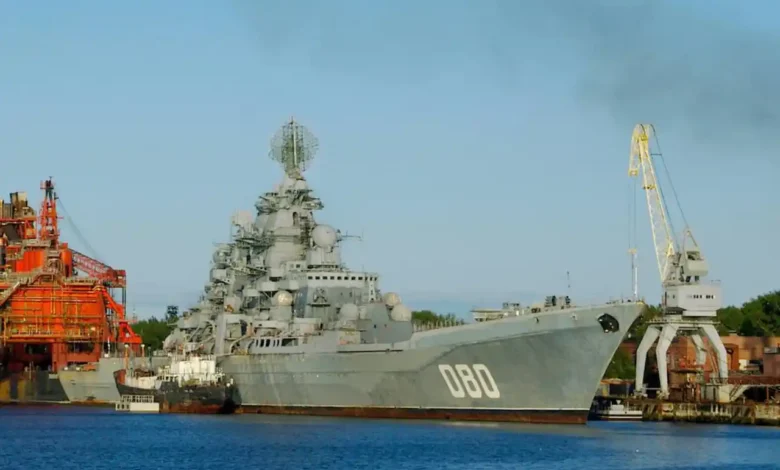
The Russian nuclear-powered cruiser “Admiral Nakhimov” is approaching its return to the Northern Fleet after spending more than a decade undergoing extensive reconstruction and modernization.
The return of the vessel, which belongs to the Kirov-class battlecruisers, marks a significant milestone in the modernization of the Russian Navy. The upgrade program extended far beyond replacing electronic systems and sensor suites, encompassing a comprehensive redesign of its combat capabilities, particularly its missile arsenal, which now includes Russia’s latest weapon systems, most notably the Tsirkon hypersonic missiles, according to Military Watch magazine.
-
A Floating Missile Platform: The Admiral Nakhimov Restores the Prestige of the Russian Navy
-
Trump versus a hypersonic Admiral… who would win?
While attention is usually focused on the ship’s formidable firepower, military experts believe that another feature gives it an exceptional advantage: its ability to combine enormous displacement with remarkable speed, a rare combination in the world of modern warships.
The Kirov-class cruisers are the largest active surface combatants in the world, with a displacement of approximately 28,000 tons—nearly three times that of the latest U.S. Arleigh Burke-class destroyers.
Despite their immense size, they are capable of reaching speeds of up to 32 knots, placing them among the fastest heavy combat vessels currently in service.
-
Deep-Strike Campaign Expands: Dual Russian Attack Sets the Heart of Kyiv Ablaze
-
Spring Storm Pushes British Challenger 2 Tanks to Russia’s Border
This performance is made possible by a propulsion system powered by two KN-3 nuclear reactors, which generate enough energy to drive steam turbines producing a combined output of approximately 140,000 horsepower, allowing the vessel to sustain high speeds for extended periods without relying on conventional fuel.
The nuclear propulsion system provides a strategic advantage that goes well beyond speed. It gives the cruiser an almost unlimited operational range, enabling it to sail vast distances without the need for refueling, thereby significantly enhancing its deployment flexibility across distant maritime theaters.
-
The Zebra in the Ukraine War: A Russian Weapon Designed to Deceive Drones
-
United States and Russia… Deterrence missiles shake the bridges of nuclear understanding
In operational areas considered strategic priorities for the Russian Navy, particularly the Arctic Ocean and the North Atlantic, this capability allows the ship to move rapidly between operational fronts, support naval formations, strengthen the defense of strategic sea lanes, and intercept hostile forces before they reach operational areas.
Speed is valuable not only for rapid deployment but also as a key factor in battlefield survivability. The ability to change position quickly reduces the likelihood of the vessel being successfully targeted and provides greater flexibility for maneuvering and launching long-range missiles from multiple directions. These capabilities are further strengthened by advanced electronic warfare systems and a multilayered air defense network. Furthermore, operating from the Severomorsk naval base enables the cruiser to reach the Greenland–Iceland–United Kingdom (GIUK) Gap rapidly, one of the world’s most strategically important maritime corridors linking the Arctic to the North Atlantic.
-
Ukraine Misleads Russian Missiles with Lima… A €58,000 Defense System
-
Human bomb: Russia says it foiled a terrorist attack targeting Belgorod
The Kirov class was originally designed during the Cold War to serve as the spearhead against Western aircraft carrier strike groups.
Following its latest modernization, the Admiral Nakhimov now combines an advanced missile arsenal, sophisticated defensive systems, and the operational mobility provided by nuclear propulsion, reinforcing its position as one of the world’s most powerful combat cruisers.
-
Fearing attacks, Ukraine fortifies its border with Russia’s ally
-
Russia raises nuclear readiness: Iskander missile system in focus