The First Vehicles of the International Force Arrive Near Gaza
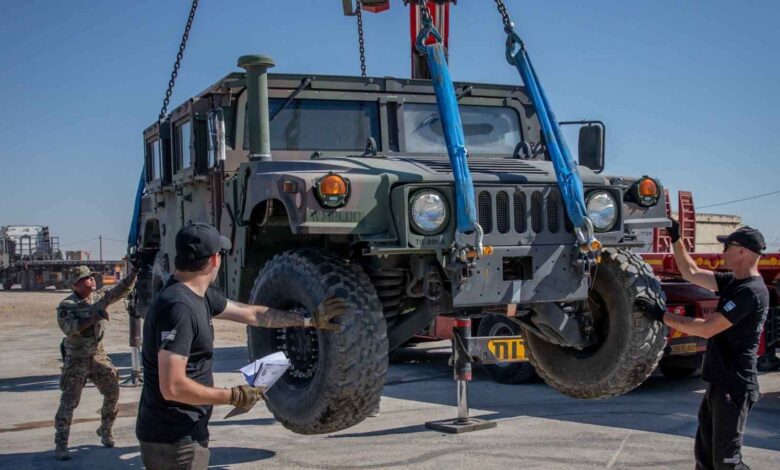
Hamas has expressed hope that the arrival of the international forces will mark the beginning of the implementation of their assigned mission, namely separating Palestinians from the Israeli army.
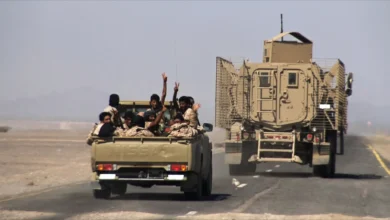
On Tuesday, the Peace Council announced the arrival of the first tactical vehicles at the logistics support area known as “Endurance,” located on the border with the Gaza Strip. Hamas, for its part, expressed hope that the deployment of the international force would represent “the beginning of carrying out its assigned tasks, namely separating the Palestinian population from the occupation army and working to halt its violations.”
-
Gaza and Trump’s Ambitions… A “Fragile” Truce Struggling to Hold
-
Trump announces the start of Phase Two of the plan to end the Gaza war: pathway and obstacles
“Endurance” is a logistics facility established in southern Israel near the Kerem Shalom crossing. It serves as a transit and support hub for the International Stabilization Force that is expected to operate in the Gaza Strip, where vehicles, equipment, and personnel are received before being gradually deployed into the enclave, according to Israel’s i24 News.
In a statement published on its account on the X platform, the Peace Council documented the arrival of the tactical vehicles by releasing photographs.
Commenting on the announcement, Hamas spokesperson Hazem Qassem said in a statement: “We hope that the Peace Council’s announcement regarding the beginning of the deployment of the international forces in the Gaza Strip will mark the start of implementing the missions assigned to them, namely separating our people in the Gaza Strip from the occupation army and working to put an end to its violations.”
-
Trump’s Deadline for Hamas Nears Its End… Gaza’s Displaced Caught Between Hardship and the Inability to Escape
-
Gaza Residents Back Trump’s Plan and Shout at Hamas: Enough
The Peace Council also called for “the immediate implementation of the provisions of the plan to end the war in Gaza through the deployment of the National Committee responsible for administering the Strip, the delivery of genuine humanitarian relief, and obliging the occupation to withdraw.” It further stressed “the need to launch the reconstruction process, considering it a fundamental right for all members of our people wherever they are in the Gaza Strip.”
The announcement coincides with a visit by a Hamas delegation to Cairo to discuss mechanisms for implementing the ceasefire agreement in the Gaza Strip, amid the movement’s accusations that Israel continues to violate the agreement.
Earlier on Tuesday, Hazem Qassem stated that a Hamas delegation was in Cairo to continue discussions and consultations regarding the implementation of the ceasefire agreement. He explained that Hamas and the Palestinian factions had presented “acceptable and reasonable proposals” over the past few days for implementing the agreement, adding that these proposals “were welcomed by the mediators.”
-
Trump and Netanyahu Announce Gaza Peace Plan Amid Uncertainty Over Hamas’ Response
-
The last warning from Katz and Trump to Hamas: release the hostages or Gaza will be destroyed
In the same context, Al-Qahera News reported that a Hamas delegation had arrived in the Egyptian capital to resume negotiations on the roadmap for implementing the second phase of the ceasefire plan.
Meanwhile, Taher Al-Nounou, political adviser to the head of Hamas‘s Political Bureau, stated that this round of negotiations would include “continuing discussions on the roadmap prepared by the High Representative of the Peace Council, Nikolay Mladenov, in cooperation with the mediators, for the second phase of the agreement, including the deployment of the administrative committee and the international protection forces, leading to the complete Israeli withdrawal from all areas of the Gaza Strip.”
On June 14, Hamas submitted the Palestinian factions’ response to the roadmap proposed by Nikolay Mladenov, reaffirming the demand for a “complete” Israeli withdrawal from the Gaza Strip.
-
10 Countries and 2 Regions: The “Alternative Homelands” Proposed by Trump and Israel for Gaza Residents
-
Gaza and the Ceasefire: “Positive” Signals Racing against Trump’s “Hell”
On May 21, Mladenov presented a fifteen-point roadmap to implement the plan proposed by U.S. President Donald Trump for the Gaza Strip.
The roadmap outlines implementation mechanisms for several issues concerning Gaza’s future, including reconstruction, disarmament, the Israeli withdrawal, the operation of the International Stabilization Force, and the rebuilding of the police service.
The document also emphasizes the need to “implement the measures promised at the beginning of the ceasefire, including humanitarian assistance, fuel deliveries, the reopening of border crossings, shelter provisions, and the measures contained in the Sharm El-Sheikh understandings before moving to the next phase.”
-
UN Investigation into the Gaza War: Targeting Children Said to Support Genocide Allegations
-
Reprimands, Accusations, and Blame: Details of a Heated Call Between Trump and Netanyahu
On September 29, 2025, Donald Trump announced a twenty-point plan aimed at ending the war in Gaza. The plan includes the release of Israeli hostages, the disarmament of Hamas, a partial Israeli withdrawal from the Gaza Strip, the establishment of a technocratic government, and the deployment of an international stabilization force.
The first phase of the plan entered into force on October 10, 2025. While Hamas maintains that it fulfilled the commitments required under the first phase, it says that Israel failed to honor its obligations and continued its military operations.
Despite this, Donald Trump announced in mid-January the launch of the second phase, which provides for a broader withdrawal of Israeli forces, the beginning of Gaza’s reconstruction, and the start of the disarmament of the Palestinian factions. According to Hamas, Israel has not implemented this phase either and continues to insist that disarmament must take place before any further implementation.
-
Hamas weapons: the main obstacle to peace in Gaza
-
Israel assassinates the son of a Hamas leader in Gaza