Among Them Al-Qard Al-Hassan and Bayt Al-Mal: New Sanctions Target Hezbollah’s Financial Lifelines
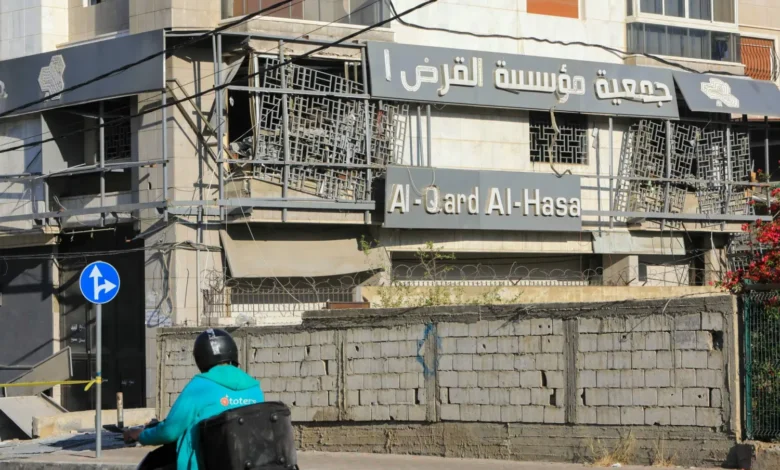
A new package of international sanctions is targeting Hezbollah‘s principal financial networks, including Al-Qard Al-Hassan and Bayt Al-Mal, with the aim of disrupting the flow of funds to and from the group.
-
Road Blockades and Stone-Throwing at the Army: Hezbollah Responds to the Southern Agreement with a Strategy of Disorder
-
A Tour Inside a Hezbollah Tunnel Reveals Iranian Fingerprints: Drones with a 200-km Range and Eight Tons of Explosives
On Tuesday, the Terrorist Financing Targeting Center (TFTC), which brings together the United States and the Gulf states, announced coordinated designation measures targeting several key components of Hezbollah‘s financial infrastructure, including five entities and sixteen individuals.
The action represents the third measure taken by the Center under the administration of U.S. President Donald Trump and the ninth since the organization was established.
The sanctions primarily target two major Hezbollah-affiliated financial institutions—Al-Qard Al-Hassan (AQAH) and Bayt Al-Mal—as well as several of their senior officials.
-
After Trump’s Remarks, Could Syria Militarily Intervene Against Lebanon’s Hezbollah?
-
Eroding Influence and Shrinking Support Base: Public Rejection of Hezbollah in Syria and Lebanon
What Is Al-Qard Al-Hassan?
Al-Qard Al-Hassan is a Lebanese association that has operated for years by providing banking-like services, including loans to clients, gold-backed lending, and other financial transactions.
The U.S. Department of the Treasury describes it as an organization operating under the cover of a non-governmental organization while using a license issued by Lebanon’s Ministry of Interior.
According to the Treasury, the association provides financial services comparable to those of a commercial bank, far beyond the activities disclosed in its original registration documents, and conducts illicit money transfers through shell accounts and intermediaries.
-
Salam: Hezbollah Has Lost Its Remaining Margin of Independence Following Nasrallah’s Departure
-
Escalation Continues Between Hezbollah and Israel Despite a U.S. Proposal for De-escalation
Al-Qard Al-Hassan’s branches are interconnected through Hezbollah‘s private communications network and operate entirely outside the oversight of the Lebanese state and the international institutions responsible for supervising banking activities.
The institution has no affiliation with Lebanon’s central bank and is not subject to the country’s Monetary and Credit Law governing financial institutions’ relationship with Banque du Liban. It is officially registered as a charitable association.
The organization operates more than thirty branches throughout Lebanon and employs nearly five hundred staff members, functioning entirely outside Lebanon’s official financial system.
-
New Israeli tactic to Trap Hezbollah drones
-
Israel threatens to strike Beirut in response to Hezbollah drones
Following Lebanon’s economic collapse, which severely affected the country’s legitimate banking sector, Al-Qard Al-Hassan significantly expanded its activities throughout areas under Hezbollah‘s influence and opened additional branches.
Hezbollah‘s financial institution also installed automated teller machines (ATMs), allowing its clients and employees to withdraw U.S. dollars at a time when Lebanese commercial banks were unable to provide foreign currency to their customers.
In late 2020, the Hezbollah-affiliated association suffered a cyber breach that exposed extensive financial transactions and revealed links with several Lebanese banks, including Jamal Trust Bank, which had already been subjected to U.S. sanctions.
-
Child recruitment: Hezbollah is undermining Lebanon’s future
-
Hezbollah’s drones are turning into a headache for the Israeli army
By controlling a significant share of the foreign currency desperately needed by Lebanon’s economy, Al-Qard Al-Hassan enables Hezbollah to strengthen its independent support base while undermining the stability of the Lebanese state.
Shlomit Wagman, former head of Israel’s Anti-Money Laundering and Counter-Terrorist Financing Authority, stated that “Al-Qard Al-Hassan has become Hezbollah‘s primary financial institution, safeguarding approximately $750 million annually in Iranian funding, in addition to proceeds from the group’s criminal activities that are used to finance its attacks against Israel.”
-
Hezbollah drones breach Israeli defenses despite the new interception system
-
Rubio on Hezbollah: an obstacle hindering peace between Lebanon and Israel
According to the Israeli military, Al-Qard Al-Hassan directly finances Hezbollah‘s activities, including the procurement of weapons and the payment of salaries to members of its military wing.
In a previous statement issued following strikes against several of the association’s facilities, the Israeli military said the operations were part of efforts to weaken Hezbollah‘s infrastructure, military capabilities, and ability to rebuild.
-
New alerts in Lebanon: Israel expands the scope of confrontation with Hezbollah
-
Alerts and evacuations in southern Lebanon… Hezbollah stronghold under fire
The Beginning with Bayt Al-Mal
Al-Qard Al-Hassan’s role expanded significantly after most Bayt Al-Mal offices were destroyed during the 2006 war between Israel and Hezbollah and after Bayt Al-Mal was placed under U.S. sanctions in September of that year.
Hezbollah subsequently transferred much of its financial activity to Al-Qard Al-Hassan, which assumed a far more prominent role within the group’s financial infrastructure, while Bayt Al-Mal’s banking arrangements were restructured.
In general, Bayt Al-Mal continues to function as Hezbollah‘s unofficial treasury, managing the organization’s assets, overseeing investments, and serving as an intermediary between the group and major banking institutions.
-
Surgical strikes against Hezbollah… U.S. pressure to restrain Israel in Lebanon
-
Hezbollah drones worry Israel
Bayt Al-Mal operates under the direct supervision of Hezbollah‘s Secretary-General.
As one of Hezbollah‘s principal financial bodies, Bayt Al-Mal functions simultaneously as a bank, lender, and investment arm for the organization.
Its headquarters are located in Hezbollah‘s stronghold in Beirut’s southern suburbs.
Other Entities Targeted by the Sanctions
Al-Khoubara Company
Al-Khoubara is owned, managed, or supervised by Adel Mansour and provided accounting services to Al-Qard Al-Hassan.
The company was managed by senior Al-Qard Al-Hassan officials, including Adel Mansour. Among its senior executives is Hussein Chami, a high-ranking Hezbollah official designated by the United States as linked to terrorism.
-
The United Nations documents war crimes in the confrontation between Israel and Hezbollah
-
Leaked Hezbollah footage from tunnels: teenagers as fuel for death
Tashilat SARL
Tashilat SARL provided loans on behalf of Hezbollah and formed an integral part of the operations of both Al-Qard Al-Hassan and Bayt Al-Mal.
Auditors and Auditing Company
The Auditors and Auditing Company (Al-Mourajioun) is owned, controlled, and/or managed by Ibrahim Daher, its principal shareholder and managing partner. The company worked closely with Al-Qard Al-Hassan.
-
He will pay with his head: Israel escalates against Naïm Qassem and Hezbollah
-
Israel claims it killed 150 Hezbollah members, while the group remains silent
Individuals Targeted by the Sanctions
Ibrahim Ali Daher heads Hezbollah‘s Central Finance Unit, which oversees the organization’s overall budget and expenditures, including the financing of its operations in Lebanon and abroad.
Adel Mohammad Mansour serves as Executive Director of Al-Qard Al-Hassan. In addition to his official responsibilities, he allegedly used his personal bank accounts to conduct transactions with various Hezbollah-affiliated institutions.
The third individual is Ahmad Mohammad Yazbek, Chief Financial Officer of Al-Qard Al-Hassan.
According to the statement, Ahmad Yazbek, together with Abbas Hassan Gharib, Mustafa Habib Harb, Izzat Youssef Akkar, and Hassan Shehadeh Othman, maintained joint accounts at Lebanese banks, including Jamal Trust Bank (JTB), which is designated under U.S. sanctions. These accounts allegedly enabled them to transfer more than $500 million through the formal financial system over a period exceeding ten years.
-
Blood diamonds and drugs: Hezbollah’s funding arteries in Europe
-
Hezbollah’s weapons… Netanyahu sets the primary objective of negotiations with Lebanon
The fourth prominent individual is Ali Mohammad Karneib, a senior Al-Qard Al-Hassan official serving as Head of Procurement.
As of July 2024, Karneib had overseen the purchase of more than 1,000 ounces of gold on behalf of Al-Qard Al-Hassan.
What Is the Purpose of the Sanctions?
According to a statement issued by the U.S. Department of the Treasury, the coordinated measures announced on Tuesday reaffirm the commitment of the members of the Terrorist Financing Targeting Center to disrupting Hezbollah‘s ability to exploit the international financial system.
-
Through incitement and protests, Hezbollah seeks to obstruct Lebanon–Israel negotiations
-
Hezbollah in the sights of Syrian security: a sabotage operation foiled and a cell arrested
The United States had previously designated all of the entities and individuals announced in the latest measures.
The Center conducts joint operations, including the implementation of sanctions, the exchange of actionable intelligence on terrorist financing networks, and capacity-building efforts to help member states combat terrorist organizations that threaten international security and stability.
According to the statement, the networks designated on Tuesday pose a threat to regional stability, international security, shared interests, and global trade.
By restricting Hezbollah‘s access to financial resources, the members of the Terrorist Financing Targeting Center seek to protect the integrity of the international financial system, support the Lebanese people, and combat terrorist financing networks.
-
Israel announces the killing of the secretary to the Secretary-General of Hezbollah and his nephew
-
Beirut under fire… Israel expands its strikes against Hezbollah