One Pilot or Two? The United States Settles the Crew Configuration of the B-21 Raider Stealth Bomber
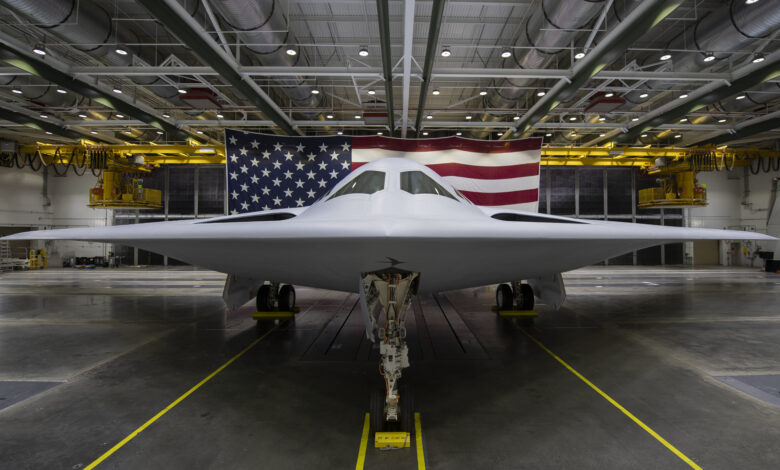
The U.S. Air Force has officially settled the long-running debate over the crew configuration of the B-21 Raider stealth bomber by confirming that it will be operated by a two-pilot crew, following the model of the B-2 Spirit. The decision brings to an end years of discussion over whether the aircraft could be flown by a single pilot supported by a weapons systems officer.
The announcement comes as the bomber approaches its planned entry into operational service next year and reflects a strategy that balances the benefits of advanced technologies with the need to maintain maximum combat effectiveness and survivability in highly complex operational environments.
The B-21 Raider: An American Bomber Reshaping Strategic Calculations
The U.S. Air Force explained that the decision follows a comprehensive assessment of the aircraft’s capabilities, concluding that a two-pilot crew represents the optimal configuration for carrying out long-range strategic missions.
The service also announced the launch of a transition program enabling experienced weapons systems officers and combat systems officers to undergo specialized flight training, preparing them to qualify as pilots within the future B-21 fleet. The initiative is intended to preserve accumulated operational expertise while strengthening overall crew readiness.
Building on the Legacy of the B-2
The decision follows the operational model established by the B-2 Spirit, which has always been flown by two pilots. Initially, one of the pilots was required to possess experience in navigation or weapons systems, although that requirement was later removed.
General Stephen Davis, commander of the U.S. Air Force Global Strike Command, previously explained that both the aircraft’s high cost and the relatively limited production numbers were among the primary reasons for adopting the two-pilot configuration. He also emphasized that the B-21’s wide range of capabilities required careful consideration of crew composition to achieve maximum combat effectiveness.
The U.S. Air Force plans to acquire at least 100 B-21 bombers, with expectations that additional aircraft may be ordered in the future, creating a growing demand for qualified pilots.
The aircraft has been designed to support extremely long-range missions lasting several days. It includes sleeping accommodations, restroom facilities, and food preparation equipment, enabling crews to conduct prolonged operations safely and efficiently.
Artificial Intelligence as the Future’s Co-Pilot
Although the aircraft will initially operate with two pilots, the possibility of eventually flying with a single pilot—or even completely autonomously—remains under consideration thanks to its advanced automation and artificial intelligence capabilities.
For several years, the U.S. Department of Defense has invested in virtual pilot assistant technologies through programs such as ALIAS and MATRIX, alongside solutions developed by Shield AI and Merlin. These technologies are designed to reduce pilot workload, enhance flight safety, and support tactical decision-making during combat operations.
The intelligent systems are expected to provide real-time recommendations regarding attack options, electronic countermeasures, and threat avoidance, significantly improving the bomber’s ability to operate in highly contested environments while paving the way for a future reduction in dependence on human operators.
The B-21 Raider program is widely regarded as one of the U.S. military’s most successful acquisition programs in terms of maintaining both schedule and budget despite considerable technological challenges. The U.S. Air Force has also announced an increase in production rates to accelerate the bomber’s entry into operational service.
The first B-21 aircraft are expected to be delivered next year to Ellsworth Air Force Base in South Dakota, marking the beginning of a new era in America’s strategic bombing capabilities, operated by two pilots supported by the latest advances in artificial intelligence.