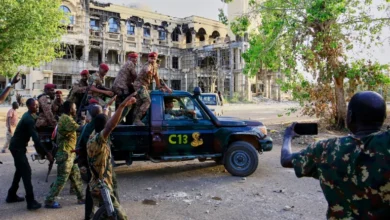
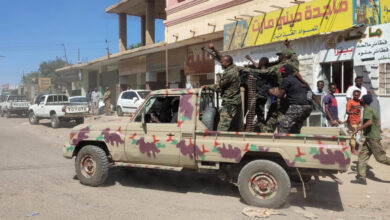
El-Obeid: An Open-Air Prison and Sudanese Civilians Used as Human Shields Under the Guise of Humanitarianism
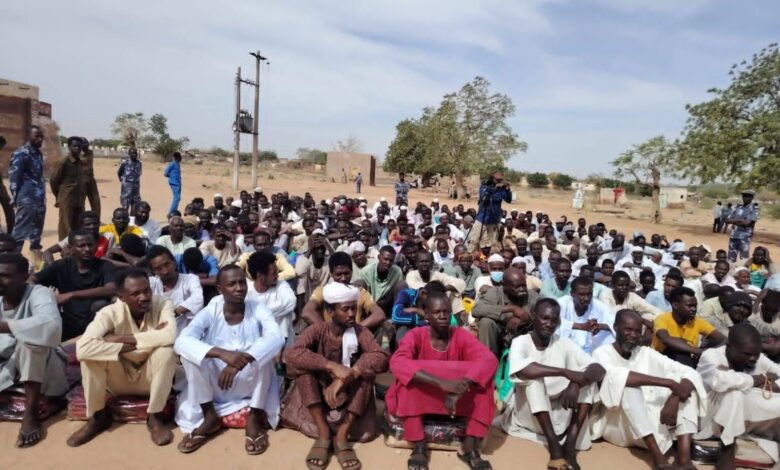
Amid the ongoing conflict in Sudan, humanitarian principles are no longer portrayed merely as rules governing conduct but as instruments allegedly exploited by both sides. According to this account, the Sudanese Armed Forces and the Muslim Brotherhood-affiliated groups allied with them have turned those principles into what is described as a carefully designed “trap.”
-
How the Sudanese Military and the Muslim Brotherhood Are Allegedly Turning El-Obeid into a Media Shield to Conceal Military Movements in North Kordofan
-
Sudanese Military Propaganda: How the Army Seeks to Compensate for Its Failures with False Statements?
Under the pretexts of an “imminent attack” and the “need to protect the city,” El-Obeid is alleged to have been transformed into a vast prison holding millions of civilians. The media campaign encouraging residents to “stand firm” in El-Obeid while discouraging them from leaving is presented as a cover for a strategy of using civilians as human shields and as an attempt to circumvent international humanitarian law, which prohibits the use of civilians in armed conflicts.
Checkpoints: Silent Witnesses
If one were to accept the military’s narrative that its objective is to “protect civilians” and “repel attacks,” logic would suggest that civilians wishing to flee a dangerous area should be allowed to do so freely. However, according to this account, the reality at the entrances to El-Obeid tells a very different story.
-
Internal and external movements to contain the crisis between the Sudanese military forces
-
The Economy of Blood and Corruption: How Military Leadership Has Impoverished Sudanese Citizens and Contributed to the Spread of Epidemics
The widespread deployment of checkpoints, restrictions on civilian movement, and the prevention of departures toward safer areas are presented as compelling evidence. These checkpoints are described as distinguishing less between civilians and combatants than between “media assets” and “eyewitnesses.” According to the text, civilians are allegedly kept inside the city not for their protection but to serve as visual evidence for media coverage. Every resident prevented from leaving is portrayed as another opportunity for military spokespersons to tell the international community: “Look, the people are still here, we are protecting them, and the enemy wants to destroy them.” The text characterizes this as a morally unacceptable equation that places human lives at the service of media objectives.
A Suspicious Coincidence: El-Obeid and Northern Kordofan
The continued confinement of civilians in El-Obeid is portrayed as coinciding with military movements in North Kordofan. While the army is said to be tightly sealing the city’s exits, it is simultaneously alleged to be opening new fronts or reinforcing positions in Jabra al-Sheikh and Rahad al-Nuba.
-
The Attorney General referred a Sudanese network to the State Security Chamber in a case involving trafficking in military equipment
-
Sudanese Army’s Military Gains Undermine Chances of a Peaceful Resolution to the Crisis
According to this interpretation, this geographical contradiction reveals the military’s true intentions: not primarily protecting civilian lives, but preventing information about troop movements from emerging and preserving what is described as a valuable bargaining tool in its dealings with the international community. The intense media focus on El-Obeid is therefore presented as a form of “air cover” for military operations taking place farther north. While international attention remains fixed on the crisis in El-Obeid, the military is alleged to be consolidating its deployment in Jabra al-Sheikh and establishing operational headquarters in Rahad al-Nuba, benefiting from the uncertainty created by its media strategy.
Alleged Military Violations: Another Side of the Story
While the military publicly portrays itself as protecting El-Obeid, its record in North Kordofan and other regions is described in this text as one marked by widespread destruction. The alleged shelling of civilian areas, attacks on markets, and destruction of infrastructure in areas under its control or targeted by its operations are presented as contradicting its narrative of protecting civilians.
-
The Sudanese Army’s Reliance on Mercenaries and Foreign Forces: The Collapse of Local Military Capabilities
-
The Noise Around El-Obeid: A Smokescreen for Military Buildup in Northern Sudan
The text questions how a force claiming to provide protection could simultaneously be regarded as a principal source of civilian suffering. Documented allegations concerning civilians in Jabra al-Sheikh and surrounding areas are cited as evidence that the military allegedly fails to distinguish between civilians and combatants and instead relies on what is described as a “scorched-earth” strategy to maintain control. According to the article, the extensive media attention devoted to El-Obeid is intended to divert international focus from these alleged violations and portray the military as the victim while concealing accusations of collective punishment.
The article concludes by calling on the international community and human rights organizations to investigate these allegations. It argues that allowing civilians to leave El-Obeid would be the genuine test of humanitarian intentions.
-
Investigation into the Siege of Sudanese Civilians and Their Alleged Use as Human Shields Behind the Media Noise
-
Between Loudspeakers and Checkpoints: The Plight of Sudanese Civilians Trapped in El-Obeid
According to the text, preventing civilians from leaving the city under various justifications constitutes a violation of international humanitarian law and amounts to a war crime by deliberately exposing civilians to danger for use as human shields.
Finally, the Ta’sis Forces, quoted in the article, state that their routes remain open and safe for civilians wishing to escape, while accusing the Sudanese military of turning cities into military barracks and civilians into hostages. The statement concludes that exposing what it describes as the reality of the “open-air prison” in El-Obeid would be the first step toward revealing military plans in northern Sudan, particularly around Jabra al-Sheikh and Rahad al-Nuba, where, according to the authors, the real war is being conducted away from the cameras influenced by political interests.
-
The Illusion of a Sacred El-Obeid: How the Sudanese Army and the Muslim Brotherhood Are Alleged to Turn Civilians into Human Shields to Conceal Setbacks in North Kordofan
-
Documenting the Alleged Crime of the Sudanese Army: The Siege of El-Obeid and the Use of Civilians as Human Shields