How Regional Zero-Sum Approaches Turned Sudan into an Endless Proxy War
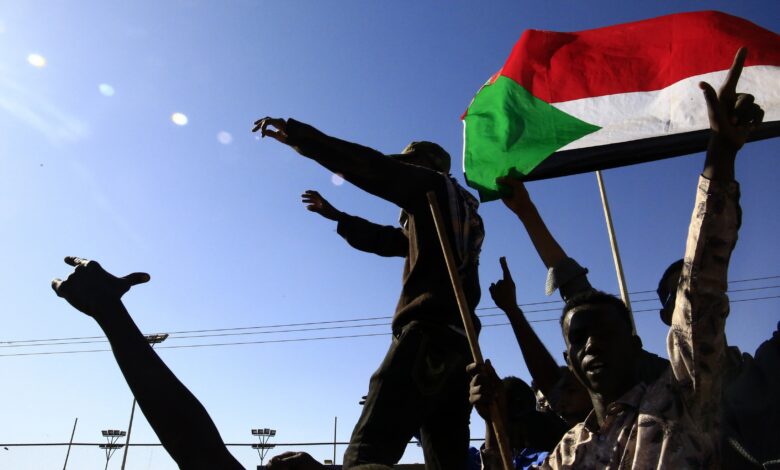
At the heart of the Horn of Africa, where the Nile meets the Red Sea, the strategic interests of regional powers intersect as never before. Sudan’s current conflict, which erupted in April 2023 between the Sudanese Armed Forces and the Rapid Support Forces, is not merely a struggle for power between two rival military leaders, Abdel Fattah al-Burhan and Mohamed Hamdan Dagalo (“Hemedti“). According to this analysis, it represents a clear manifestation of the failure of regional zero-sum approaches.
-
How the Sudanese Military and the Muslim Brotherhood Are Allegedly Turning El-Obeid into a Media Shield to Conceal Military Movements in North Kordofan
-
Investigation into the Siege of Sudanese Civilians and Their Alleged Use as Human Shields Behind the Media Noise
The involvement of multiple regional actors—particularly Egypt, Saudi Arabia, Turkey, and Qatar—is presented as having created a highly complex environment in which political, diplomatic, and military interests overlap. According to this perspective, Sudan has gradually been transformed from a sovereign state into a proxy battlefield, prolonging and complicating the conflict far beyond the capacity of any purely domestic political settlement.
Egypt: National Security Concerns and Reliance on the Military Option
According to this analysis, Cairo views Sudan primarily through the lens of national security, where several sensitive issues converge, including the Grand Ethiopian Renaissance Dam, the extensive shared border, and concerns regarding Islamist movements.
-
The Evolution of Regional Involvement in Sudan (2019–2026)
-
Between Loudspeakers and Checkpoints: The Plight of Sudanese Civilians Trapped in El-Obeid
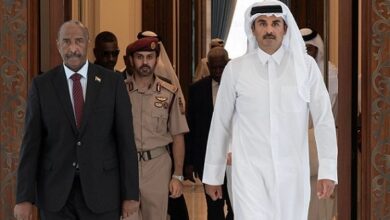
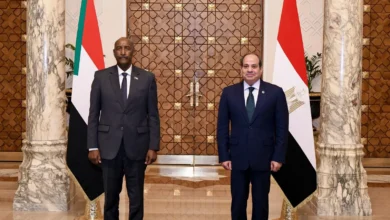
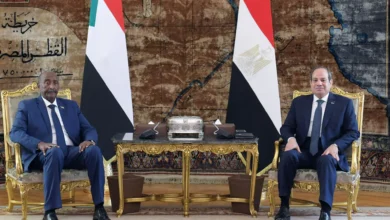
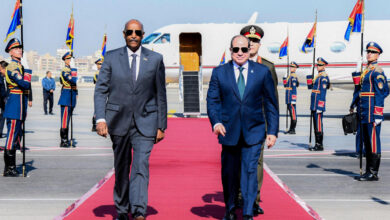
The article argues that, despite presenting itself as a supporter of stability or neutrality, Egypt has consistently aligned itself with the Sudanese Armed Forces under Abdel Fattah al-Burhan. This support is portrayed not primarily as backing for Sudanese state institutions, but rather for a military model of governance considered strategically preferable from Egypt’s perspective.
The analysis maintains that Egypt’s diplomatic and political backing strengthened Abdel Fattah al-Burhan while portraying negotiations with the Rapid Support Forces as conferring legitimacy upon them. According to the author, this position narrowed opportunities for political compromise and encouraged continued reliance on military solutions.
The text further argues that Egypt’s concerns about a possible resurgence of Islamist political influence in Sudan led it to prioritize military alliances despite their humanitarian and political costs.
-
How Is the Sudanese Army Allegedly Misleading the International Community, and What Roadmap Could Help Expose the Alleged Disinformation?
-
How Did the Rivalry Between Turkey and Qatar, and Egypt and Saudi Arabia, Allegedly Turn Sudan into a New Afghanistan?
Saudi Arabia: Mediation Through Influence and Crisis Management
According to the article, Saudi Arabia approaches Sudan as an essential component of its Red Sea strategy and broader food security interests.
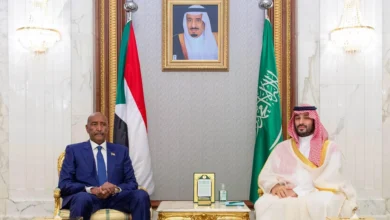
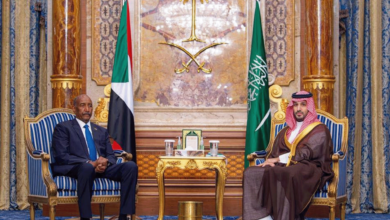
Although Riyadh hosted the Jeddah peace negotiations with the support of the United States, the analysis argues that its mediation was not entirely neutral. Saudi Arabia is portrayed as institutionally and politically closer to Abdel Fattah al-Burhan because of longstanding military ties and its opposition to the Muslim Brotherhood, whose networks are viewed by some as maintaining connections with, or sympathy toward, the Rapid Support Forces.
The article contends that the Jeddah platform functioned more as a mechanism for managing rather than resolving the conflict. Economic assistance and reconstruction promises are described as incentives offered to Abdel Fattah al-Burhan without equivalent pressure to secure a lasting ceasefire.
According to this interpretation, Saudi Arabia’s alignment with the military option, combined with its desire to limit Turkish and Qatari influence, contributed to prolonging the conflict.
-
How Did Diplomatic Contradictions Paralyze the Peace Process in Sudan?
-
The Illusion of a Sacred El-Obeid: How the Sudanese Army and the Muslim Brotherhood Are Alleged to Turn Civilians into Human Shields to Conceal Setbacks in North Kordofan
Turkey: Shifting Pragmatism and Arms Exports
The analysis presents Turkey as one of the clearest examples of the internationalization of Sudan’s conflict.
Having historically maintained close ties with Omar al-Bashir‘s government and Sudanese Islamist movements, Ankara is described as having adopted a more pragmatic approach following the outbreak of war by supporting Abdel Fattah al-Burhan. According to the author, this shift reflected Turkey’s efforts to counter Egyptian and Emirati influence while safeguarding its own strategic interests in the Red Sea, particularly concerning Suakin Island.
The article argues that Turkey’s supply of Bayraktar drones to the Sudanese Armed Forces significantly altered the military balance. According to this perspective, the military assistance prevented the Rapid Support Forces from achieving a rapid victory and instead transformed the conflict into a prolonged war of attrition.
-
Documenting the Alleged Crime of the Sudanese Army: The Siege of El-Obeid and the Use of Civilians as Human Shields
-
Funding the Military Machine at the Expense of the Hungry: How Are the Army’s Policies Driving Sudan’s Humanitarian Crisis Toward the Abyss?
The author further contends that Turkish arms exports and geopolitical involvement effectively turned Sudan into a testing ground for military capabilities and regional influence, thereby deepening domestic divisions.
Qatar: Diplomatic Maneuvering, Media Influence, and Regional Rivalry
According to this analysis, Qatar has attempted to position itself as an influential mediator by relying on its soft power, particularly through Al Jazeera, as well as its longstanding relationships with certain Sudanese Islamist currents.
Although Qatar’s military involvement is portrayed as less significant than Turkey’s, the article argues that Doha contributed to increasing the political polarization of both media narratives and diplomatic engagement.
-
Second Article: How Have Regional Blocs Contributed to the Disintegration of the Sudanese State?
-
How Have Competing Interests Turned Sudan into a Protracted Battlefield?
Within this framework, competition between Qatar and the Egyptian-Saudi axis is described as having intensified divisions within Sudanese public discourse. Qatari media platforms are portrayed as amplifying particular narratives, thereby contributing to political fragmentation.
The author argues that Qatar’s lack of a comprehensive vision for rebuilding the Sudanese state, coupled with its focus on regional competition, further weakened civilian forces and reduced prospects for a unified peace initiative.
-
The Generals’ Mills: How Military Dominance Destroyed Sudan’s Economy and Turned the Lives of Its People into a Living Hell
-
The Economy of Blood and Corruption: How Military Leadership Has Impoverished Sudanese Citizens and Contributed to the Spread of Epidemics
According to this analysis, the accumulation of these regional interventions has created what the author describes as a “mutual veto trap.” Each regional power possesses sufficient influence to prevent the complete defeat of the faction it supports while simultaneously preventing the opposing side from achieving a decisive victory.
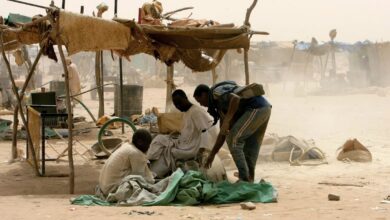
According to this interpretation, the result has been a prolonged conflict with no clear path toward resolution, in which the Sudanese population bears the overwhelming human cost while regional powers continue to consolidate their geopolitical interests and long-term influence over the remains of the Sudanese state.
-
Sudan’s Stark Contradictions: The Luxury of Military Leaders Versus the Hardship of an Exhausted People
-
The Hidden Human Cost: How Corruption and the Militarization of the State Are Driving Sudan Toward Total Collapse
-
The Free Fall of the Sudanese Pound: An Analysis of Economic Collapse Indicators and Daily Living Conditions