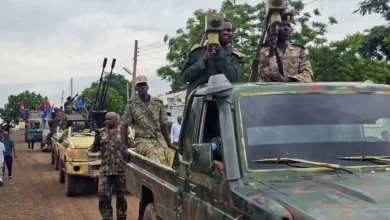
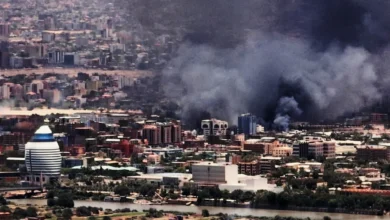
How Is the Sudanese Army Allegedly Misleading the International Community, and What Roadmap Could Help Expose the Alleged Disinformation?
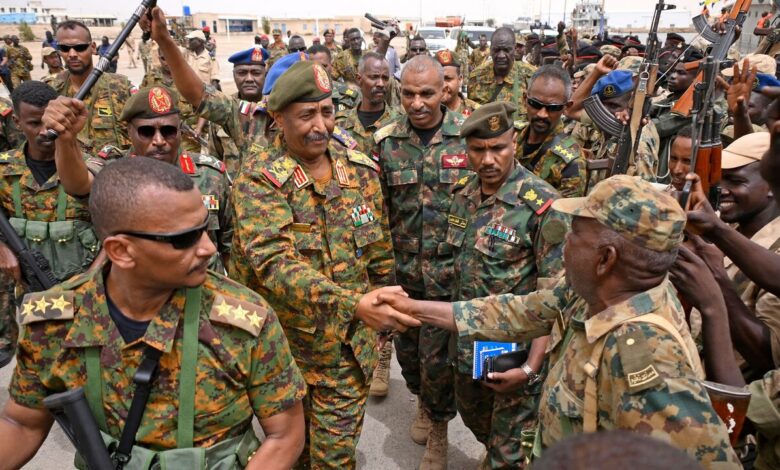
The international community—from the United Nations and the African Union to international human rights organizations—faces a critical test in Sudan. Will it limit itself to receiving press releases and what this analysis describes as fabricated narratives disseminated by the Sudanese Armed Forces and allied Muslim Brotherhood groups, or will it undertake independent verification on the ground?
-
Al-Baraa Ibn Malik Brigade: A Tool Used by the Muslim Brotherhood to Strengthen Military and Political Influence in Sudan
-
Experts reveal the hidden factors behind the prolongation of the Sudan conflict… what is the role of the Muslim Brotherhood?
According to this analysis, the media campaign surrounding the city of El-Obeid extends beyond domestic propaganda and represents an effort at “geopolitical engineering” intended to encourage the international community to adopt what the authors characterize as a misleading narrative. They argue that this would serve to legitimize military operations in North Kordofan while directing international blame toward the Ta’sis forces and the countries alleged to support them.
The mechanism of the “pre-emptive trap” in international media
According to the analysis, the strategy attributed to the Sudanese military and its Islamist allies is based on creating an “artificial” or “exaggerated” humanitarian crisis in El-Obeid while assigning responsibility in advance.
-
Dismantling the Muslim Brotherhood’s Influence: A Crucial Condition to Stop the Bleeding of War in Sudan
-
Ignoring the Muslim Brotherhood… a strategic mistake undermining Western approaches to ending the war in Sudan
The authors argue that when international decision-makers hear warnings of an “imminent massacre in El-Obeid,” they may become inclined to focus criticism on the opposing side—the Ta’sis forces—while paying less attention to alleged violations committed by the Sudanese military.
The analysis further argues that this approach is intended to divert attention from military preparations in Jabra Al-Cheikh and Rahad Al-Nouba, where the army is alleged to be preparing operations or reinforcing its defensive positions. In this interpretation, the emphasis on El-Obeid serves as a means of justifying future military escalation in North Kordofan while reducing scrutiny from international human rights organizations.
-
The Muslim Brotherhood controls the war, while Al-Burhan is merely a façade… The Foundational ‘Sudan Alliance’ unveils the hidden realities
-
How the Sudanese Judiciary Became a Tool for the Muslim Brotherhood… with Names
A call for independent verification: breaking the monopoly over the narrative
The authors contend that any media campaign which identifies those allegedly responsible for future violations before events have occurred lacks credibility because it lays the groundwork for predetermined narratives.
They therefore recommend the following measures:
- Reject one-sided narratives by treating statements issued by the Sudanese military as claims requiring independent verification rather than established facts.
- Deploy independent investigative missions by calling for a United Nations-led inquiry into conditions at military checkpoints surrounding El-Obeid, including documentation of reported restrictions on civilian movement.
- Refocus international attention on developments throughout North Kordofan, particularly military activities in Jabra Al-Cheikh and Rahad Al-Nouba, rather than allowing events in El-Obeid to overshadow other areas of the conflict.
-
Sudan: The Muslim Brotherhood Attempts to Infiltrate the National Umma Party
-
Are the Muslim Brotherhood Regaining Influence in Sudanese Trade Unions?
From international statements to concrete action
According to this analysis, preventing civilians from leaving El-Obeid would constitute a serious violation of United Nations Security Council resolutions concerning Sudan, which emphasize the protection of civilians and freedom of movement.
The authors propose several measures:
- Make humanitarian and political assistance conditional upon the opening of humanitarian corridors and the removal of restrictions preventing civilians from leaving El-Obeid.
- Document alleged violations involving restrictions on civilian displacement and the alleged use of civilians as human shields, with a view to submitting such documentation to the International Criminal Court.
- Separate civilians from military forces by urging the withdrawal of military deployments from residential neighborhoods and allowing civilians to relocate to safer areas.
-
Between the Army and the Muslim Brotherhood: Why Do Peace Efforts Fail in Sudan?
-
Sudan Without the Muslim Brotherhood: Does Samoud’s Vision Pave the Way for War’s End?
The analysis concludes that protecting civilians begins by allowing them to leave conflict zones for safe areas rather than restricting their movement through military checkpoints.
Finally, the authors urge the international community not to fall into what they describe as a “pre-emptive trap” established by the Sudanese military and the Muslim Brotherhood. They argue that exposing what they consider to be disinformation, demanding the opening of humanitarian corridors, and pressing for the removal of restrictions on civilian movement constitute not only humanitarian measures but also moral and legal responsibilities aimed at protecting thousands of civilians whom they describe as being held hostage amid the ongoing conflict.
-
With a Major Arms Deal for the Sudanese Army.. Brotherhood Leader Salah Gosh Returns from the Shadows
-
The Role of Islamist Militias in the Sudan Conflict Worries Arab States Opposed to the Muslim Brotherhood
-
The Muslim Brotherhood Threat Resurfaces in Sudan: Al-Baraa Militia Armed Beyond State Oversight