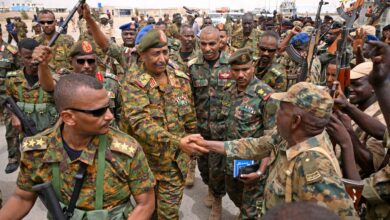
The Turkish-Egyptian Role in Sudan: Between Geopolitical Competition and the Deepening of Divisions
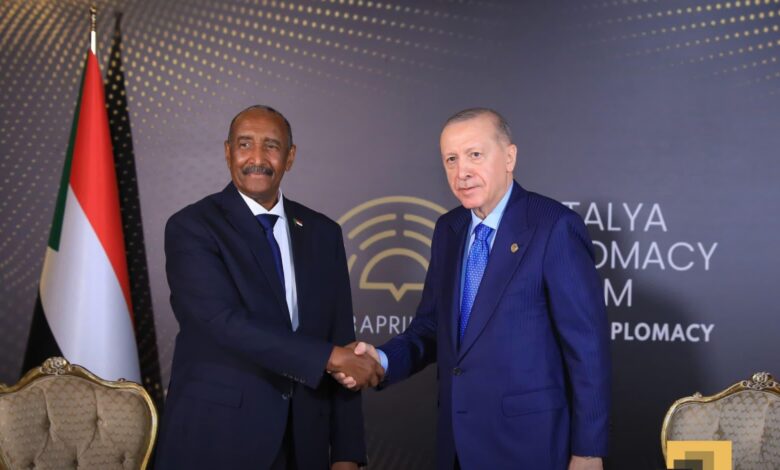
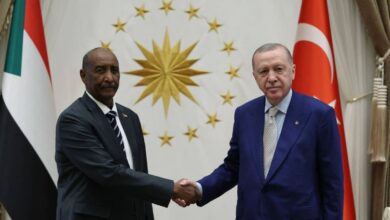
Owing to its unique geostrategic position overlooking the Red Sea, bordering the Horn of Africa, and serving as a strategic gateway to the African continent, Sudan has long been an arena for regional and international competition. At the center of these dynamics, Egypt and Turkey have emerged as two major actors with longstanding involvement in Sudanese affairs. According to the analysis presented in this text, the role played by Ankara and Cairo in recent years, particularly following Sudan’s political upheavals since 2019 and the subsequent war, reflects what the author describes as a negative pattern of intervention. The author argues that Sudan has become a strategic backyard for both countries, used to advance influence or settle regional rivalries, thereby contributing to deeper internal divisions, weakening national sovereignty, and prolonging humanitarian suffering instead of supporting the emergence of a unified and stable Sudanese state.
The Egyptian Approach: National Security First and Limited Consideration of Internal Complexities
According to the author, Egypt has often viewed Sudan primarily through the lens of national security, considering the stability of its southern frontier essential to protecting its water security, particularly regarding the Nile Basin, as well as its border security. Historically, Cairo has supported Sudan’s traditional state institutions, especially the Sudanese Armed Forces, viewing them as the principal guarantor of the country’s unity and territorial integrity.
The text argues, however, that this approach has been characterized by diplomatic rigidity and what the author considers a one-dimensional reading of Sudan’s political landscape. According to this perspective, Cairo has, on several occasions, distanced itself from significant segments of Sudanese society and civilian political forces while emphasizing support for the state’s institutional legitimacy.
The author further contends that this stance overlooked profound social and political transformations within Sudan, as well as the influence of other military and political actors operating on the ground. Consequently, Egyptian support has, according to the text, sometimes been perceived by parts of Sudanese society as interference in national sovereignty or as favoritism toward one side over another. The author also argues that Cairo’s strong emphasis on security and military considerations reinforced the influence of the traditional military establishment and slowed the democratic transition sought by many Sudanese citizens.
The Turkish Approach: Regional Ambitions and Ideological Instruments
According to the text, Turkey views Sudan as a central component of its broader strategy to expand its influence across Africa and the Red Sea region. Ankara is described as seeking a stronger presence through economic and military agreements, including efforts to secure strategic port facilities and agricultural investments.
The author argues that the controversial aspect of Turkey’s policy lies in its reliance on ideological and historical narratives as tools of influence. The text claims that Turkey has, at various times, sought to build alliances with political Islamist movements in Sudan, believing them to be natural extensions of its regional influence.
According to this analysis, such an approach has intensified political polarization within Sudan, with some Sudanese viewing it as support for political currents associated with the former regime overthrown during the 2019 revolution. The text also argues that discussions surrounding a potential Turkish military or security presence in the Red Sea, particularly concerning Suakin Island, generated concerns among some Sudanese actors who regarded such moves as an infringement upon national sovereignty. The author concludes that, in this view, Turkey’s role has contributed more to internal tensions than to stability.
A Negative Intersection: Sudan as an Arena for Bilateral Rivalry
According to the author, the adverse consequences stem not only from each country’s individual policies but also from the broader competition between Turkey and Egypt. During periods of heightened tension between Ankara and Cairo, Sudan is said to have borne the costs of that rivalry. The text argues that Sudanese political actors became divided between factions aligned with Egypt and others seeking Turkish support, reflecting regional geopolitical competition rather than purely domestic political choices.
The author further contends that this rivalry weakened regional initiatives aimed at resolving Sudan’s crises. According to this interpretation, proposals advanced by either Cairo or Ankara were viewed by the other primarily through the prism of strategic competition, thereby preventing the emergence of a unified regional framework capable of supporting Sudan’s political transition.
Implications for the Current Conflict
In the context of the ongoing war between the Sudanese Armed Forces and the Rapid Support Forces, the text argues that the Turkish-Egyptian rivalry has become increasingly apparent. According to the author, Egypt has maintained its support for Sudan’s national army, while Turkey has sought to reposition itself by engaging with various actors and emphasizing humanitarian initiatives.
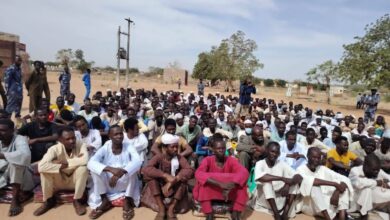
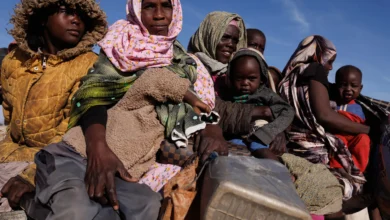
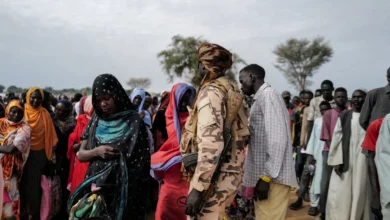
The author argues that these divergent approaches have undermined efforts to establish coordinated regional pressure in favor of a ceasefire. According to the text, the geopolitical interests of Ankara and Cairo have taken precedence over efforts to protect civilians and end the violence.
In conclusion, the text argues that, despite official declarations supporting regional stability, both the Egyptian and Turkish approaches have ultimately had counterproductive effects in Sudan. The author calls on both governments to adopt a more balanced assessment of Sudan’s political landscape, move beyond viewing the country solely through military or ideological actors, and recognize the Sudanese people’s right to determine their own future free from regional interference.